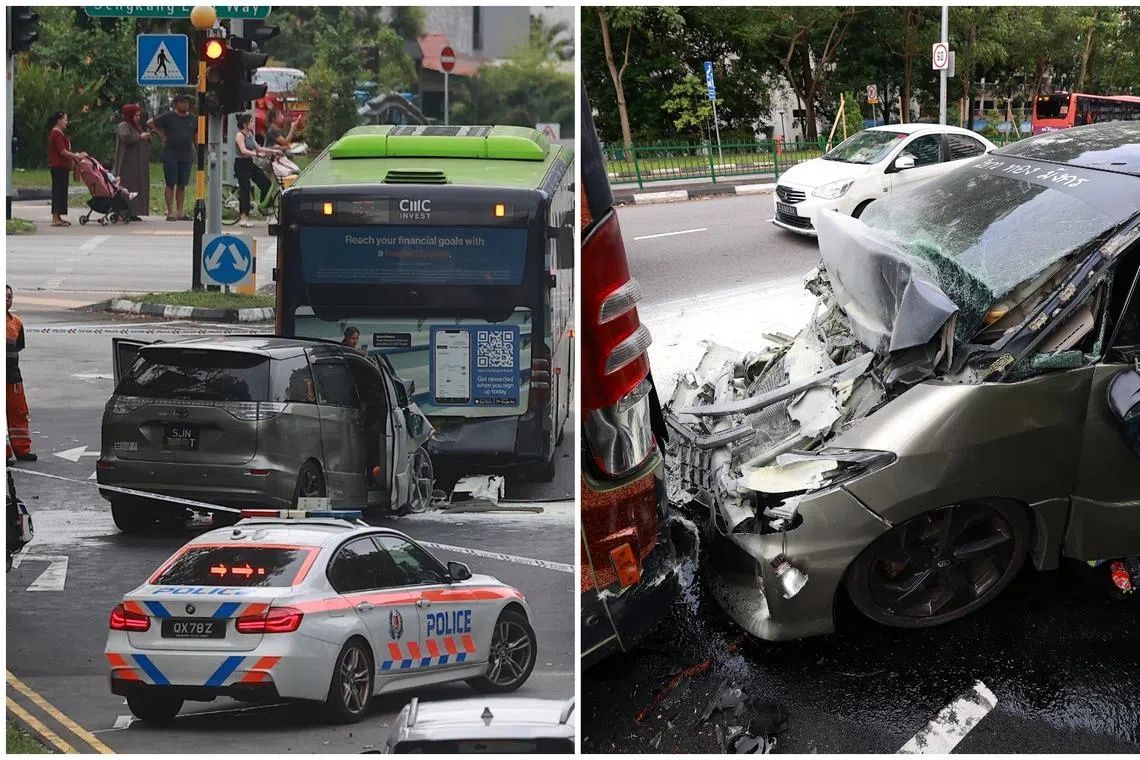
Singapore's emergency departments are confronting an alarming public safety challenge that extends beyond traditional drunk driving concerns. Over just twelve days in June, three men faced charges related to driving under the influence of drugs, each discovery triggered only after they had already caused accidents on public roads. Two of these individuals allegedly consumed methamphetamine, locally known as Ice, while operating their vehicles. The third was allegedly impaired by etomidate, a veterinary anaesthetic that has emerged as a dangerous component in e-vapourisers marketed as Kpods—a development that has caught both law enforcement and medical professionals off guard.
The medical community's alarm at this trend reflects genuine concern about driver safety. Jonathan Tang, a clinical toxicologist at the National University Hospital's Emergency Medicine Department, has personally treated patients presenting with traumatic injuries sustained in road accidents where etomidate intoxication played a role. His assessment carries particular weight: etomidate impairs driving ability in ways comparable to alcohol intoxication, compromising the cognitive and physical responses necessary for safe vehicle operation. The substance affects not merely the impaired driver, but creates cascading risk across all road users—passengers, pedestrians, cyclists, and other motorists.
The statistical picture emerging from Singapore's law enforcement agencies reveals a crisis accelerating rapidly. Between 2023 and 2025, police recorded 38 traffic accidents directly linked to drug use and etomidate consumption. Of these incidents, nineteen proved fatal. Disturbingly, the problem is intensifying: twenty-nine of the thirty-eight accidents occurred during 2025 alone, suggesting the issue has reached critical mass only in the past year. Among 2025's incidents, eighteen involved etomidate specifically, while seven involved combinations of both drugs and etomidate. This concentration represents not merely a statistical anomaly but evidence of a growing public health emergency demanding urgent intervention.
One fatal incident illustrates the human cost of this trend. On May 13, 2025, a vehicle collided with a bus in Punggol with a female passenger on board. Police discovered forty-two vapes and more than twelve hundred pods in the wreckage, with some containing etomidate. Testing confirmed that etomidate was present in the bloodstreams of both the driver and his passenger. The woman, aged twenty-eight, did not survive her injuries. Such cases underscore that victims of drug-impaired driving accidents are not limited to the impaired driver—innocent passengers and other road users bear the consequences of another person's chemical intoxication.
Parliamentary scrutiny has recently focused on this problem. In February, Member of Parliament Valerie Lee raised concerns about whether traffic police implement standard protocols for assessing motorists involved in accidents for evidence of vaping or drug use. In response, Coordinating Minister for National Security K. Shanmugam confirmed that following any traffic accident, officers assess for signs of impaired driving, with blood tests ordered when drug or etomidate use is suspected. Drivers found impaired face charges under provisions specifically addressing operation of vehicles while under the influence of intoxicating substances. The legislative framework exists, yet enforcement appears insufficient to deter or prevent these incidents from occurring in the first place.
The pharmacological effects of etomidate on driving capability deserve particular attention, as the substance represents a novel risk factor distinct from traditional drugs of abuse. Tang explains that etomidate impairs the neurological functions essential for safe driving: reaction time becomes delayed, hazard perception deteriorates, and physical control of the vehicle diminishes. Crucially, the substance appears to produce psychiatric side effects—depressed mood, heightened aggression, and impulsivity—that compound driving risk. Some users have reportedly attempted suicide following etomidate vaping, introducing an additional layer of unpredictability to road safety. These psychological manifestations fundamentally compromise judgment and impulse control, creating conditions where catastrophic accidents become statistically probable rather than anomalous.
Singapore's broader road safety statistics contextualise the scale of this emerging threat. Traffic deaths reached a decade-high of one hundred forty-nine in 2025, exceeding the one hundred forty-one fatalities recorded in 2016 and surpassing the one hundred forty-two deaths in 2024. Simultaneously, injuries increased from nine thousand three hundred forty-two cases in 2024 to nine thousand nine hundred fifty-five in 2025. This upward trajectory suggests that even as vehicle safety technology advances, human behaviour—specifically substance-impaired driving—increasingly determines crash outcomes. The concentration of drug-related incidents within this broader deterioration implies that impaired driving may represent a disproportionate factor in recent fatalities.
Recent prosecutions illustrate the enforcement response to this crisis. Mohamed Firdouz Mohamed Akram, thirty-six, faced multiple charges after his vehicle collided with a taxi in Kallang, injuring both the taxi driver and a passenger. Testing revealed Ice consumption at the time of driving. Police recovered drugs, vaporisers, and weapons from his vehicle. Puah Zhe Cong, thirty-four, allegedly operated a vehicle while under etomidate's influence, causing one death and two injuries through dangerous driving that also involved failing to stop after the accident. Sivakandesh, thirty-two, drove a Mercedes-Benz after consuming methamphetamine, ultimately crashing into a rubbish chute in Yishun Street, striking bollards, a parked vehicle, and the chute structure before stopping. These cases represent merely the prosecutions that proceeded to court—each reflects a preventable incident where chemical impairment created conditions for disaster.
The legal consequences for driving under the influence of intoxicating substances carry substantial penalties reflecting the gravity of the offence. First-time offenders face imprisonment of up to one year, fines reaching ten thousand Singapore dollars, or both sanctions. Repeat offenders encounter stricter penalties: imprisonment up to two years combined with fines of up to twenty thousand Singapore dollars. Yet despite these consequences, the prevalence of such incidents continues climbing. This gap between penalty severity and preventive effectiveness suggests that deterrence through criminal sanction alone proves insufficient when addiction or recreational use patterns override rational cost-benefit calculation among users.
For Malaysia and other Southeast Asian nations observing Singapore's experience, the emergence of etomidate as a component in commercial vaping products represents an early warning signal. The substance's availability in recreational vaping devices—a market that remains largely unregulated across the region—creates potential for similar crises to develop elsewhere. Unlike traditional drugs requiring cultivation or complex synthesis, etomidate appears incorporated into commercially distributed consumer products, potentially reaching users without awareness of the substance's actual composition or psychoactive effects. Regulatory frameworks governing vaping products across Southeast Asia remain fragmented and frequently inadequate to address emerging novel psychoactive substances embedded in seemingly ordinary consumer electronics.
Health authorities across the region face an institutional challenge in responding to substance-induced impairment that emerges through novel delivery mechanisms. Emergency departments and forensic toxicology services may lack capacity to rapidly identify etomidate or similar anaesthetic compounds in screening protocols designed for traditional drugs of abuse. Medical education concerning the driving impairment caused by these substances remains limited. Road safety authorities have not universally updated enforcement protocols to address impaired driving caused by vaping-delivered substances, instead maintaining procedures designed for alcohol and conventional drug detection. This institutional lag creates intervals where dangerous drivers operate with reduced risk of apprehension, particularly in jurisdictions with limited forensic capacity.
Singapore's escalating crisis reflects a convergence of factors: novel drug delivery mechanisms outpacing regulatory response, pharmaceutical substances repurposed for recreational use, commercial vaping markets evolving faster than oversight can accommodate, and gaps between law enforcement protocols and emerging impairment pathways. The concentration of fatal accidents involving etomidate particularly within 2025 suggests the substance entered the market recently and has achieved rapid penetration among certain user populations. Regional authorities cannot assume that robust regulation of traditional drugs of abuse provides adequate protection against chemically-sophisticated impairment delivered through inconspicuous vaping devices. The human cost—measured in fatalities like the twenty-eight-year-old woman killed in Punggol, and in the injuries accumulating across nine thousand nine hundred fifty-five cases annually—demands that regulatory, enforcement, and medical responses evolve at pace with the threat.
%22%2F%3E%3C%2Fpattern%3E%3C%2Fdefs%3E%3Crect%20width%3D%22100%25%22%20height%3D%22100%25%22%20fill%3D%22url(%23ph2wtq6g)%22%2F%3E%3Crect%20width%3D%22100%25%22%20height%3D%22100%25%22%20fill%3D%22url(%23ph2wtq6p)%22%2F%3E%3Ctext%20x%3D%2250%25%22%20y%3D%2250%25%22%20text-anchor%3D%22middle%22%20dominant-baseline%3D%22central%22%20fill%3D%22rgba(255%2C255%2C255%2C0.95)%22%20font-family%3D%22Georgia%2C%20'Times%20New%20Roman'%2C%20serif%22%20font-weight%3D%22700%22%20font-size%3D%22320%22%20letter-spacing%3D%22-0.02em%22%3ETV3%3C%2Ftext%3E%3C%2Fsvg%3E)
%22%2F%3E%3C%2Fpattern%3E%3C%2Fdefs%3E%3Crect%20width%3D%22100%25%22%20height%3D%22100%25%22%20fill%3D%22url(%23ph3gf80g)%22%2F%3E%3Crect%20width%3D%22100%25%22%20height%3D%22100%25%22%20fill%3D%22url(%23ph3gf80p)%22%2F%3E%3Ctext%20x%3D%2250%25%22%20y%3D%2250%25%22%20text-anchor%3D%22middle%22%20dominant-baseline%3D%22central%22%20fill%3D%22rgba(255%2C255%2C255%2C0.95)%22%20font-family%3D%22Georgia%2C%20'Times%20New%20Roman'%2C%20serif%22%20font-weight%3D%22700%22%20font-size%3D%22170%22%20letter-spacing%3D%22-0.02em%22%3ENational%3C%2Ftext%3E%3C%2Fsvg%3E)
%22%2F%3E%3C%2Fpattern%3E%3C%2Fdefs%3E%3Crect%20width%3D%22100%25%22%20height%3D%22100%25%22%20fill%3D%22url(%23ph4jjg8g)%22%2F%3E%3Crect%20width%3D%22100%25%22%20height%3D%22100%25%22%20fill%3D%22url(%23ph4jjg8p)%22%2F%3E%3Ctext%20x%3D%2250%25%22%20y%3D%2250%25%22%20text-anchor%3D%22middle%22%20dominant-baseline%3D%22central%22%20fill%3D%22rgba(255%2C255%2C255%2C0.95)%22%20font-family%3D%22Georgia%2C%20'Times%20New%20Roman'%2C%20serif%22%20font-weight%3D%22700%22%20font-size%3D%22170%22%20letter-spacing%3D%22-0.02em%22%3EJudicial%3C%2Ftext%3E%3C%2Fsvg%3E)