%22%2F%3E%3C%2Fpattern%3E%3C%2Fdefs%3E%3Crect%20width%3D%22100%25%22%20height%3D%22100%25%22%20fill%3D%22url(%23ph4jjg8g)%22%2F%3E%3Crect%20width%3D%22100%25%22%20height%3D%22100%25%22%20fill%3D%22url(%23ph4jjg8p)%22%2F%3E%3Ctext%20x%3D%2250%25%22%20y%3D%2250%25%22%20text-anchor%3D%22middle%22%20dominant-baseline%3D%22central%22%20fill%3D%22rgba(255%2C255%2C255%2C0.95)%22%20font-family%3D%22Georgia%2C%20'Times%20New%20Roman'%2C%20serif%22%20font-weight%3D%22700%22%20font-size%3D%22170%22%20letter-spacing%3D%22-0.02em%22%3EJudicial%3C%2Ftext%3E%3C%2Fsvg%3E)
Tan Sri Nallini Pathmanathan, the recently appointed chairman of the Malaysian Media Council, has moved to address concerns about her judicial background by framing it as an asset to the council's core mission of remaining independent and impartial. Speaking at a media dialogue session in Butterworth alongside Communications Minister Datuk Fahmi Fadzil, Nallini argued that the strengths she brings from the Bench translate directly into the qualities needed to lead a credible self-regulatory body for Malaysia's news industry. Her appointment has drawn scrutiny from those questioning whether someone without direct journalism or newsroom experience is the right fit to oversee media standards and complaints handling.
Nallini acknowledged the apparent mismatch between her background and her new role with disarming candour. She freely conceded that she has never worked as a journalist, managed a newsroom, made editorial decisions on story placement, or experienced the pressures of meeting daily news deadlines. Such hands-on experience, she recognised, remains the domain of working editors and reporters who understand the practical realities and constraints of news production. However, she pivoted to argue that the Malaysian Media Council Act itself reflects an intentional design choice in requiring the chairperson to be someone divorced from politics, the civil service, and the legislature. This structural requirement, she suggested, points to the architects' understanding that a neutral outsider may be better positioned to command the trust of disparate stakeholders than someone embedded within the journalism profession.
The foundation of Nallini's argument rests on a particular conception of fairness and impartiality cultivated through her time on the Federal Court. She contended that her primary contribution to the council would be the ability to arbitrate between competing parties fairly, without owing allegiance to any faction, and to ground all decisions in evidence and transparent reasoning. This judicial mindset, she elaborated, encompasses ensuring that processes are conducted with natural justice, that decisions are proportionate to the issues at hand, and that the council always explains its reasoning in language that can be scrutinised and tested. In essence, she positioned judicial independence as a proxy for the kind of institutional independence the council must demonstrate to retain the confidence of the public, the media industry, and the government.
Nallini outlined an ambitious vision for the council's foundational work, describing the coming months as a "constitution-writing phase" during which the institution must build robust structures from the ground up. She identified the quality and fairness of the council's own processes as her paramount concern, singling out the code of conduct, the complaints mechanism, and the manner in which decisions are reached and communicated as critical areas requiring rigorous attention. Without solid procedural foundations grounded in principles of natural justice and proportionality, she warned, the council will struggle to earn the standing necessary to discharge its regulatory functions effectively. This focus on institutional architecture reflects a recognition that the council's credibility will be judged not by grand pronouncements but by how it conducts itself in specific, observable decisions over time.
Central to Nallini's articulation of the council's broader purpose is a conception of media freedom and responsibility as inseparable rather than opposed. She emphasised that a free media must also be responsible, and conversely, a responsible media deserves protection from unwarranted pressure, harassment, and misuse of its reputation. This framing attempts to position the council as serving the interests of democracy and public discourse rather than narrowing the space for journalism. Nallini argued that freedom and responsibility operate as "two halves of the same trust," suggesting that efforts to uphold journalistic standards need not constrain the fundamental freedoms upon which independent journalism depends. For Malaysian readers accustomed to debates about press freedom in the region, this articulation seeks to recast media regulation as something compatible with rather than antithetical to a vibrant, challenging press.
To demonstrate the council's seriousness about this balance, Nallini identified three immediate priorities that will shape its work in its formative months. The council aims to establish a robust framework for receiving and adjudicating complaints, expand its membership base across the journalism and media industry to ensure broad legitimacy, and grapple with emerging technological and informational challenges including deepfakes and the misuse of artificial intelligence. Each of these priorities reflects both the council's regulatory function and its ambition to strengthen the media ecosystem as a whole. The emphasis on AI-related issues in particular signals an understanding that media regulation cannot remain static but must evolve to address novel threats to information integrity and public trust.
Nallini was explicit about a constraint that will define the council's approach to complaints and standard-setting: the mechanism must never become an instrument for silencing journalists or discouraging the robust reporting that democratic societies require. She acknowledged that challenging those in power and asking difficult questions represents not a deviation from journalistic standards but a core function of the free press. The council's commitment would be to upholding standards while remaining "vigilant in ensuring that the upholding of standards is not turned into a means of discouraging the very journalism a democracy most needs." This formulation attempts to pre-empt a common criticism of media councils in the region: that they can become vehicles for suppressing dissent under the guise of maintaining standards.
A theme running through Nallini's remarks is the notion that institutional independence cannot be declared in speeches but must be proven through concrete decisions, particularly those in which the council is willing to disagree with the government, media owners, or other powerful actors. She framed this as the standard by which the council should be held accountable, suggesting that genuine independence will be observable in the patterns of decisions the council reaches rather than in aspirational statements about its mandate. This forward-looking challenge to the council implies an understanding that Malaysian observers and international commentators will be watching closely to see whether the MMC operates as a credible arbiter or as a tool serving particular interests.
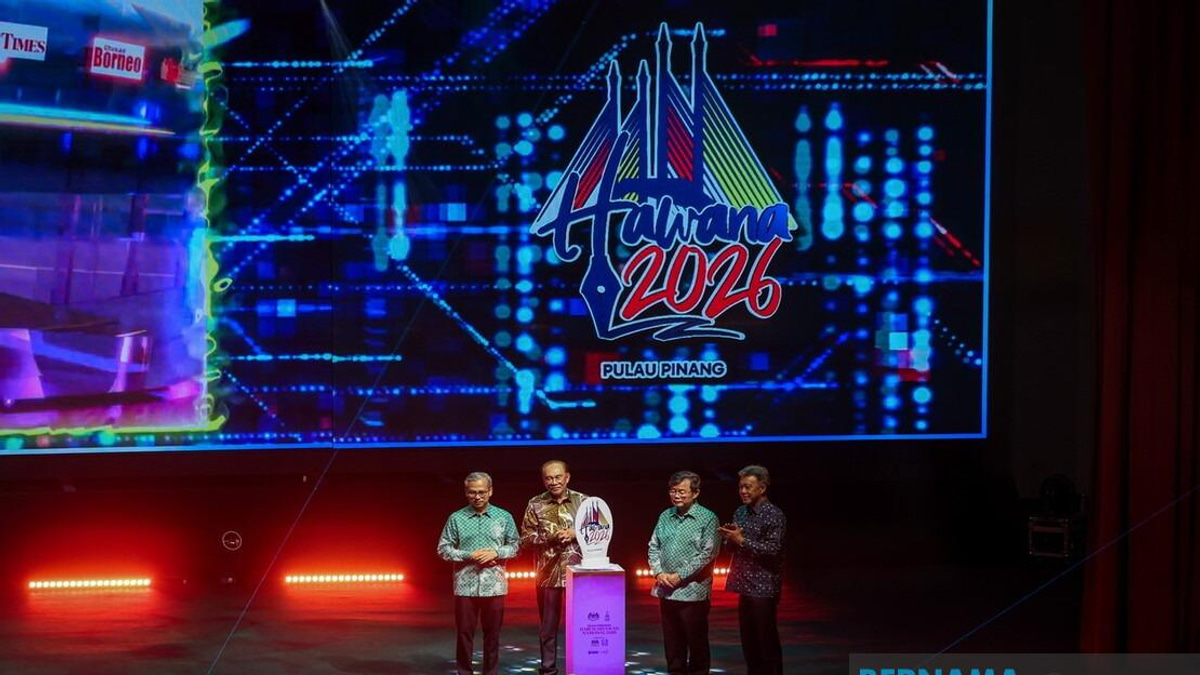
The dialogue session at which Nallini made these remarks was held in conjunction with Malaysia's National Journalists' Day (HAWANA) 2026 celebrations, a context that lent symbolic weight to her emphasis on the relationship between press freedom and institutional accountability. The event drew senior figures from the communications ministry, the Malaysian National News Agency, and local media organisations, reflecting the broad stakeholder base that the council must navigate. The presence of Communications Minister Fahmi Fadzil signalled government engagement with the council's formation, even as Nallini's remarks on independence attempted to establish clear separation between the council and the state apparatus.
Nallini's judicial background, while potentially contentious, may offer advantages beyond the procedural safeguards and impartiality she stressed. The federal court experience suggests familiarity with complex legal and institutional questions, experience managing public trust in the face of controversy, and exposure to competing interests and arguments presented at high levels of sophistication. Moreover, her distance from the journalism profession may insulate her from some of the factional tensions that characterise media industries globally, where different outlets and proprietors vie for influence and advantage. In the Malaysian context, where concerns about media plurality and independence have long been significant, an outsider perspective may carry particular weight with stakeholders who might otherwise suspect that a veteran journalist or media executive could not fully transcend the interests of her former organisational home.
The appointment and Nallini's public articulation of her vision for the council occur against a backdrop of evolving thinking about media regulation in Southeast Asia more broadly. Several countries in the region have moved toward strengthening self-regulatory mechanisms and industry standards as an alternative to direct government control, reflecting international best practice and democratic commitments. Malaysia's establishment of the MMC represents part of this broader trend, though questions persist about how effectively self-regulatory bodies can function in contexts where government influence remains substantial and where the relationship between media freedom and national security remains contested. Nallini's emphasis on independence and on the council's refusal to become a tool for censorship attempts to position the MMC within this progressive regulatory model, even as the council's ultimate efficacy will depend on how it handles specific, sensitive cases in the months and years ahead.