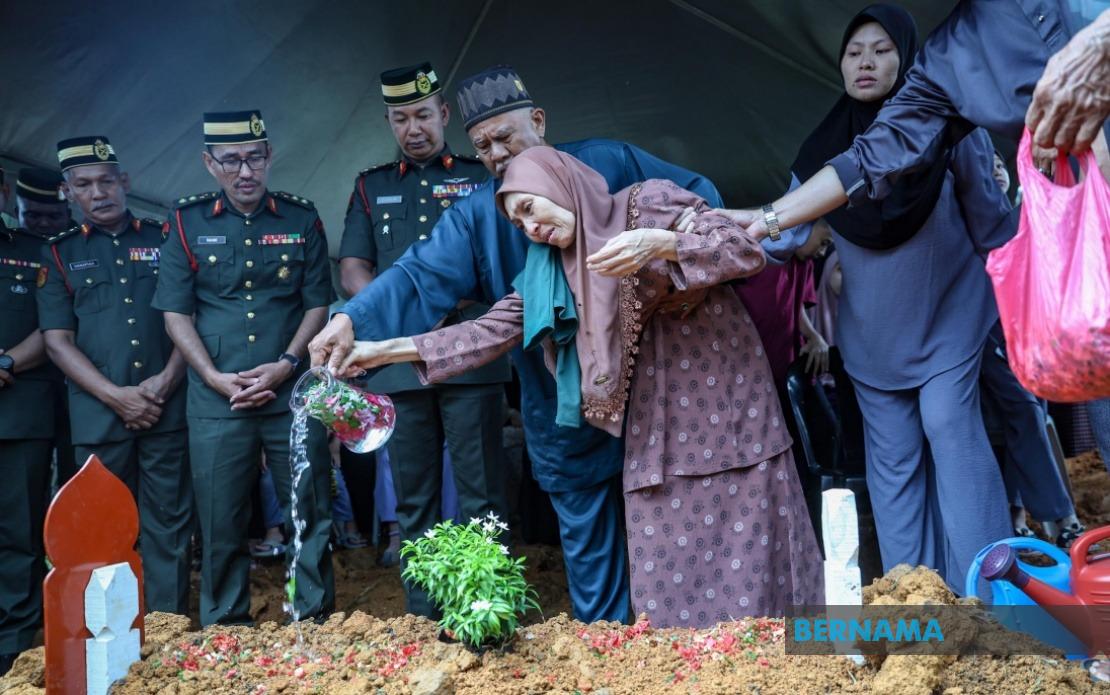
A solemn funeral service brought military personnel and grieving family members together at Taman Sri Lambak Muslim Cemetery in Kluang on June 17, marking the final farewell to Private Siti Khadijah Sungip, 24, a Malaysian Army soldier whose life was claimed by an unexpected tragedy during routine training. The ceremony, held at 1.15 pm, underscored the heavy toll that military training accidents exact on defence forces and their families alike, reminding observers of the inherent risks personnel face even during controlled exercises.
The young Royal Engineer Regiment member met her fatal injuries in the morning of June 16 at Hobart Camp in Gurun, Kedah, when a grenade detonated unexpectedly during what should have been standard throwing practice at the target range. The incident, occurring at 10.57 am, also claimed the life of Corporal Norazmi Abu Bakar from the Sixth Battalion of the Royal Malay Regiment, marking it as one of the most serious training mishaps in recent military memory. Both service members were rushed to Sultan Abdul Halim Hospital in Sungai Petani but succumbed to severe blast injuries during transit, with authorities confirming their deaths on arrival.
Private Siti Khadijah's body underwent post-mortem examination at Sultanah Bahiyah Hospital in Alor Setar, a procedure that concluded around 2.30 am before the remains were transported back to her family home. The careful coordination between medical facilities, military units, and civilian authorities reflected the protocols surrounding deaths of armed service personnel in Malaysia, where such incidents trigger formal investigations and ceremonial procedures. The body arrived at the family residence in Taman Sri Lambak at 12.10 pm, accompanied by First Field Troop Leader Lieutenant Muhammad Lutfil Hadi Osman and four members from the First Squadron of the Royal Engineer Regiment stationed at Sangro Camp in Taiping, Perak.
Before the burial commenced, funeral prayers were conducted at Darul Iman Mosque, with Major Mohd Azlan Shah Abdul Razak from the Malaysian Army Field Engineering Institute leading the religious ceremony. This aspect of the service honoured Islamic traditions while also acknowledging the military's commitment to observing proper rites for fallen personnel. The spiritual component of the funeral reflected the importance the defence establishment places on dignifying soldiers' deaths and supporting families through religious and cultural observances.
The Malaysian Army extended formal military honours to acknowledge Private Siti Khadijah's service and sacrifice. Brigadier General Datuk Zulhelmy Masdar, Commander of the 7th Brigade at Mahkota Camp, presided over the symbolic presentation of the Jalur Gemilang national flag to the deceased's father, Sungip Jais, 65, a gesture laden with symbolic weight. This handover represented both the nation's recognition of his daughter's contributions to national defence and an expression of collective mourning by the military institution.
The tragedy has raised fresh questions about safety protocols and risk management in military training environments across Southeast Asia. Grenade throwing exercises are fundamental to infantry and engineer training worldwide, yet incidents like this underscore how even well-established procedures can result in catastrophic outcomes if execution falters or equipment malfunctions. Malaysia's defence establishment will likely face renewed scrutiny regarding whether training methodologies at Hobart Camp and similar facilities adequately account for human error and equipment failure scenarios.
The incident affects not only the immediate military community but reverberates through defence sectors across the region, particularly among troops conducting similar training routines. Military establishments in neighbouring countries, including Singapore, Thailand, and Indonesia, maintain comparable training ranges and protocols, making the Hobart Camp tragedy a cautionary reference point. Accident investigations following such events often lead to recommendations that spread across regional military networks, potentially influencing training standards and safety measures.
For Private Siti Khadijah's family, the loss represents an irreplaceable personal tragedy compounded by the circumstances of her death while fulfilling professional obligations. At 24, she represented a generation of Malaysian women increasingly visible in military ranks, though her service ended prematurely and tragically. The presence of military personnel at her funeral, coordinated across multiple units and branches, reflected the armed forces' commitment to honouring those who perish in service, yet such gestures provide limited comfort to bereaved families facing sudden and preventable loss.
The Malaysian Army's formal statement regarding the incident identified both victims by rank, unit, and service branch, emphasizing that the explosion occurred during target range training rather than active operations. This classification matters significantly, as training accidents sometimes trigger different levels of investigation and accountability compared to combat-related deaths. The distinction also highlights the military's ongoing challenge of balancing operational readiness with personnel safety, a tension that persists despite advanced equipment and established safety frameworks.
Moving forward, military officials will conduct comprehensive investigations to determine whether procedural breaches, equipment defects, or environmental factors contributed to the explosion. Such investigations are standard following fatal military incidents and serve multiple functions: establishing accountability, identifying systemic improvements, and providing closure to families by explaining precisely what occurred. The findings will likely inform future training protocols at Hobart Camp and potentially influence grenade handling procedures across Malaysian Army units more broadly.
The funeral of Private Siti Khadijah Sungip concluded another chapter in the ongoing narrative of military sacrifice and institutional responsibility. While her name will be remembered within defence circles and military records, the incident itself represents a broader challenge facing armed forces throughout the region: maintaining rigorous training standards that develop combat capability while simultaneously protecting personnel from preventable harm. How Malaysian defence authorities respond to this tragedy, through both immediate support for grieving families and systematic safety improvements, will signal their commitment to both operational excellence and personnel welfare.