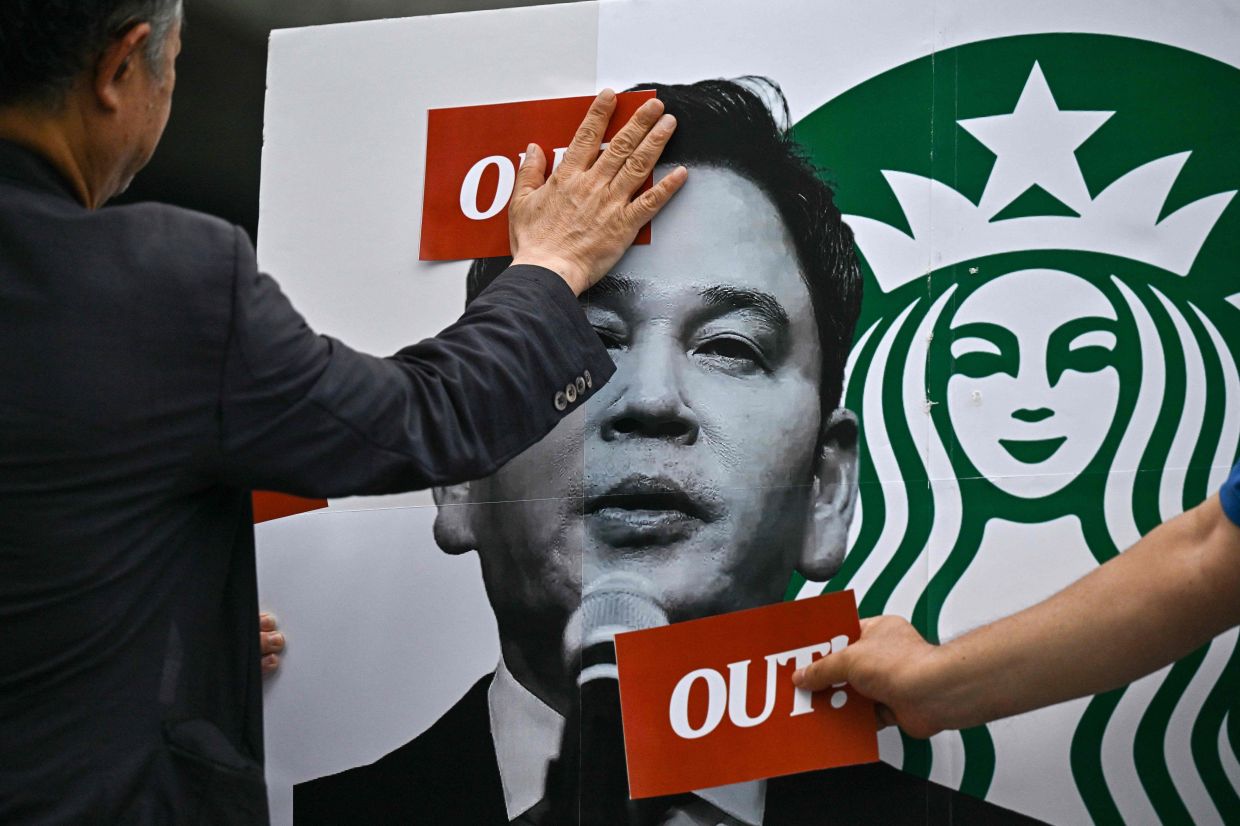
South Korean police have begun interrogating executives of Starbucks Korea's parent company, Shinsegae Group, over a promotional blunder that ignited widespread public outrage and reignited sensitivities surrounding one of the nation's most traumatic historical events. The questioning represents an escalation in official scrutiny of the incident, which has evolved from a corporate public relations disaster into a potential legal matter with constitutional implications for how companies handle sensitive national commemorations.
Starbucks Korea, operating approximately 2,000 locations across South Korea under a licensing arrangement with Shinsegae Group, launched a "Tank Day" reusable cup promotion scheduled for May 18. This timing proved catastrophically insensitive, as that date marks the anniversary of the Gwangju uprising, a pivotal moment in South Korean history when military forces killed civilians during a pro-democracy demonstration. Official records document 165 deaths, though historians and survivors' groups contend the actual death toll was substantially higher, with many estimates exceeding 200. The synchronisation between a whimsical consumer promotion and a solemn commemoration of state violence represented a jarring cultural misstep that exposed deep institutional failures within the corporate structure.
The fallout was immediate and severe. Shinsegae Group's Korea chief executive was terminated on the day the scandal broke, signalling the company's acknowledgment of serious mismanagement. Subsequently, group chairman Chung Yong-jin made a formal public apology, a gesture customary in South Korean corporate culture when facing reputational damage. However, these measures failed to contain the controversy or satisfy civic organisations angered by what they perceived as willful ignorance of national historical trauma.
A civic group escalated the matter by filing a formal complaint against Chung and other company executives, invoking the 2016 law governing how public discourse and media address the 1980 pro-democracy crackdown. This legislation prohibits the dissemination of false or distorted information about the uprising and imposes penalties for violations. The complaint also alleges defamation and insulting conduct, suggesting the complainants view the promotion not merely as careless marketing but as a potential affront to the memory of those who died.
The Seoul Metropolitan Police Agency questioned Yang Jong-hwan, head of Shinsegae Group's audit division, in his capacity as a witness, according to company statements released Thursday. The questioning reflects law enforcement's determination to establish responsibility chains and identify systemic failures that permitted such a culturally inept campaign to reach consumers. Shinsegae indicated it would cooperate fully with investigators and expressed hope that the truth would emerge through transparent investigation, language that typically precedes more significant internal accountability measures.
The company subsequently conducted an internal review revealing a cascade of negligent procedures that enabled the promotion to advance unchecked. Multiple executives authorised the campaign without reviewing the design materials or consulting with anyone possessing historical or cultural awareness. This breakdown suggests the incident resulted not from deliberate disrespect but from organisational dysfunction and a fundamental disconnection between corporate planning and national historical consciousness among senior management.
In response to the scandal, Starbucks Korea announced mandatory educational initiatives for its workforce. All stores nationwide will close for half a day, allowing staff to participate in structured historical lessons about the Gwangju uprising and its significance in South Korean democracy's evolution. Shinsegae's leadership, including the chairman and other senior executives, will undergo identical training two days later, signalling institutional commitment to preventing recurrence through education rather than solely through punitive measures.
The controversy carries weight beyond corporate embarrassment when contextualised within Starbucks' positioning in South Korea. The coffee chain represents the nation's third-largest market for the Seattle-based company globally, trailing only the United States and China. This commercial significance means reputational damage extends beyond mere local inconvenience; it threatens substantial revenue streams and brand equity in a strategically important Asian market. The incident demonstrated how corporate decisions made without cultural sensitivity can jeopardise multinational operations in markets where historical consciousness runs deep.
Public response was sufficiently intense to generate street protests in Seoul and Gwangju, the city most directly connected to the 1980 tragedy. The operator reported a sharp decline in sales during the scandal's initial phase, quantifying the economic consequences of consumer backlash. Opposition leader Lee Jae-myung publicly condemned the promotion as "inhumane and disgraceful," indicating that the incident transcended corporate affairs to become a political matter with electoral implications.
For Malaysian readers and broader Southeast Asian context, this incident illuminates how multinational corporations operating across Asia must navigate deeply rooted historical sensitivities unique to each market. Malaysia's own complex history involving sensitive commemorative dates and social divisions suggests comparable risks exist when international companies fail to localise decision-making processes and ensure cultural awareness among leadership. The Starbucks case demonstrates that even well-established global brands require embedded knowledge of local historical consciousness to avoid catastrophic missteps that erode brand loyalty and community trust.