South Korean President Lee Jae Myung has sought to strike a delicate balance between validating public anger over the June 3 local election management crisis and drawing a hard line against what he characterises as baseless conspiracy theories about election rigging. In a statement posted on social media platform X on June 15, the president acknowledged widespread concerns about the infringement of voting rights while simultaneously cautioning demonstrators not to undermine the rights of others through their protest activities. The statement reflects mounting pressure on South Korea's political establishment to respond decisively to a crisis that has exposed significant vulnerabilities in the country's electoral machinery.
The controversy centres on substantial ballot paper shortages and other administrative failures that disrupted voting at numerous polling stations during the June 3 local elections, forcing temporary suspensions and delays in the voting process. Lee's acknowledgment of these failures represents a significant concession from the executive branch. He publicly declared that the National Election Commission's performance constituted a serious breach of voter rights and described the incident as troubling when examined in detail. However, he deliberately separated his criticism of administrative incompetence from emerging claims that the voting system itself had been manipulated or rigged, labelling the latter as unfounded theories exploited by certain interests to destabilise public confidence in democratic institutions.
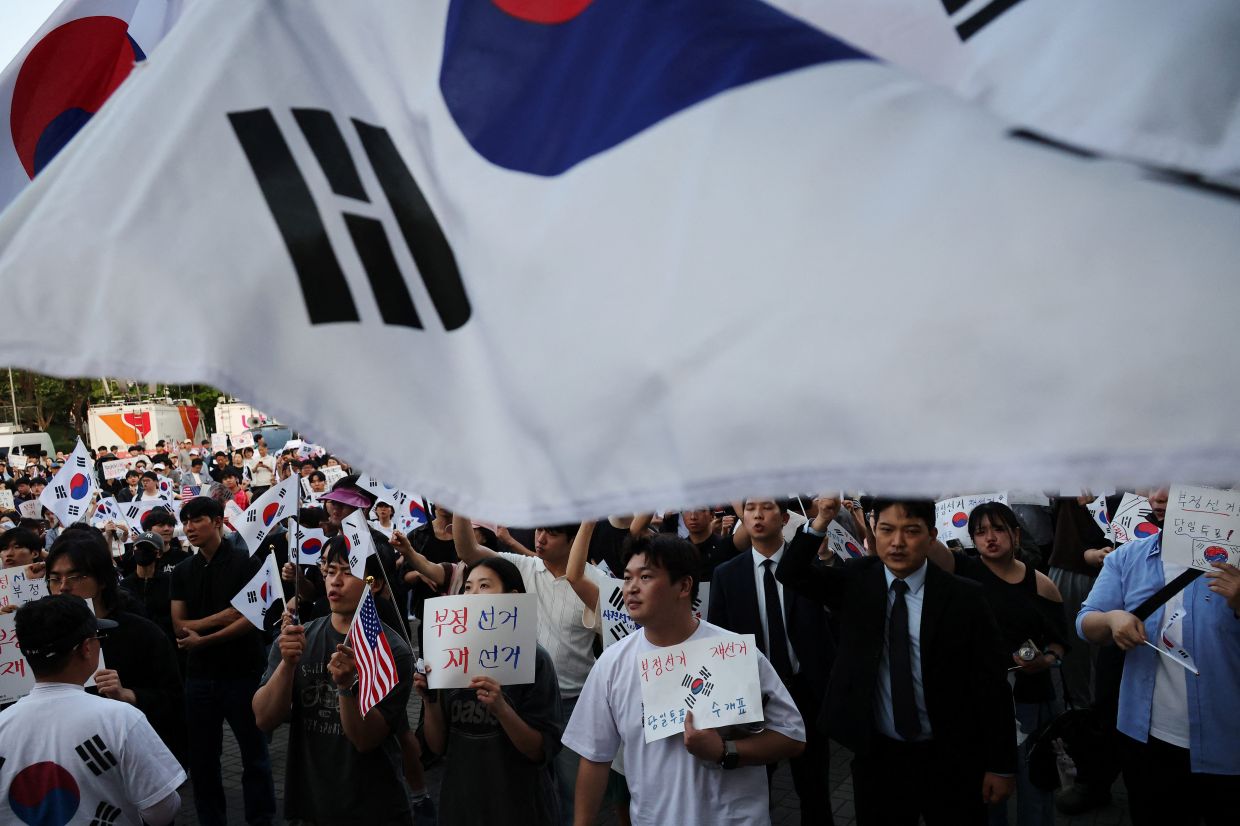
The president's remarks came as demonstrations intensified around Olympic Park's handball arena in southern Seoul, which served as the vote-counting centre for the June 3 elections and housed ballot boxes after voting concluded. Activist groups have maintained a visible presence at the facility, creating disruptions that extended beyond the immediate vicinity of the protest itself. According to reports the president referenced, sports organisations operating offices within Olympic Park experienced significant operational interruptions as protesters blocked access routes to various facilities. These access restrictions forced some athletic bodies to suspend administrative work deemed essential for South Korean athletes' participation in international sporting competitions, highlighting the broader ripple effects of the unrest.
Lee's June 15 statement specifically addressed this collateral damage, emphasising that while citizens possessed the right to express their views, such expression must not encroach upon the legitimate activities and freedoms of others. The statement effectively signalled that the government would tolerate sustained protest activity but would not permit escalation into actions that inflicted tangible harm on unrelated parties or critical national functions. To underscore this position, Lee announced that police had received instructions to conduct thorough investigations into individuals who obstructed facilities through force, prevented civilians from accessing buildings, or participated in coordinated schemes to carry out such obstruction.
The president's measured approach became clearer when understood against the backdrop of his earlier statements made on June 14 while presiding over a video conference with senior advisers from the Vatican. At that time, Lee had been more forthright in his criticism of the electoral administration, declaring the situation genuinely puzzling and absurd while emphasising that interference with the fundamental right to vote struck at the very foundation of democratic governance. Yet even in that more forceful statement, he had drawn explicit distinctions between legitimate accountability for administrative failure and acceptance of unsupported allegations regarding systemic manipulation. Lee characterised those promoting election fraud narratives as forces seeking to weaponise genuine grievances for purposes of stoking unfounded conspiracy theories that threatened public trust in democratic processes.
The allegations of election manipulation have taken troubling forms, according to Lee's description. Individuals advancing these claims have allegedly threatened police officers and ordinary citizens, conducted searches and inspections lacking any clear basis, obstructed access to official facilities, and interfered with the performance of official duties. Lee responded by insisting that anyone responsible for such actions must face consequences in strict accordance with legal frameworks and established institutional procedures. His language throughout the statements emphasised that whatever responses the government might pursue, certain boundaries rooted in the rule of law and institutional integrity must remain inviolable.
Democratic legitimacy requires both effective accountability and measured public discourse, according to Lee's framing of the crisis. He called explicitly for a transparent investigation into the ballot shortage incident and for development of preventive measures that would forestall similar failures in future electoral cycles. Rather than attempting to suppress public criticism, Lee characterised robust debate and constructive proposals as essential components of converting a democratic infringement into an opportunity for strengthening democratic practice and popular sovereignty. This rhetorical positioning allows Lee to acknowledge valid grievances while maintaining that productive solutions require healthy criticism combined with institutional cooperation rather than confrontational protest.
To translate these principles into action, Lee urged the National Election Commission to furnish complete cooperation with a parliamentary investigation that he indicated could commence within the week. He simultaneously pressed prosecutors and police to accelerate their joint investigation into responsibility for the election management failures, specifically instructing them to pursue accountability "without any sanctuary"—language that signals no political figure or institution should escape scrutiny regardless of their position or influence. By actively pushing multiple investigative bodies forward while simultaneously drawing boundaries around acceptable protest conduct, Lee attempted to demonstrate responsiveness to public anger without surrendering control over the political narrative surrounding the crisis.
The underlying challenge for Lee involves navigating genuine administrative failure while preventing the consolidation of anti-system sentiment that could undermine institutional confidence more broadly. The June 3 ballot shortages represent a real and documented problem that created tangible interference with voting rights across numerous polling stations. Yet the emergence of fraud allegations suggests some segments of the public have begun constructing alternative explanations for electoral outcomes that diverge from simple administrative incompetence. Lee's strategy involves treating the administrative failure with appropriate seriousness through investigations and parliamentary scrutiny while simultaneously closing off space for narrative escalation toward systemic manipulation claims.
For Southeast Asian observers monitoring South Korean political dynamics, the crisis illuminates vulnerabilities that extend beyond Seoul. Electoral administration failures in a mature democracy with substantial resources and institutional experience raise questions about the resilience of voting systems across the region. Malaysia's own electoral history includes episodes of controversy regarding ballot management and vote-counting procedures, making the South Korean situation potentially instructive. Lee's attempt to balance institutional accountability with boundary-setting around acceptable protest activity represents a recurring challenge for democratic governments throughout Asia attempting to maintain both legitimacy and order when administrative systems fail publicly.
The broader implications of Lee's response strategy will depend significantly on the forthcoming investigations and their findings. Should parliamentary and prosecutorial inquiries confirm that failures resulted from straightforward incompetence rather than deliberate manipulation, Lee's framing may succeed in containing the political damage while preserving institutional confidence. Conversely, if investigations uncover evidence suggesting deliberate conduct or systemic problems extending beyond the June 3 elections, the credibility distinctions Lee has attempted to draw between administrative failure and election rigging could collapse. The president's emphasis on transparency and accountability without sanctuary suggests confidence that investigation findings will support his position that the incident reflected failure of management rather than corruption of democratic processes.