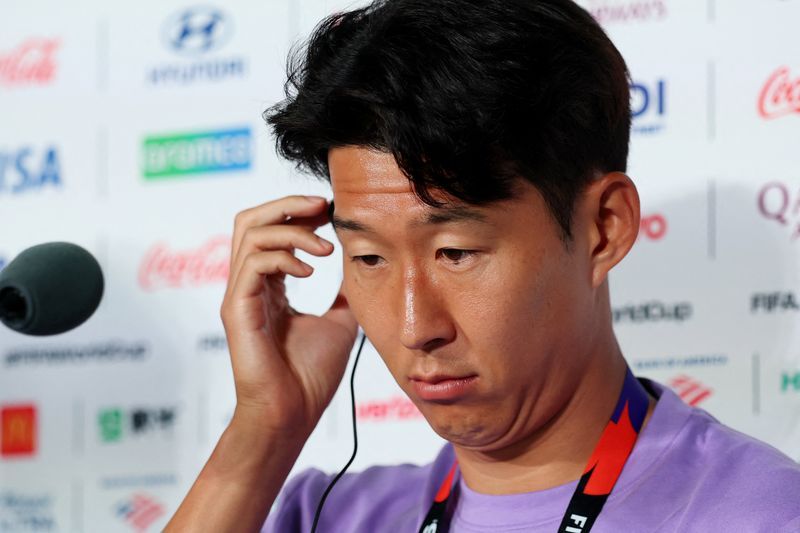
The South Korea national football team has withdrawn from media responsibilities during the World Cup in protest at alleged mockery directed at captain Son Heung-min regarding his military service obligations, according to reports emerging from their training base in Guadalajara. The controversy centres on remarks captured on an open microphone by journalists covering the squad's preparations, with the comments reportedly made while the 33-year-old Tottenham Hotspur forward trained separately from his teammates during a scheduled session.
The incident has reignited tensions around South Korea's mandatory military conscription system, a deeply embedded institutional requirement that shapes the lives of millions of its male citizens. All able-bodied men in the country must complete approximately 21 months of military service, a foundational element of the nation's defence strategy against potential aggression from North Korea. This obligation represents far more than a bureaucratic procedure—it carries substantial cultural, patriotic, and social significance within South Korean society, making public ridicule of anyone's service completion particularly sensitive and divisive.
The controversy gains additional significance because Son and his teammates qualified for a rare military service exemption by securing gold at the 2018 Asian Games, an achievement that granted them a formal reprieve from this national duty. Under South Korea's system, exceptional athletic accomplishments at major international competitions—particularly Olympic medals or Asian Games victories—can exempt individuals from conscription, recognising the global prestige these athletes bring to their nation. Son's 2018 gold medal thus represented a pinnacle moment that shielded him from years of mandatory service, a benefit he had already earned through earlier achievement.
Yet Son chose to voluntarily complete military training regardless, a decision that underscores his personal commitment to honouring national obligations. In 2020, during a period when the Premier League had suspended operations due to the COVID-19 pandemic, the forward underwent three weeks of intensive basic military training at a facility in South Korea. This training proved far from ceremonial—participants endured rigorous physical conditioning, live-fire exercises, extended tactical marches covering 30 kilometres, and exposure to tear gas, subjecting recruits to conditions that mirror actual combat scenarios. Son's willingness to undertake this demanding programme voluntarily, despite his exemption status, demonstrated a patriotic gesture that many South Koreans viewed with respect.
The Korea Football Association issued a formal statement expressing deep regret over the alleged conduct of media representatives at the training facility, characterising their remarks as inappropriate and damaging to team morale during a critical international competition. The association framed the incident as particularly troubling given the squad's mission to represent their nation with distinction on football's grandest stage. The KFA's response emphasised that the athletes are investing considerable effort to justify the faith and support of the South Korean public, making internal undermining of that effort especially corrosive to team cohesion and mental preparation.
The boycott represents an extraordinary measure reflecting the intensity of feeling within the squad about the alleged disrespect. Rather than engage in conventional post-training interviews and scheduled media access, the players have collectively withdrawn from optional media interactions, a decision with serious implications for South Korean sports journalism and public engagement with the national team during the tournament. This action signals that the players regard the incident not as a minor passing comment but as a fundamental breach of the respect and trust that should exist between a national squad and their domestic media.
The association has explicitly requested that all media outlets demonstrate greater thoughtfulness and professionalism in their coverage of the team, appealing for what it terms a "responsible attitude" towards squad members during competition. The KFA has committed to prioritising protection of players and establishing conditions that foster healthy media relationships going forward, implying that future access to the squad may depend on demonstrated respect and professionalism from journalists seeking interviews or background information.
However, the boycott faces practical constraints arising from international football's governing structure. FIFA, world football's regulatory body, has mandated specific media obligations that national teams must fulfil during World Cup tournaments, obligations that override any domestic dispute or team preference to limit access. Consequently, while South Korea players can restrict voluntary media participation, they cannot entirely avoid the mandatory FIFA-required press conferences and broadcast appearances that form part of tournament operations, creating an awkward compromise between the team's protest and their legal obligations to the governing body.
The incident carries broader implications for how sports media in South Korea approaches sensitive national topics, particularly military service, which remains a contentious and emotionally charged subject despite its compulsory status. Public figures who complete service often become targets of criticism from various quarters, and athletes in particular face scrutiny over whether they truly fulfilled their obligations or received preferential treatment. The decision by journalists to mock Son's service completion—especially given his voluntary nature of that training—suggests either profound insensitivity to the national significance of military service or a deliberate attempt to create controversy for engagement purposes.
The timing of the controversy, occurring during World Cup preparation when psychological focus and team unity are paramount, adds to its disruptiveness. Elite athletes operating at the highest levels of international sport require stable mental environments to perform optimally, and internally generated crises stemming from perceived disrespect from home media can destabilise preparation and confidence. The South Korea squad's decision to boycott represents both a protest against the specific remarks and a broader assertion of their right to be treated with the professional dignity expected for representatives carrying national responsibility on the world stage.