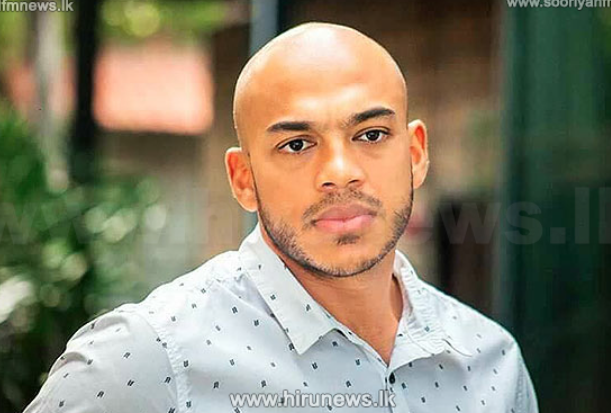
Sri Lanka's anti-corruption authorities have arrested Yoshitha Rajapaksa, the 38-year-old son of former president Mahinda Rajapaksa, marking another significant development in the country's sweeping crackdown on the once-dominant political family. The Bribery Commission confirmed the arrest on Wednesday and said the naval officer faces charges related to obtaining government-funded overseas training without possessing the required qualifications for advancement. The detention comes as part of an intensified campaign against graft that has gathered momentum since President Anura Kumara Dissanayake's electoral victory in 2024, which was substantially built on pledges to dismantle entrenched corruption within the nation's political establishment.
Yoshitha Rajapaksa stands accused of leveraging state resources to pursue military education abroad, specifically attending a prestigious programme at Dartmouth, Britain's renowned naval college, during his father's presidency between 2005 and 2015. The anti-corruption commission contends that he ascended through military ranks without meeting minimum qualification standards, subsequently securing government sponsorship for his international training course. According to the statement released by the commission, investigators determined that he received assistance in recruitment and was aided and abetted in his efforts to access state-funded educational opportunities to which he would not otherwise have been entitled. Critics have long argued that his attendance at Dartmouth displaced a qualified naval cadet whose merit-based selection should have secured the placement.
Prior to his formal detention this week, Rajapaksa had already been embroiled in multiple legal complications that severely restricted his movements and financial freedom. He was subject to an enforceable foreign travel ban and faced investigation in connection with two separate money-laundering allegations. While awaiting trial in these cases, he had been released on bail, a status that has now been superseded by his arrest on the fresh charges. This layering of legal jeopardy reflects the growing complexity of the prosecutorial strategy targeting members of the Rajapaksa household and their associates, suggesting authorities are building comprehensive cases rather than pursuing isolated incidents.
The financial irregularities ensnaring Rajapaksa extend beyond his overseas training to encompass his acquisition of residential property during his father's time in office. Investigators questioned him about the source of funds used to purchase a house, a transaction he struggled to adequately explain through legitimate channels. In his defence, Rajapaksa offered an implausible narrative, claiming he had raised the necessary capital by selling precious gemstones allegedly gifted to him by his grandaunt. However, this explanation collapsed when the elderly relative acknowledged she could not herself account for how she had obtained the valuable stones in the first place, rendering his justification circular and unconvincing. Additionally, he faces separate criminal prosecution related to his involvement in acquiring a television network, an enterprise that has also drawn scrutiny from investigators probing potential illicit asset accumulation.
The broader context of the Rajapaksa family's legal predicament reflects the dramatic reversal in fortunes experienced by one of Sri Lanka's most formidable political dynasties. For decades, the Rajapaksas wielded extraordinary influence across multiple state institutions and exercised near-impunity from accountability mechanisms. Mahinda Rajapaksa's leadership, particularly his military victory in the civil war against Tamil separatists, had cemented the family's grip on national politics. However, his younger brother Gotabaya Rajapaksa's presidency, which commenced in 2019, proved catastrophic for both the nation and the family's reputation. An economic collapse of unprecedented severity triggered mass public uprising in 2022, forcing Gotabaya to flee the country and resign from office. This dramatic fall from power created the political opening that subsequent administrations have exploited to pursue long-dormant corruption inquiries.
The current momentum behind prosecutions targeting the Rajapaksa network represents a fundamental shift in Sri Lanka's governance culture, at least under the present dispensation. President Dissanayake's mandate explicitly centred on eliminating the corrupt practices that citizens believe had pervaded state institutions under previous administrations. The succession of arrests and indictments involving family members and their associates demonstrates that the new government is translating campaign rhetoric into concrete legal action. Multiple figures connected to the Rajapaksas have been charged with diverse offences spanning fraud, graft, and even homicide, though these cases remain in various stages of the judicial process with verdicts still pending.
Gotabaya Rajapaksa himself has recently become the subject of intensified legal pressure. He was placed under a foreign travel restriction earlier this month by authorities determined to prevent his departure during ongoing investigations. Most significantly, Gotabaya sought court intervention to shield himself from potential arrest in connection with his government's handling of the 2019 Easter Sunday bombings, a series of coordinated attacks on churches and hotels that claimed 279 lives. His efforts to preemptively forestall prosecution for alleged security failures reflect the precarious position now occupied by members of the former ruling family. The contrast between their current vulnerability and their erstwhile dominance underscores the turbulent nature of Sri Lankan politics, where political fortunes can shift with remarkable velocity.
For Malaysia and other Southeast Asian nations observing these developments, the Rajapaksa trajectory offers instructive lessons about the fragility of personalised governance models and the potential consequences of untrammelled executive power. The family's ability to operate with apparent impunity for so long, only to face cascading legal problems following a change in electoral fortune, demonstrates the inadequacy of institutional checks when concentrated power lacks genuine restraint. Sri Lanka's experience illustrates how economic mismanagement combined with perceived corruption can swiftly mobilise public sentiment and create space for alternative political movements to emerge and articulate reform agendas. For regional policymakers concerned with democratic consolidation and institutional integrity, the Sri Lankan case provides cautionary evidence about the long-term sustainability of systems built primarily on personality and patronage networks rather than robust legal and administrative frameworks that function independently of individual officeholders.
The unfolding legal reckoning with the Rajapaksas also reflects broader patterns visible across South Asia, where transitions of political power have increasingly prompted retrospective investigations of predecessors' alleged misdeeds. Unlike in previous decades when peaceful handovers of authority typically involved implicit agreements to overlook prior misconduct, contemporary politics in the region demonstrates reduced tolerance for selective amnesia regarding graft and abuse. This shifting dynamic, while potentially serving accountability objectives, also creates incentives for outgoing administrations to cling to power through extralegal means or otherwise entrench themselves against future prosecution. Sri Lanka has already experienced this phenomenon, with the Rajapaksas' desperation to retain influence contributing to decisions that ultimately destroyed public confidence and triggered the 2022 uprising.