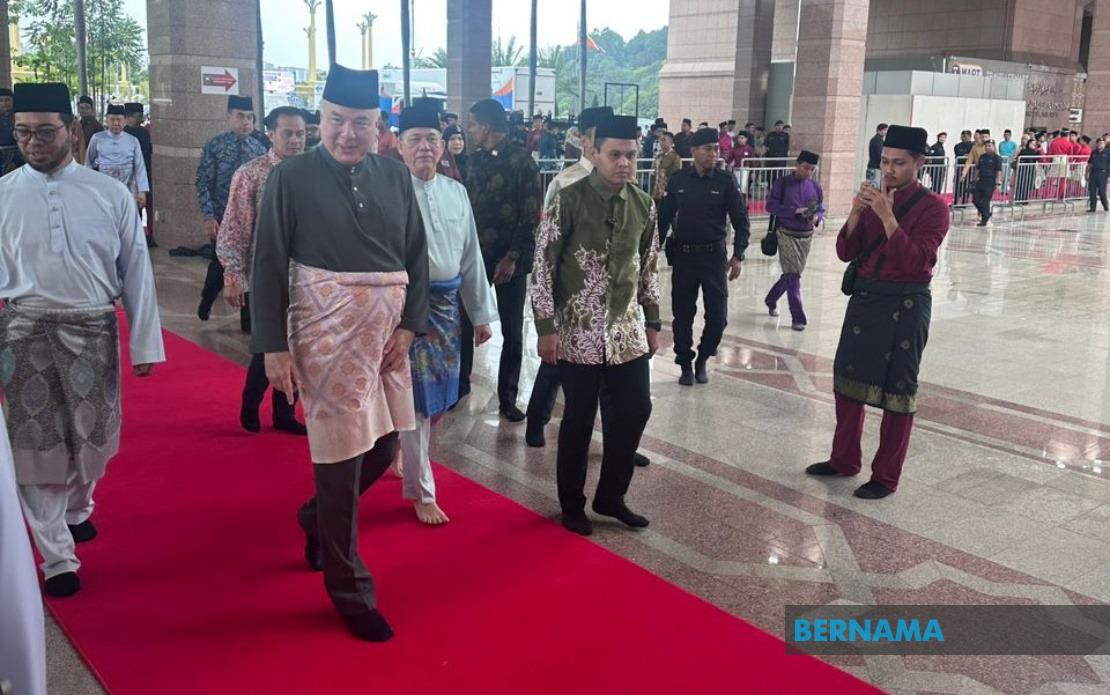
Speaking at the National Level Maal Hijrah 1448 Celebration in Putrajaya on June 17, Deputy Yang di-Pertuan Agong Sultan Nazrin Shah delivered a forthright critique of contemporary leadership styles, warning that nations suffer grievously when those in power allow impulse and emotion to override careful deliberation. His message carried particular resonance given Malaysia's complex political landscape, where coalition governments and competing interests frequently test the stability of decision-making processes at the highest levels.
The Sultan of Perak articulated a core concern facing modern administrations: the tendency for leaders to prioritise immediate gains and personal preferences rather than weighing long-term consequences for the broader population. When hasty choices are made without thorough analysis, he emphasised, the resulting damage ultimately falls upon ordinary citizens who bear financial and social burdens they did not create. This observation speaks to anxieties across Southeast Asia about governance quality and accountability in an era of rapid change and competing pressures.
Central to Sultan Nazrin's address was his assertion that successful leadership demands three essential qualities: composure in facing complex issues, intellectual openness to diverse perspectives, and prudent caution when evaluating options. These traits, he suggested, should form the foundation of how senior officials approach matters affecting millions of people. The emphasis on well-informed judgment rather than instinctive reaction challenges a pattern observed in regional politics where popular sentiment and media cycles sometimes outpace substantive policy development.
Drawing from Islamic history, the Sultan referenced Prophet Muhammad's appointment of Abdullah bin Uraiqit as a guide during the Hijrah despite the man's non-Muslim status at that time. This example underscores a principle directly applicable to modern Malaysia's multiethnic context: competence, integrity, and reliability transcend religious identity. The Ruler used this historical episode to advocate for meritocratic practices in governance and institutional appointments—a message relevant to recurring debates about hiring practices and diversity in Malaysian public administration.
Beyond immediate decision-making, Sultan Nazrin emphasised that nations distinguishing themselves globally are not those resting on historical laurels but those extracting actionable wisdom from past experiences to construct superior futures. This forward-looking perspective carries implications for Malaysia's positioning amid regional economic competition and geopolitical shifts. A nation that learns systematically from successes and failures positions itself to navigate challenges more effectively than one trapped in cyclical patterns.
A particularly striking element of the royal address focused on the concept of sacrifice as foundational to national achievement. The Sultan expressed concern that the willingness to subordinate personal comfort and interest for collective good—once central to nation-building movements—has become increasingly rare, sometimes manifesting only as hollow rhetoric. This observation resonates across Southeast Asia, where development requires sustained investment and delayed gratification from populations frequently tempted by short-term consumption or populist promises.
Sultan Nazrin articulated that authentic sacrifice demands more than passive acceptance of loss; it requires active courage, disciplined perseverance, and genuine commitment to purposes transcending individual benefit. For Malaysia's continued stability amid demographic changes, religious diversity, and economic pressures, cultivating such a spirit throughout the population becomes strategically vital. The Sultan's warning that this quality grows rarer suggests urgency in how institutional and community leaders model and communicate the value of collective commitment.
The address also drew instructive parallels to the Medina Charter, a historical agreement uniting diverse populations through tolerance and equitable governance. Sultan Nazrin highlighted how the Charter's success derived from combining ethnic and religious pluralism with just, wise administration. This framework speaks directly to Malaysia's foundational social contract and the challenges inherent in maintaining multiracial harmony as competing interests vie for prominence. The lesson suggests that diversity itself poses no insurmountable obstacle if leadership remains fair-minded and principled.
Unity and cooperation, Sultan Nazrin stressed, represent fundamental strengths for advancing not merely Islamic civilisation but any complex society seeking progress and resilience. The emphasis on mutual respect across ethnic, cultural, and religious boundaries—supported by competent governance—identifies what separates functional plural societies from those fractured by divisiveness. For Malaysia, where communal cohesion directly affects economic performance and social stability, this message carries practical weight beyond religious commemoration.
Furthermore, the Sultan reframed the significance of Maal Hijrah observance itself, moving beyond calendar commemoration or nostalgic reflection toward purposeful self-examination. He positioned the celebration as an opportunity for introspection about individual and collective failings, a moment to acknowledge how worldly preoccupations can obscure judgment and priorities. This interpretation transforms a religious observance into a vehicle for institutional and personal accountability—a perspective that transcends faith communities while resonating with secular governance challenges.
The presence of Deputy Prime Minister Datuk Seri Fadillah Yusof and Minister in the Prime Minister's Department (Religious Affairs) Dr Zulkifli Hasan signified official endorsement of the Sultan's themes, suggesting receptiveness within government to critiques of impulsive governance. The approximately 5,000 attendees at the Putra Mosque event demonstrated the public platform available for articulating leadership principles through religious and cultural channels.
Sultan Nazrin's address ultimately constructs an integrated argument: effective governance requires emotional discipline, strategic thinking, meritocratic inclusion, commitment to collective welfare, and maintenance of societal unity. Each element reinforces the others, forming a coherent philosophy applicable across diverse national contexts. For Malaysia specifically, the emphasis on thoughtful leadership and sacrifice resonates amid ongoing debates about corruption, institutional accountability, and equitable development.
The speech's implications extend beyond ceremonial remarks, suggesting a senior constitutional figure's concerns about governance trajectories. His call for leaders to embrace wisdom and prudence over impulse implicitly critiques contemporary political tendencies while proposing historically validated alternatives. Whether such calls influence policy and behavioural patterns among decision-makers remains to be observed, but the articulation of such principles from the Perak Sultan provides an important reference point for public discourse about leadership standards and national expectations.