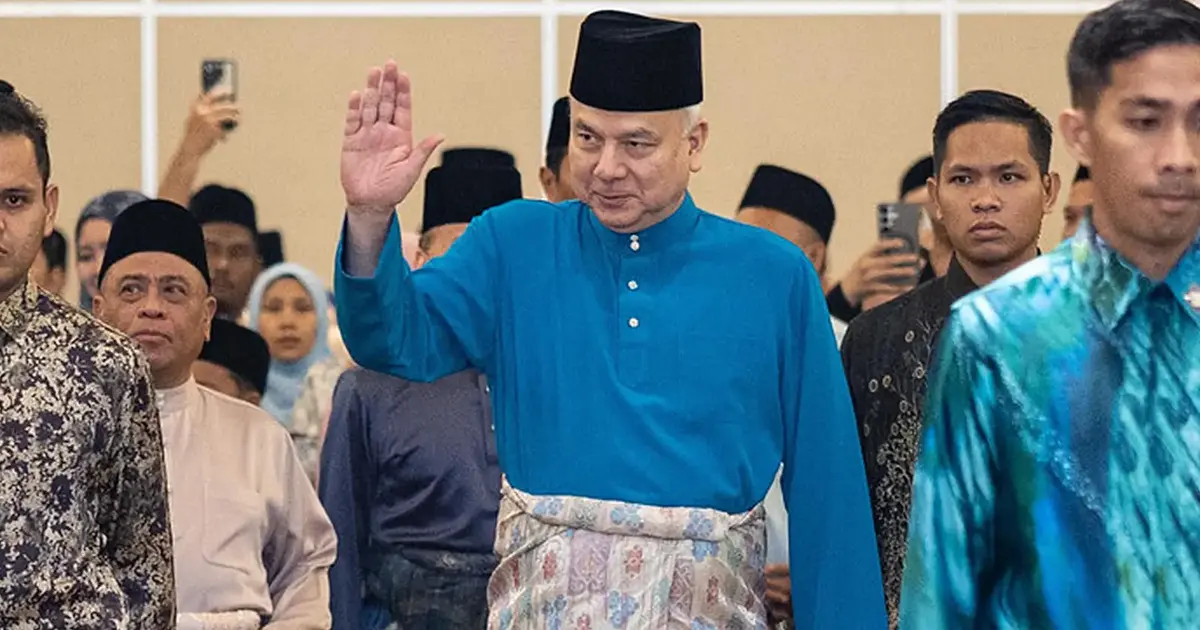
Sultan Nazrin Shah of Perak has issued a pointed reminder to the country's leadership to resist the temptation of making impulsive, emotionally charged decisions when steering the nation's course. The Deputy Agong's counsel comes at a time when Malaysian politics continues to navigate complex challenges requiring measured judgment and careful deliberation. His intervention underscores the growing concern among the country's constitutional monarchy about the quality of decision-making at the highest levels of government.
The Perak monarch's message fundamentally centres on the premise that sustainable national development cannot be achieved through snap decisions driven by immediate passions or personal grievances. Rather, effective governance demands a temperate approach where leaders weigh consequences carefully and prioritise the collective interest over momentary impulses. This admonition reflects traditional wisdom within Malaysia's constitutional framework, where the institutions of royalty have historically served as guardians of stability and measured governance.
Crucially, Sultan Nazrin articulated that a nation's prosperity rests on foundations far deeper than any single decision or policy initiative. According to his perspective, the willingness of ordinary Malaysians to cooperate with one another constitutes the bedrock upon which all sustainable progress is built. Without this fundamental cooperative spirit permeating society from top to bottom, even the most brilliantly conceived policies risk failure if the people lack the cohesion needed to implement them effectively.
The emphasis on mutual respect within the population reveals an awareness that Malaysia's diversity—comprising multiple ethnic groups, religions, and cultural traditions—requires constant nurturing of harmonious coexistence. Sultan Nazrin's comments suggest that leaders cannot take for granted the delicate social compact that has, for the most part, held the federation together since independence. When leadership becomes reactive and emotionally volatile, it risks destabilising the intricate balance of communal tolerance that Malaysians have painstakingly maintained.
For Southeast Asia more broadly, Sultan Nazrin's intervention carries significance beyond Malaysia's borders. Regional stability increasingly depends on neighbouring countries maintaining internal cohesion and avoiding governance crises that might spill across frontiers. A Malaysia characterised by erratic decision-making at the apex would inevitably create ripple effects throughout the region, affecting trade relationships, security arrangements, and the broader architecture of regional cooperation that underpins ASEAN's functioning.
The Deputy Agong's counsel also resonates with longstanding concerns about the quality of political discourse in Malaysia. When leaders make decisions driven by faction, personality conflicts, or the heat of momentary controversy, they often fail to consider broader implications for institutional health, economic stability, or social trust. Such impulsive governance typically leaves unintended consequences that require years to remedy, meanwhile eroding public confidence in the state's capacity to manage affairs competently.
Historically, Malaysia's constitutional monarchs have played a crucial stabilising role precisely by embodying this principle of thoughtful deliberation above partisan emotion. Sultan Nazrin's message implicitly reminds contemporary political leaders that they operate within a system where the Crown retains significant moral authority to comment on governance standards. This constitutional reality means his words carry weight beyond mere commentary; they represent a formal articulation of expectations regarding how leaders ought to conduct themselves.
The underlying concern in the Deputy Agong's statement points to observable patterns in Malaysian politics where personality-driven conflicts have sometimes overridden institutional considerations or policy merit. When leaders allow personal animosity, factional competition, or ideological rigidity to drive major decisions, the machinery of government often suffers. Bureaucratic effectiveness diminishes, investor confidence wavers, and the general population becomes cynical about whether their interests genuinely guide policy formation.
Sultan Nazrin's invocation of harmony and mutual respect also addresses an era where polarisation on various issues—from religion to ethnicity to partisan politics—has intensified Malaysian public discourse. Leaders who exploit these divisions for short-term political advantage may achieve immediate tactical victories, yet they accumulate long-term costs to social stability that eventually constrain everyone's options. By contrast, leadership that deliberately works to bridge divides and foster cooperation creates an enabling environment where diverse groups can coexist productively.
The practical implications for Malaysia's political establishment are substantial. Senior government officials, opposition leaders, and those aspiring to higher office would do well to heed the Deputy Agong's counsel about avoiding emotionally-driven decisions. This means investing in consultation, considering multiple perspectives, and resisting the urge to react impulsively to provocations. It suggests that measured responses to controversy often prove more effective than scorched-earth confrontation.
Moreover, Sultan Nazrin's emphasis on cooperation and mutual respect provides a counterweight to the adversarial model of politics increasingly dominant in Malaysian discourse. While healthy competition between political parties remains essential to democratic function, that competition need not preclude cooperation on matters of genuine national interest. Leaders who can differentiate between legitimate partisan disagreement and unnecessary personal animus serve the nation more effectively than those who conflate the two.
Ultimately, the Deputy Agong's message represents an assertion that Malaysia's success depends less on any individual leader's brilliance than on the broader health of its civic institutions and the quality of relationships binding its diverse population together. When leaders make rash, emotional decisions, they risk fracturing those relationships and weakening those institutions. Conversely, leaders who demonstrate composure, thoughtfulness, and genuine commitment to building consensus strengthen the very foundations upon which national development rests.