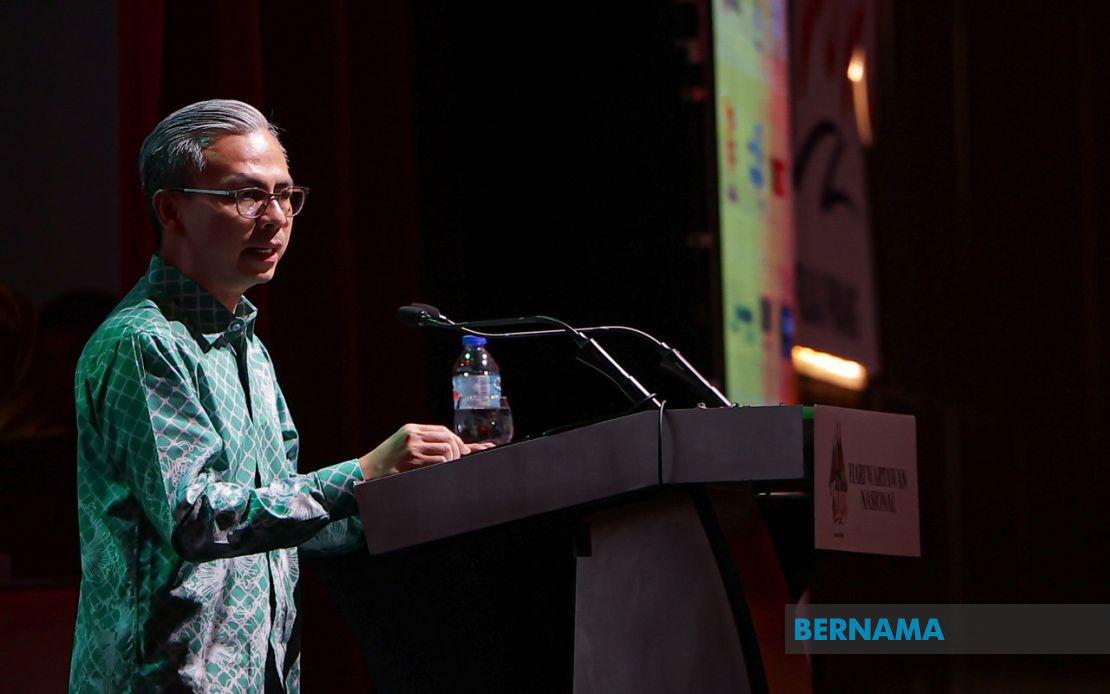
Telekom Malaysia has stepped forward as the newest strategic partner of Tabung Kasih@HAWANA, pledging RM500,000 through a corporate social responsibility initiative designed to strengthen financial support for media practitioners across the nation. The announcement was made by Communications Minister Datuk Fahmi Fadzil during the National Journalists' Day celebrations in Butterworth on June 20, marking a significant show of corporate commitment to the welfare of Malaysia's journalism community during a period of considerable industry strain.
The welfare fund, which commenced operations in April 2023, has already distributed RM2.26 million in assistance to 773 media personnel nationwide. Tabung Kasih@HAWANA represents a crucial safety net for journalists and former members of the profession who face financial hardship, and Telekom Malaysia's contribution underscores the growing recognition among major corporations that the health of Malaysia's media ecosystem requires active institutional support beyond regulatory frameworks.
Fahmi expressed appreciation for Telekom Malaysia's commitment, framing the contribution as exemplary of the kind of engagement the government hopes to encourage among other major corporations and government-linked companies. He articulated a broader vision where private sector entities recognise their stake in maintaining a robust and financially sustainable media landscape, viewing such support not merely as charitable giving but as an investment in maintaining credible journalism and informed public discourse.
The timing of this partnership announcement carries particular significance given the substantial headwinds currently buffeting Malaysia's media industry. Advertising expenditure, traditionally the lifeblood of news organisations, has contracted dramatically in recent years, declining from RM4.5 billion annually to approximately RM2 billion yearly. This structural shift reflects broader global trends affecting media economics but carries acute implications for Malaysia's news organisations, many of which have struggled to adapt their business models to a radically altered media consumption landscape dominated by digital platforms and social media.
Fahmi seized the opportunity to appeal directly to the corporate sector, urging companies and government-linked entities to increase their media placements as a tangible means of supporting the industry. This message reflects an implicit acknowledgment that government intervention through welfare funds, while necessary, cannot alone address the fundamental economic pressures constraining news organisations. Instead, sustained recovery requires that advertisers and marketing-focused entities view allocating budgets to traditional media as both a business necessity and a form of industry stabilisation.
Beyond immediate financial support, the Communications Ministry has signalled its backing for Project Sigma 2.0, a skills development initiative spearheaded by Google Malaysia in collaboration with the Malaysian Media Council and the Malaysian Press Institute. This programme aims to equip media personnel with enhanced capabilities in technology and artificial intelligence, recognising that the industry's long-term viability depends on practitioners' ability to navigate and leverage technological change rather than being overwhelmed by it.
The Butterworth event also witnessed the signing of a Memorandum of Understanding between Bernama, Malaysia's national news agency, and TATOLI, Timor-Leste's national news agency. This bilateral arrangement represents a tangible expression of commitment to strengthening media cooperation across Southeast Asia and reflects Malaysia's position as a regional convenor of media institutions. The timing carries symbolic weight given Timor-Leste's recent accession as ASEAN's eleventh member state during the 47th ASEAN Summit held in Kuala Lumpur, with Fahmi emphasising how the media collaboration embodies ASEAN's broader commitment to regional inclusivity and prosperity.
The expansion of regional media ties through such arrangements serves multiple purposes within Southeast Asia's evolving geopolitical context. Enhanced information exchange among national news agencies strengthens the region's capacity to present coherent narratives about ASEAN affairs while establishing frameworks for cooperative journalism practices and professional standards. For Malaysian media institutions, deeper engagement with neighbouring countries' news organisations offers pathways to expand coverage reach and diversify content sources, potentially offsetting some revenue constraints by positioning Malaysian outlets as primary sources for regional journalism.
Fahmi's remarks concerning media integrity as the foundation for credibility, articulated through the National Journalists' Day theme, underscore an important recognition within government circles that media sustainability concerns cannot be divorced from questions of editorial standards and professional conduct. The implicit message suggests that corporate partners like Telekom Malaysia are investing in an industry where journalism continues to meet professional benchmarks and serves the public interest, creating positive feedback loops where quality journalism attracts audience engagement and advertiser interest.
The partnership announcement also reflects evolving corporate understandings of corporate social responsibility in Malaysia, moving beyond conventional philanthropic activities toward strategic sector engagement. By supporting Tabung Kasih@HAWANA and positioning itself as invested in media practitioners' welfare, Telekom Malaysia cultivates reputational benefits while simultaneously addressing a genuine sectoral challenge. This model, if replicated across Malaysia's corporate landscape, could provide the sustained funding streams necessary to complement welfare programmes and support industry adaptation initiatives.
Looking forward, the challenge facing Malaysian policymakers and corporate leaders involves scaling these initiatives substantially. While RM500,000 contributions are meaningful and the expansion of welfare disbursements demonstrates impact, the structural economic pressures affecting media organisations require proportionally larger commitments alongside complementary policy measures. These might include regulatory frameworks encouraging digital advertising allocations to local media, tax incentives for corporate media spending, and accelerated skills development programmes to ensure Malaysia's journalism community remains competitive and technologically sophisticated.
The National Journalists' Day celebration, attended by Prime Minister Datuk Seri Anwar Ibrahim and other senior officials, signalled top-level government commitment to media sector interests. This political backing, combined with concrete corporate action from companies like Telekom Malaysia, suggests an emerging consensus that supporting Malaysia's media ecosystem represents a legitimate policy priority rather than merely incidental corporate generosity. For journalists and news organisations navigating a challenging period, such institutional recognition offers hope that industry recovery and sustainability remain viable through coordinated efforts spanning corporate, governmental and professional bodies.
%22%2F%3E%3C%2Fpattern%3E%3C%2Fdefs%3E%3Crect%20width%3D%22100%25%22%20height%3D%22100%25%22%20fill%3D%22url(%23ph43s4kg)%22%2F%3E%3Crect%20width%3D%22100%25%22%20height%3D%22100%25%22%20fill%3D%22url(%23ph43s4kp)%22%2F%3E%3Ctext%20x%3D%2250%25%22%20y%3D%2250%25%22%20text-anchor%3D%22middle%22%20dominant-baseline%3D%22central%22%20fill%3D%22rgba(255%2C255%2C255%2C0.95)%22%20font-family%3D%22Georgia%2C%20'Times%20New%20Roman'%2C%20serif%22%20font-weight%3D%22700%22%20font-size%3D%22136%22%20letter-spacing%3D%22-0.02em%22%3ERonaldinho%3C%2Ftext%3E%3C%2Fsvg%3E)
%22%2F%3E%3C%2Fpattern%3E%3C%2Fdefs%3E%3Crect%20width%3D%22100%25%22%20height%3D%22100%25%22%20fill%3D%22url(%23ph4tn5og)%22%2F%3E%3Crect%20width%3D%22100%25%22%20height%3D%22100%25%22%20fill%3D%22url(%23ph4tn5op)%22%2F%3E%3Ctext%20x%3D%2250%25%22%20y%3D%2250%25%22%20text-anchor%3D%22middle%22%20dominant-baseline%3D%22central%22%20fill%3D%22rgba(255%2C255%2C255%2C0.95)%22%20font-family%3D%22Georgia%2C%20'Times%20New%20Roman'%2C%20serif%22%20font-weight%3D%22700%22%20font-size%3D%22272%22%20letter-spacing%3D%22-0.02em%22%3EJohor%3C%2Ftext%3E%3C%2Fsvg%3E)