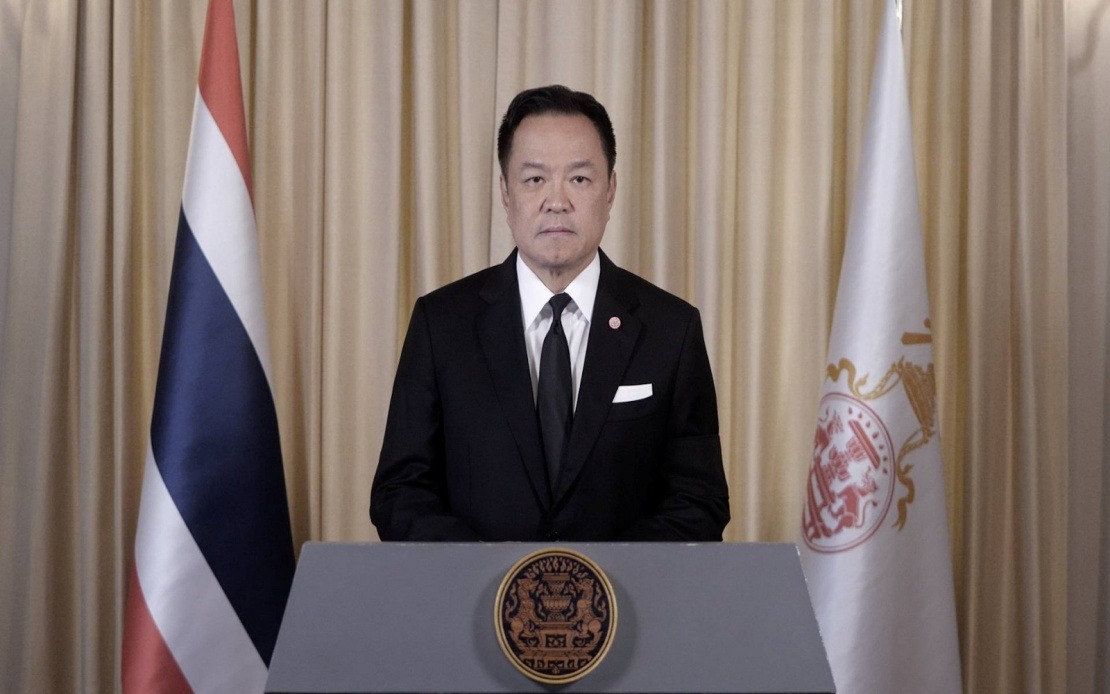
Thailand's leadership has signalled confidence that a breakthrough in the geopolitical standoff between the United States and Iran could deliver meaningful economic relief across the region, even as the Southeast Asian nation braces itself for ongoing global uncertainties. Prime Minister Anutin Charnvirakul stated on Monday that any resolution to tensions in West Asia represents a positive development that would help ease multiple global crises and provide essential support for economic stability. The Thai government, he suggested, remains well positioned to navigate external shocks through proactive planning rather than ad-hoc crisis management.
The optimism stems from US President Donald Trump's announcement on Sunday regarding a finalised agreement with Iran, which includes provisions to reopen the Strait of Hormuz and withdraw a US naval blockade. This development carries significant implications for energy security and global trade flows, both critical concerns for import-dependent Southeast Asian economies like Thailand. The blockade and resulting tensions have created persistent uncertainty in global energy markets, keeping oil prices elevated and disrupting shipping routes that many regional economies depend upon.
Deputy Prime Minister and Finance Minister Ekniti Nitithanprapas reinforced the government's perspective, characterising an end to the conflict as beneficial for both global and Thai economic prospects. He specifically highlighted the potential for moderation in energy prices, which have remained stubbornly high due to Middle East tensions. For Thailand, an economy heavily reliant on imported oil and natural gas, any sustained decline in energy costs would translate into lower production expenses across manufacturing and transportation sectors, ultimately benefiting consumers through reduced inflation pressures.
The Thai government's measured assessment reflects a sophisticated understanding of how regional geopolitical events ripple through global supply chains and inflation dynamics. Thailand has experienced considerable disruption to its supply networks over recent years, ranging from pandemic-related shutdowns to port congestions and shipping delays. Officials argue that the nation has developed substantial adaptive capacity, implementing diversification strategies and building resilience into critical supply relationships. Rather than reacting to daily developments in the news cycle, government officials emphasise long-term strategic planning that anticipates and absorbs external shocks.
Ekniti indicated that authorities would continue monitoring inflationary pressures and cost-of-living impacts on households and small businesses, suggesting that improved global conditions could support economic growth exceeding current forecasts. Thailand's economy has faced headwinds from elevated energy costs, which feed into transportation expenses, manufacturing input costs, and ultimately consumer prices for essential goods. A sustained reduction in oil prices stemming from a resolved Iran-US conflict would provide policymakers with additional policy flexibility and breathing room to address other structural economic challenges.
However, the finance minister made clear that Thailand's commitment to its energy transition programme remains unaffected by expectations of lower oil prices. The government plans to proceed with a 200-billion-baht energy transition initiative designed to reduce the nation's dependence on imported fossil fuels. This dual approach—welcoming near-term relief from lower energy prices while investing in long-term structural energy independence—reflects a pragmatic recognition that geopolitical tensions could resurge and that Thailand's economic resilience ultimately depends on diversifying its energy sources.
Thailand's position parallels broader Southeast Asian concerns about energy security and economic vulnerability. The region as a whole remains deeply exposed to Middle East dynamics, with most nations dependent on imported energy and vulnerable to supply disruptions or price spikes. A sustained Iran-US agreement could significantly alter the risk calculus for regional economies, potentially lowering insurance and financing costs for long-haul shipping while reducing the geopolitical risk premium embedded in energy prices.
The Thai government's cautious optimism also reflects awareness that energy price moderation, while welcome, does not automatically resolve deeper inflationary pressures. Global supply chain normalisation remains incomplete, wage pressures persist in some sectors, and domestic fiscal pressures continue in several Southeast Asian economies. Nevertheless, lower energy costs would provide a meaningful tailwind, particularly for export-dependent manufacturing sectors that form the backbone of Thailand's economy.
Looking forward, Thai officials appear to be signalling that they view the reported US-Iran agreement as a genuine turning point rather than a temporary reprieve in ongoing tensions. This assessment carries implications for business confidence, investment planning, and consumer sentiment across Thailand and the broader region. If the ceasefire holds and tensions genuinely de-escalate, regional economies could benefit from lower risk premiums, improved financing conditions, and stronger demand growth as businesses emerge from prolonged uncertainty.
The Thai government's framing of the ceasefire as broadly positive for global economic stability suggests confidence that mechanisms for resolving disputes, however imperfect, ultimately serve regional and global interests. For Malaysian and other Southeast Asian policymakers monitoring these developments, Thailand's experience and policy responses offer relevant benchmarks for managing external shocks while pursuing long-term structural reforms in energy and supply chain resilience.