Thailand's approach to cannabis regulation is entering a critical phase as lawmakers confront a mounting tension between public health safeguards and the interests of cultivators and businesses operating within an increasingly murky legal landscape. The House Public Health Committee convened on June 18 to examine whether cannabis should be reclassified as a controlled narcotic, reflecting deepening anxieties about the consequences of the nation's 2022 liberalisation decision and the proliferation of largely unmonitored commercial activity.
The committee hearing, presided over by Sakoltee Phattiyakul, assembled a diverse coalition of medical professionals, government agencies, academics and civil society representatives whose perspectives revealed fundamental disagreements over how Thailand should structure its cannabis market. The Department of Thai Traditional and Alternative Medicine, the Food and Drug Administration, health networks and anti-drug advocacy groups all contributed to a discussion that underscored the complexity of balancing competing interests in a nation attempting to modernise its drug policy without abandoning public health principles.
Thailand's cannabis framework has evolved considerably since June 2022, when the substance was removed from the narcotics list, marking a significant shift in Southeast Asian drug policy. The Department of Thai Traditional and Alternative Medicine currently regulates cannabis as a controlled herb under the Protection and Promotion of Thai Traditional Medicine Wisdom Act 1999. However, this arrangement has proven insufficient to contain the proliferation of sales channels and cultivation operations that have emerged in the intervening years. In response, the Public Health Ministry issued three additional regulations in June 2025 aimed at controlling research, sales, processing and exports in accordance with international standards, yet enforcement challenges persist.
Dr Tewan Thaneerat, deputy director-general of the Department of Thai Traditional and Alternative Medicine, acknowledged that concerns have mounted steadily since decriminalisation. Recognising the inadequacy of the current regulatory framework, government agencies are collaborating on a comprehensive cannabis and hemp bill intended to provide dedicated legal structures. The draft legislation was previously submitted to Cabinet under a predecessor administration but failed to advance before Parliament was dissolved. The current Public Health Ministry remains committed to progressing the bill, which is undergoing public consultation expected to conclude by late July before resubmission to Cabinet.
Proponents of tightening restrictions argue that Thailand's current system contains significant vulnerabilities that undermine both public health and legitimate business. Ekkapop Sittiwantana, deputy chairman of the House Public Health Committee from the People's Party, contends that cannabis should temporarily return to narcotic classification until a dedicated law is enacted. He points to widespread unregistered cultivation and informal direct sales as evidence of loopholes being exploited by operators operating in regulatory grey zones. Establishing proper plant registration systems, he suggests, could eliminate gaps allowing questionable actors to escape scrutiny.
Associate Professor Smith Srisont, representing a coalition of medical practitioners, academics and civic organisations focused on drug-related harms, reinforced this position by questioning the original decision to remove cannabis from the Narcotics Code. While acknowledging that cannabis extracts containing more than 0.2 per cent THC remain classified as narcotics, he emphasised that liberalisation has demonstrably expanded access in practice. He advocated for a two-stage approach: immediate return to narcotic status, followed by enactment of a separate regulatory framework specifically designed for cannabis. This sequencing, he argued, would provide breathing room for proper policy development while preventing uncontrolled proliferation. Professor Srisont also highlighted a structural loophole whereby cannabis flowers classified as controlled herbs are subject to restrictions, yet other plant components remain outside criminal controls when cultivated.
The Food and Drug Administration outlined its current oversight mechanisms, emphasising that herbal medicines intended for disease prevention and treatment remain subject to rigorous supervision. The agency's licensing system encompasses three primary domains: production facilities and processing operations, imports, and retail sales through certified outlets. The FDA reported having conducted ongoing inspections of cannabis products to verify compliance with labelling standards and material specifications, with most tested products meeting regulatory benchmarks. Crucially, the agency identified the principal challenge not as formal market operations but rather as unregistered sales channels circumventing the official legal framework entirely.
Cannabis industry operators and civic networks, particularly the Thai Cannabis Future Network, presented a sharply contrasting assessment. They contend that legitimate businesses are struggling to survive amid competition from unregulated markets, illicit imports and legal uncertainty. The network raised serious allegations concerning official misconduct, including purported demands for unofficial payments or benefits linked to cannabis licensing, as well as complications surrounding prescription requirements that farmers describe as prohibitively expensive or being traded through non-medical channels. Industry representatives argued that cannabis possesses broader economic and cultural significance beyond pharmaceutical applications and should not be restricted to mainstream medical frameworks. They called for legislation developed through genuine public participation rather than serving primarily large-scale investors.
The fundamental tension underlying these debates reflects broader questions about how Thailand can manage cannabis as a commodity while protecting public welfare. Medical and regulatory voices emphasise that current arrangements have produced visible harms, including increased youth accessibility, while industry perspectives highlight the dangers of reverting to prohibition-style enforcement that they argue would only strengthen illegal markets. The challenge is particularly acute in Southeast Asia, where Thailand's regulatory approach influences regional drug policy discussions and where public health institutions remain concerned about normalising cannabis use among younger populations.
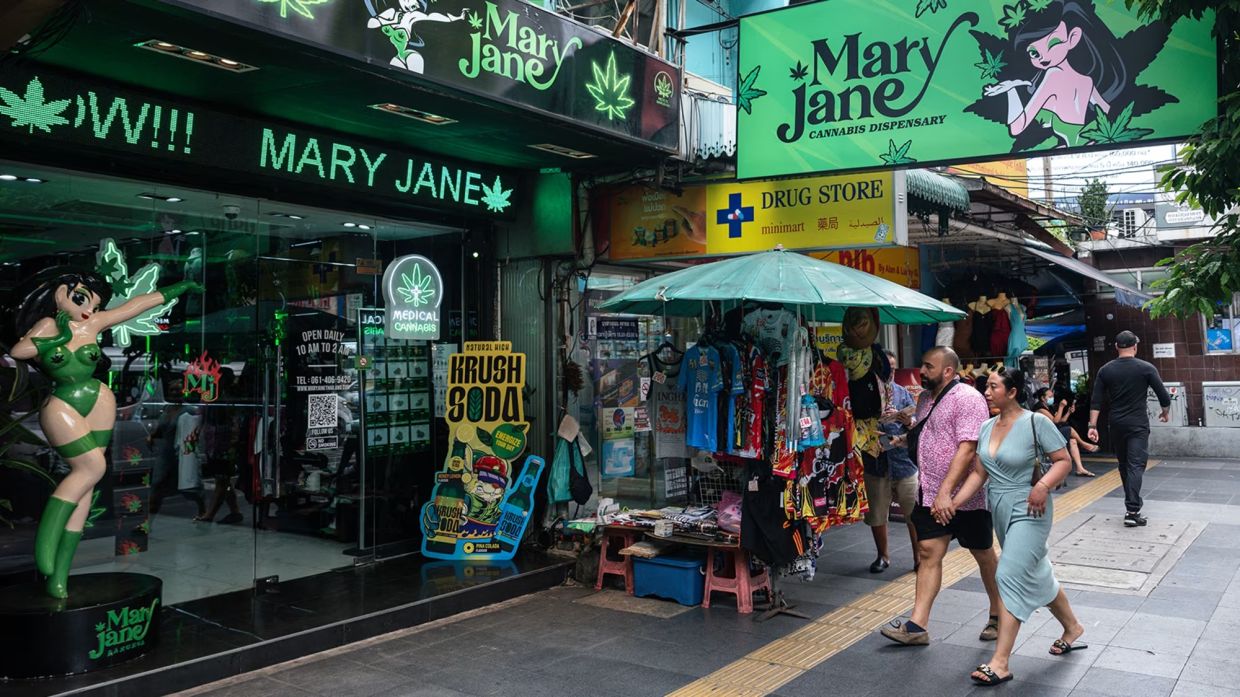
Sakoltee concluded the hearing by directing officials to compile comprehensive inventories of licensed cannabis retailers in Bangkok and FDA-certified products for further examination. He emphasised that cannabis has become excessively accessible and insisted that future legislation include provisions establishing minimum distances between cannabis shops and educational facilities, a measure reflecting concerns about youth exposure. The committee requested expanded research documenting cannabis-related harms and identifying affected populations, indicating an intention to ground further policy decisions in empirical evidence rather than ideological positions.
The pathway forward will test Thailand's capacity to construct balanced regulation that acknowledges legitimate farming and business interests while maintaining meaningful public health protections. The government has signalled openness to considering alternative legislative proposals alongside the Public Health Ministry's official bill, suggesting recognition that consensus-building across stakeholder groups may be essential. Whether Thailand can achieve genuine equilibrium between these competing interests—or whether policy will oscillate between permissiveness and restriction—may substantially influence how Southeast Asian neighbours approach their own cannabis frameworks in coming years.
%22%2F%3E%3C%2Fpattern%3E%3C%2Fdefs%3E%3Crect%20width%3D%22100%25%22%20height%3D%22100%25%22%20fill%3D%22url(%23phafweg)%22%2F%3E%3Crect%20width%3D%22100%25%22%20height%3D%22100%25%22%20fill%3D%22url(%23phafwep)%22%2F%3E%3Ctext%20x%3D%2250%25%22%20y%3D%2250%25%22%20text-anchor%3D%22middle%22%20dominant-baseline%3D%22central%22%20fill%3D%22rgba(255%2C255%2C255%2C0.95)%22%20font-family%3D%22Georgia%2C%20'Times%20New%20Roman'%2C%20serif%22%20font-weight%3D%22700%22%20font-size%3D%22272%22%20letter-spacing%3D%22-0.02em%22%3EAnwar%3C%2Ftext%3E%3C%2Fsvg%3E)