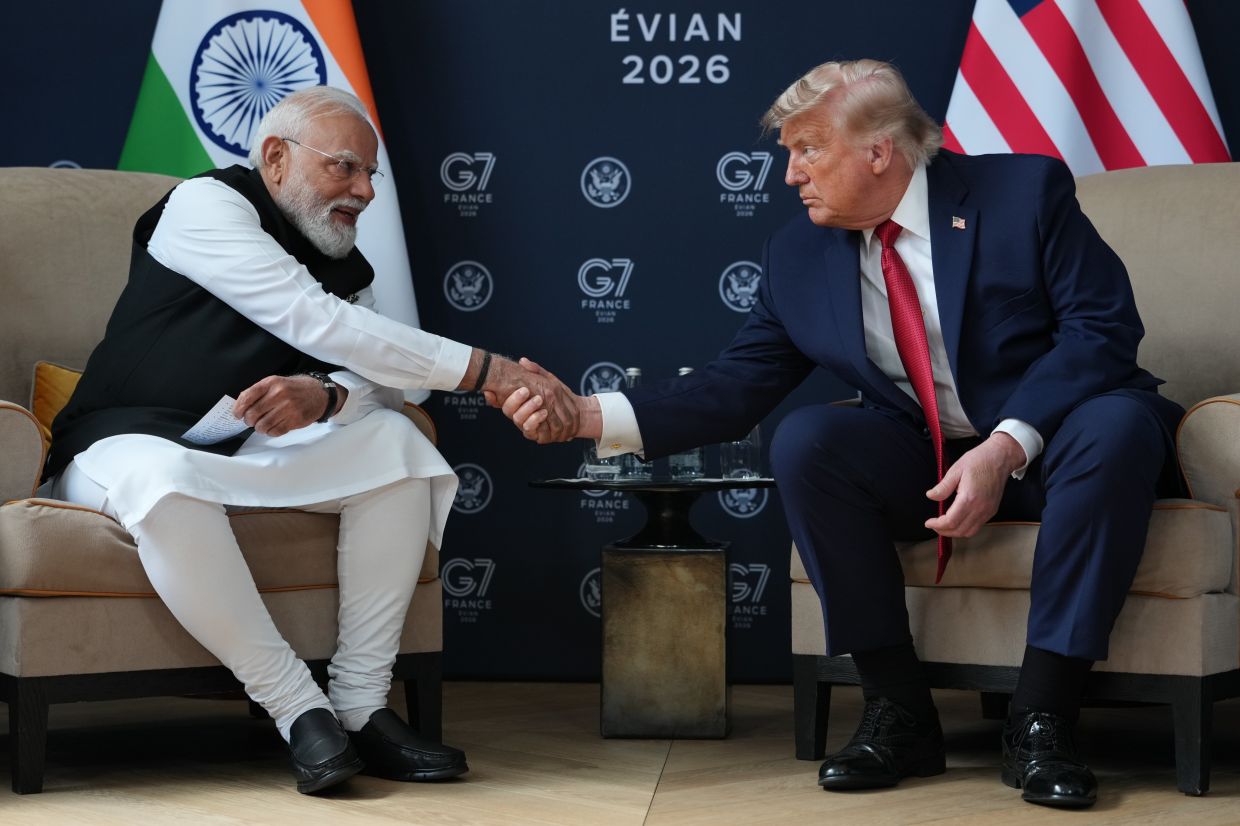
President Trump has offered no expression of regret or condolence regarding the deaths of three Indian nationals killed when United States forces fired missiles at the Palau-flagged MT Settebello last week. Speaking to journalists after his first bilateral meeting with Prime Minister Narendra Modi in sixteen months, Trump dismissed the tragedy by framing commercial maritime operations as an inherently perilous profession. His measured response, which acknowledged awareness of the incident but steered away from sympathy, has sparked significant tension within India's political establishment and public sphere.
The underlying dispute centres on American military operations in the Strait of Hormuz, where the US has enforced a blockade on Iranian ports. Beyond the MT Settebello, American forces conducted strikes against two additional commercial vessels carrying Indian crew members, which the US Central Command justified as responses to alleged violations of this blockade and the illicit transportation of Iranian crude oil. The escalation underscores the geopolitical complexities facing India as it navigates between its strategic partnership with Washington and its economic relationships across the Middle East and Asia.
During their conversation, External Affairs Minister S. Jaishankar lodged a formal and emphatic protest against the killings. However, the State Department's official readout of this exchange revealed the fundamental disagreement between the two capitals. American officials emphasised their determination to prevent blockade violations and illicit Iranian oil shipments, signalling an unwillingness to entertain Indian concerns about the disproportionate casualties inflicted on commercial mariners. This rhetorical positioning demonstrated how far apart Washington and New Delhi remain on this sensitive matter, despite their broader strategic alignment.
Trump's cavalier framing of the deaths—describing them as an unfortunate but unremarkable consequence of maritime commerce—has provoked considerable backlash within India. Public demonstrations have erupted, with videos circulating online showing auto-rickshaw drivers in Delhi physically removing promotional posters bearing Trump's image from their vehicles. These banners, part of an American embassy campaign promoting US-India relations with slogans including "Happy Birthday America," have become symbols of perceived American disrespect toward Indian sovereignty and the value placed on Indian lives.
Political opposition figures have seized upon this perceived slight. Rahul Gandhi, a prominent opposition leader, used social media to criticise Prime Minister Modi for what he characterised as an overly accommodating stance toward Washington. Gandhi's post accused the government of behaving as an "obedient servant" and suggested that a truly independent nation would have responded with far greater firmness to American provocations. This criticism reflects deeper anxieties within Indian political circles about whether Modi's government has allowed strategic partnership with the US to compromise India's independent foreign policy decision-making.
The fraying of bilateral relations stands in sharp contrast to the cordiality that marked Trump's previous encounter with Modi in February 2025, when the two leaders met in Washington to initiate negotiations toward a comprehensive bilateral trade agreement. India earned the distinction of becoming one of the first nations to enter formal trade discussions with the Trump administration, signalling Washington's strategic priority in engaging New Delhi. Yet this apparent warmth has been tested by the maritime incident and the American government's unwillingness to acknowledge Indian grievances.
Trade discussions between the two countries remain active, though progress appears circumscribed by ongoing tensions. US Trade Representative officials continue negotiations aimed at reaching an interim trade agreement, with the more comprehensive bilateral pact remaining on the longer-term agenda. These commercial negotiations carry substantial weight for both nations—India seeks preferential market access for its services sector and pharmaceuticals, while the US pursues market opening in Indian agriculture and manufacturing. The deteriorating political atmosphere, however, threatens to complicate what have historically been complex and protracted trade talks.
Despite the friction, Trump attempted to project confidence in the relationship during Wednesday's press conference, describing Modi as both a "tough trader" and a "great guy" while announcing plans to visit India sometime in the future. These remarks suggest the American administration views the sailor deaths as insufficient cause to derail the strategic partnership. Secretary of State Marco Rubio subsequently visited India and characterised the country as one of America's "most important strategic partners," underscoring Washington's determination to maintain and deepen engagement with New Delhi despite the recent unpleasantness.
The incident highlights the inherent tensions within great-power relationships, particularly when security interests diverge sharply from humanitarian considerations. India's geographic proximity to Iran and its historical ties to Gulf markets create competing pressures that make blanket adherence to American sanctions policy politically difficult. For Malaysian and Southeast Asian observers, the situation illustrates how even strategically aligned nations can experience serious friction when one party prioritises security objectives over the welfare of the other's citizens. The outcome of this dispute may shape how other regional states calibrate their own relationships with the United States, particularly regarding American enforcement of sanctions regimes that affect their commercial and strategic interests in the broader Indo-Pacific region.
%22%2F%3E%3C%2Fpattern%3E%3C%2Fdefs%3E%3Crect%20width%3D%22100%25%22%20height%3D%22100%25%22%20fill%3D%22url(%23ph2wtq6g)%22%2F%3E%3Crect%20width%3D%22100%25%22%20height%3D%22100%25%22%20fill%3D%22url(%23ph2wtq6p)%22%2F%3E%3Ctext%20x%3D%2250%25%22%20y%3D%2250%25%22%20text-anchor%3D%22middle%22%20dominant-baseline%3D%22central%22%20fill%3D%22rgba(255%2C255%2C255%2C0.95)%22%20font-family%3D%22Georgia%2C%20'Times%20New%20Roman'%2C%20serif%22%20font-weight%3D%22700%22%20font-size%3D%22320%22%20letter-spacing%3D%22-0.02em%22%3ETV3%3C%2Ftext%3E%3C%2Fsvg%3E)
%22%2F%3E%3C%2Fpattern%3E%3C%2Fdefs%3E%3Crect%20width%3D%22100%25%22%20height%3D%22100%25%22%20fill%3D%22url(%23ph3gf80g)%22%2F%3E%3Crect%20width%3D%22100%25%22%20height%3D%22100%25%22%20fill%3D%22url(%23ph3gf80p)%22%2F%3E%3Ctext%20x%3D%2250%25%22%20y%3D%2250%25%22%20text-anchor%3D%22middle%22%20dominant-baseline%3D%22central%22%20fill%3D%22rgba(255%2C255%2C255%2C0.95)%22%20font-family%3D%22Georgia%2C%20'Times%20New%20Roman'%2C%20serif%22%20font-weight%3D%22700%22%20font-size%3D%22170%22%20letter-spacing%3D%22-0.02em%22%3ENational%3C%2Ftext%3E%3C%2Fsvg%3E)
%22%2F%3E%3C%2Fpattern%3E%3C%2Fdefs%3E%3Crect%20width%3D%22100%25%22%20height%3D%22100%25%22%20fill%3D%22url(%23ph4jjg8g)%22%2F%3E%3Crect%20width%3D%22100%25%22%20height%3D%22100%25%22%20fill%3D%22url(%23ph4jjg8p)%22%2F%3E%3Ctext%20x%3D%2250%25%22%20y%3D%2250%25%22%20text-anchor%3D%22middle%22%20dominant-baseline%3D%22central%22%20fill%3D%22rgba(255%2C255%2C255%2C0.95)%22%20font-family%3D%22Georgia%2C%20'Times%20New%20Roman'%2C%20serif%22%20font-weight%3D%22700%22%20font-size%3D%22170%22%20letter-spacing%3D%22-0.02em%22%3EJudicial%3C%2Ftext%3E%3C%2Fsvg%3E)