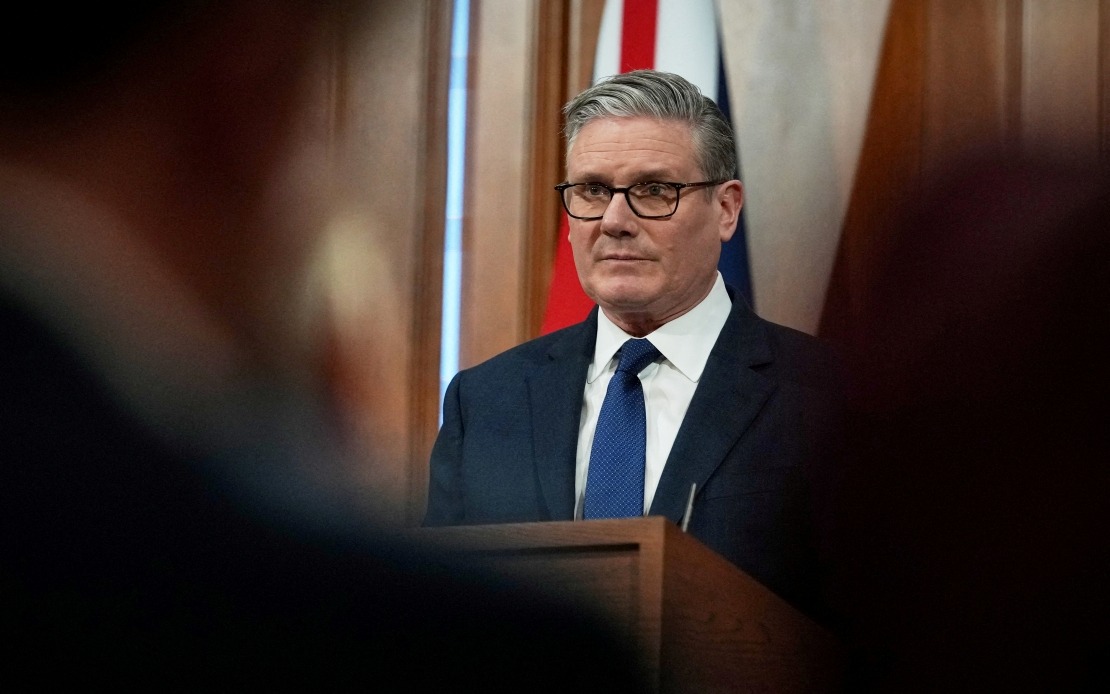
US President Donald Trump has predicted that United Kingdom Prime Minister Keir Starmer will resign from office, citing poor management of immigration and energy policy as the primary reasons for his political downfall. Speaking on his Truth Social platform from Istanbul on Sunday, Trump made the stark pronouncement without elaboration, suggesting the British premier has mishandled two critical areas that affect public confidence in government.
The American president's intervention into British domestic politics underscores the international attention now focused on potential instability within the UK government. Trump specifically referenced Starmer's failures on immigration matters and energy policy, notably highlighting the question of North Sea oil development—an issue that has become increasingly contentious as Britain balances climate commitments with economic priorities. The brevity and confidence of Trump's statement suggest he believes the resignation is not merely possible but imminent and inevitable.
Trump's comments arrived amid mounting speculation within Westminster circles that Starmer's tenure as prime minister could be drawing to a rapid conclusion. According to reporting from the BBC on the same Sunday, multiple sources within government indicated that the Prime Minister might articulate a formal timetable for his departure as soon as the following day, signalling a dramatic shift in the political atmosphere surrounding his leadership. This convergence of international observation and domestic instability reflects the fragile state of Starmer's position.
The suggestion that Starmer could announce his resignation timeline within hours of Trump's remarks highlights the extraordinary pace at which events were unfolding within the British establishment. Government insiders speaking to the BBC described a perceptible change in mood, with colleagues increasingly convinced that a leadership transition would occur. The speed with which resignation scenarios were being discussed indicated that underlying support for Starmer had substantially eroded among his own ranks.
For Malaysian and Southeast Asian observers, this political turbulence in a long-established liberal democracy carries implications for international stability and bilateral relations. The United Kingdom remains a significant global economic and diplomatic actor, and any leadership vacuum or policy uncertainty could affect trade arrangements, security partnerships, and geopolitical alignment in the Indo-Pacific region where Malaysia maintains diverse interests. Changes in British government priorities could reshape approaches to issues ranging from supply chain cooperation to regional security dialogues.
The specifically cited failures on immigration and energy policy reflect broader challenges facing Western governments in the current era. Immigration management has become politically divisive across democracies, with competing demands between security concerns, economic needs, and humanitarian obligations creating pressure on leaders. Energy policy, simultaneously, requires navigating the transition toward renewable sources while managing immediate economic and employment concerns—a tension particularly acute in regions historically dependent on fossil fuel extraction like the North Sea.
Starmer's Labour government had promised significant changes following the Conservative Party's long tenure in power, yet the rapid deterioration of his political standing suggests that governing coalitions and parliamentary arithmetic presented greater obstacles than anticipated during the campaign phase. The shift from electoral optimism to resignation speculation within months of taking office demonstrates how quickly political momentum can evaporate when implementation encounters practical constraints and public dissatisfaction.
The involvement of Trump in commentary on British politics also reflects the increasingly interconnected nature of Anglo-American political discourse, where leaders on opposite sides of the Atlantic frequently comment on each other's domestic circumstances. This exchange of political observations, while commonplace in modern media environments, still carries weight given the historical alliance between the two nations and their considerable mutual influence on policy directions.
The potential departure of a sitting prime minister would trigger constitutional processes requiring the governing party to select a new leader who could command parliamentary support. This succession would unfold against a backdrop of existing challenges including economic management, public service reform, and international commitments. The disruption caused by leadership transition could temporarily complicate Britain's engagement with regional partners and international organisations, including potential implications for Malaysian business interests and bilateral cooperation frameworks.
%22%2F%3E%3C%2Fpattern%3E%3C%2Fdefs%3E%3Crect%20width%3D%22100%25%22%20height%3D%22100%25%22%20fill%3D%22url(%23ph5142vg)%22%2F%3E%3Crect%20width%3D%22100%25%22%20height%3D%22100%25%22%20fill%3D%22url(%23ph5142vp)%22%2F%3E%3Ctext%20x%3D%2250%25%22%20y%3D%2250%25%22%20text-anchor%3D%22middle%22%20dominant-baseline%3D%22central%22%20fill%3D%22rgba(255%2C255%2C255%2C0.95)%22%20font-family%3D%22Georgia%2C%20'Times%20New%20Roman'%2C%20serif%22%20font-weight%3D%22700%22%20font-size%3D%22194%22%20letter-spacing%3D%22-0.02em%22%3EBintulu%3C%2Ftext%3E%3C%2Fsvg%3E)