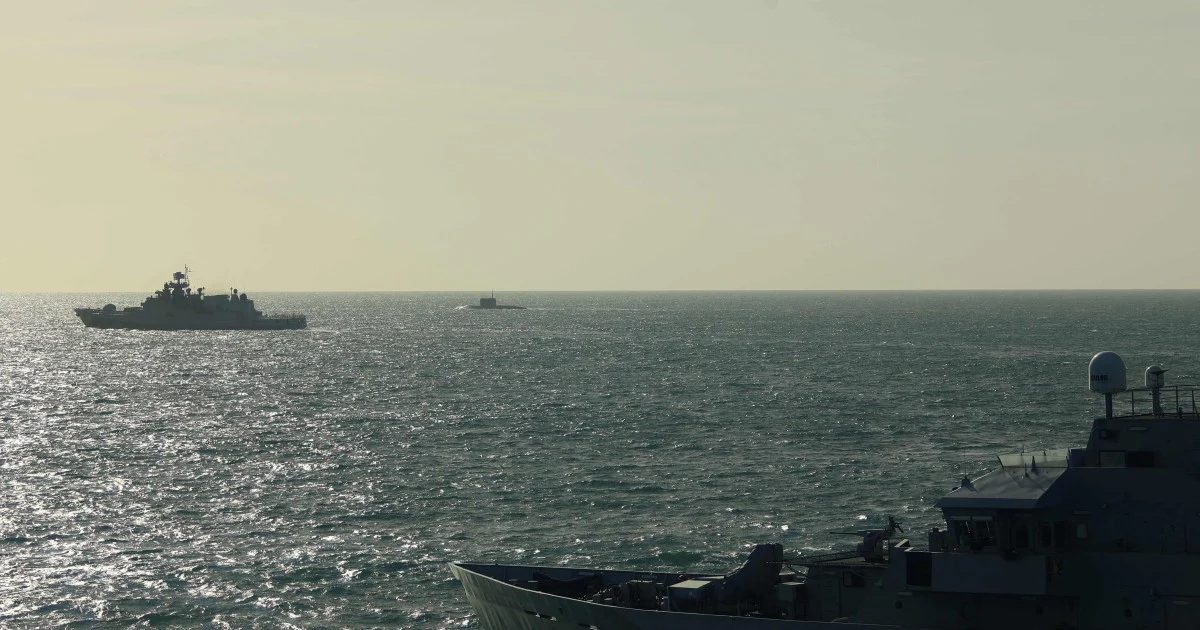
The latest display of naval brinkmanship in the English Channel illustrates the precarious state of British-Russian relations, with UK Prime Minister Keir Starmer characterising the incident as an example of increasingly reckless maritime behaviour rather than a calculated provocation. The Russian warship discharged warning shots in the vicinity of a yacht operating in waters that have become an accidental flashpoint for geopolitical tension, prompting swift condemnation from London despite Starmer's careful calibration of language in describing the event.
The distinction Starmer drew between "reckless" and "sinister" behaviour carries considerable weight in diplomatic discourse. By resisting the temptation to attribute malicious intent, the British Prime Minister attempted to prevent further escalation whilst still conveying disapproval of the Russian naval action. This rhetorical positioning suggests that London interprets the incident as stemming from operational recklessness or poor judgment rather than as a deliberate challenge to British sovereignty, though such nuance risks being overshadowed by the raw reality of warning shots being fired in one of Europe's busiest shipping lanes.
The English Channel has emerged as an unexpected arena for UK-Russia tensions, particularly given its historical significance and the sheer volume of maritime traffic that transits its waters daily. Hundreds of vessels pass through the channel each day, representing numerous nationalities and commercial interests. When military incidents occur in such congested waters, the potential for broader conflict or unintended consequences multiplies substantially, affecting not only the immediate parties but also neutral shipping and regional economic interests.
This incident represents merely the latest in a string of confrontational encounters between Russian and Western forces, reflecting the broader context of deteriorating geopolitical relations that intensified following Russia's invasion of Ukraine. The English Channel has witnessed multiple such incidents in recent years as Russian naval vessels challenge Western positions and test responses to provocative manoeuvres. Each encounter chips away at the fragile protocols that historically prevented military accidents from spiralling into genuine crises.
The yacht involved in the incident occupied a liminal space in this confrontation. Though civilian in nature, its presence in contested waters where Russian vessels operate represented an opportunity for Moscow to demonstrate its willingness to enforce its interpretation of maritime rights and freedoms. The warning shots served as both a tactical measure and a message—a physical assertion of Russian authority communicated through the universal language of military force.
Britain's response through Starmer's carefully chosen words reflects the delicate balance London must maintain between standing firm against Russian assertiveness and avoiding escalation that could prove catastrophic. The United Kingdom maintains substantial naval interests in the channel and considers it fundamental to its security and commerce. Yet simultaneously, British leaders must account for the presence of NATO allies, civilian shipping, and the broader strategic context of potential nuclear powers locked in increasingly intense competition.
The characterisation of the event as "reckless" rather than "sinister" invites scrutiny. Recklessness implies thoughtlessness, poor judgment, or insufficient care for consequences. Sinister conduct, by contrast, suggests deliberate malice and calculated provocation. This semantic choice may reflect genuine British intelligence assessments of Russian intentions, or it may represent an attempt to keep diplomatic channels open despite the hostile act. Either way, the distinction shapes how the incident will be interpreted across European capitals and influences international response.
For Malaysia and other Southeast Asian nations, such incidents carry broader implications. The English Channel confrontation reflects a larger pattern of great power competition that extends globally, including throughout the South China Sea where Malaysia maintains significant maritime interests. The Russian-British tensions echo anxieties about naval coercion, freedom of navigation, and the reliability of international law when confronted with military power. The manner in which established Western powers respond to such challenges may establish precedents that resonate far beyond European waters.
The incident also underscores the limitations of diplomatic language in an era of escalating military assertiveness. Warning shots represent a dramatic escalation from mere presence or shadowing of vessels. They constitute an unmistakable assertion of force and a direct threat to those aboard the targeted vessel. That such measures can occur in busy international waters yet be dismissed as merely "reckless" rather than provocative suggests a recalibration of what constitutes acceptable naval behaviour among major powers, a troubling trend with regional repercussions.
Looking forward, the English Channel will likely remain contested terrain in the broader Russia-West competition. The incident demonstrates that neither side shows signs of retreating from aggressive posturing. For Britain, the challenge lies in maintaining deterrence and firmness whilst avoiding actions that might provide Moscow justification for further escalation. The appearance of strength must be balanced against the reality that miscalculation in such environments carries genuinely catastrophic risks.
The incident ultimately reveals the fragility of maritime order even in heavily-regulated international waters. When great powers contest the same space, civilian vessels and neutral observers find themselves caught between competing claims of authority and legitimacy. Starmer's measured response suggests British recognition that this particular incident, whilst alarming, does not necessarily warrant dramatic retaliation. Whether such restraint will prove sustainable as tensions continue mounting remains an open question with implications stretching well beyond European shores.