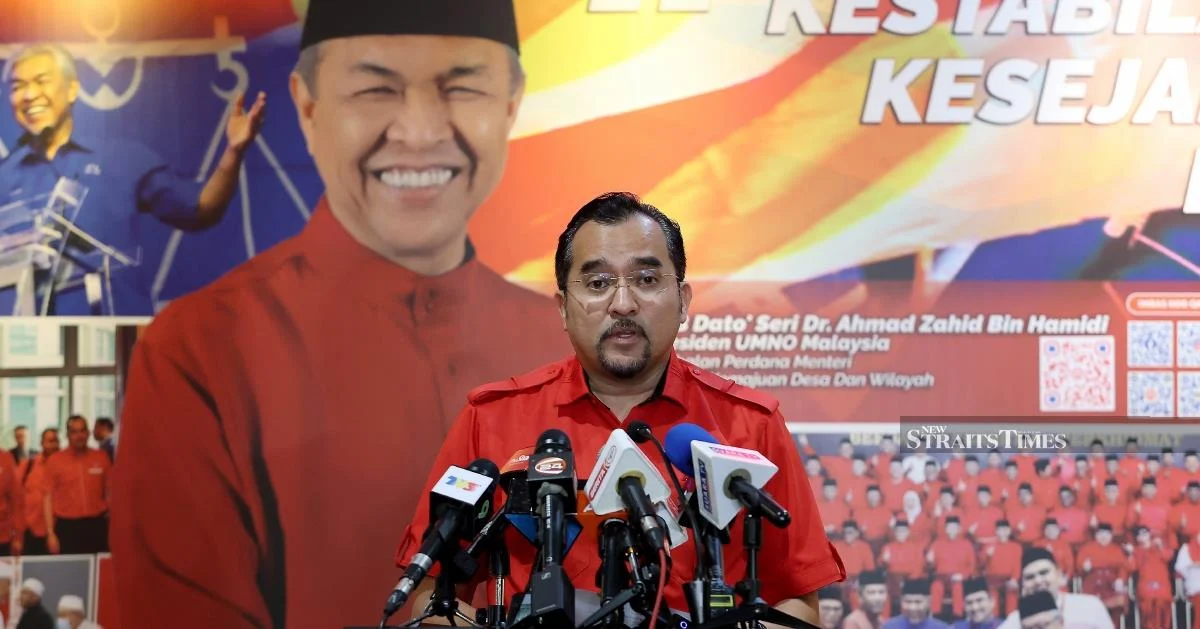
Umno will pursue a principled campaign strategy focused on concrete policy proposals rather than personal attacks when it contests the upcoming state elections in Johor and Negri Sembilan, party secretary-general Datuk Dr Asyraf Wajdi Dusuki announced this week. The commitment represents a deliberate effort to elevate the tone of electoral discourse and present voters with substantive reasons to choose the party based on its governance record and forward-looking agenda.
This pledge from the party hierarchy carries particular significance given the increasingly combative nature of Malaysian electoral politics in recent years. The decision to forswear mudslinging reflects broader concerns among voters about campaign quality and the need for parties to demonstrate maturity and respect for democratic norms. By explicitly distancing itself from negative campaigning tactics, Umno is positioning itself as the candidate for restrained, issues-driven debate—a stance that could resonate with urban and middle-class voters who have grown weary of personal disputes dominating airwaves and social media.
The two state battlegrounds represent strategically important contests for the coalition government. Johor, Malaysia's southernmost peninsula state bordering Singapore, has long been an Umno stronghold with significant economic influence. Negri Sembilan, meanwhile, occupies a pivotal position in central Peninsular Malaysia and has seen shifting political dynamics in recent election cycles. Success in both states would strengthen Umno's position within the larger federal coalition and provide momentum heading into future national contests.
Byputting emphasis on how party proposals translate into tangible benefits for ordinary Malaysians, Umno is attempting to reframe the campaign narrative around bread-and-butter issues. Economic concerns, infrastructure development, education, healthcare, and employment opportunities constitute the substantive terrain on which the party intends to compete. This approach acknowledges that many voters make electoral decisions based on perceived competence in delivering services and managing state resources rather than being swayed by character attacks against political opponents.
The declaration also implicitly responds to public sentiment about campaign conduct. Multiple surveys and polling conducted by independent researchers have shown that Malaysian voters express frustration with the prevalence of personal attacks and unsubstantiated allegations during election periods. By committing publicly to avoiding such tactics, Umno provides itself with a platform to claim the moral high ground and demonstrate institutional discipline—qualities that appeal particularly to swing voters and those concerned about democratic backsliding.
Umno's positioning here must be understood within the context of Malaysian coalition politics. The party operates as part of a broader governing alliance that includes coalition partners with their own regional influence and electoral bases. Maintaining unity while competing effectively in state contests requires careful navigation, and a focus on policy achievements and forward planning allows room for unified messaging across coalition partners without requiring them to adopt identical campaign styles.
The Johor campaign holds special resonance given the state's historical significance to Umno's origins and influence. The party's credibility in this region remains substantial, though it has faced competitive pressure from both opposition forces and from the Islamist Pas party operating within the broader coalition framework. Emphasizing governance accomplishments and development plans allows Umno to remind voters of its track record while articulating a vision for continued prosperity in Southeast Asia's most developed state after Selangor.
Negri Sembilan presents different dynamics. The state has demonstrated greater political fluidity in recent years, with voters more receptive to change and less locked into traditional party loyalties than in some other regions. A policy-driven campaign gives Umno the opportunity to articulate why its approach to state governance better serves the interests of Negri Sembilan residents compared to potential alternatives. Infrastructure connectivity to Kuala Lumpur, economic diversification beyond traditional sectors, and quality-of-life improvements become central messaging pillars.
The timing of this commitment is worth examining. Election cycles in Malaysia increasingly feature extended campaigns that begin months before official nomination periods, with parties testing messaging and building grassroots momentum throughout this period. Establishing clear campaign boundaries early—including the rejection of mudslinging—allows a party to maintain message discipline and remind candidates and party workers of acceptable conduct standards.
For regional observers and Malaysia's international partners, such commitments carry broader significance. Election conduct reflects on democratic health and institutional maturity. When major political parties voluntarily impose restraint on themselves and commit to elevating campaign discourse, it reinforces norms that benefit the overall political system and public confidence in electoral processes. This becomes particularly important for countries in Southeast Asia that continue building and strengthening democratic institutions.
The practical implementation of this pledge will ultimately matter more than the announcement itself. Party candidates and grassroots operatives must understand and internalize these directives, as individual campaign conduct at the ground level frequently diverges from headquarters statements. Umno will face the challenge of ensuring consistent adherence to its stated principles across numerous constituencies and campaign committees.
Moving forward, the effectiveness of this policy-focused approach depends on several factors: how compellingly party leaders communicate their proposals, whether voters perceive these offerings as genuinely addressing their concerns, and how opposition parties respond to this campaign strategy. If rivals maintain aggressive personal attack campaigns while Umno remains measured, voters may judge the contrast favorably. Conversely, if voters perceive the policy focus as insufficiently ambitious or poorly articulated, the strategy could backfire. The upcoming state campaigns will test whether principle-based electioneering can prove electorally effective in contemporary Malaysian politics.