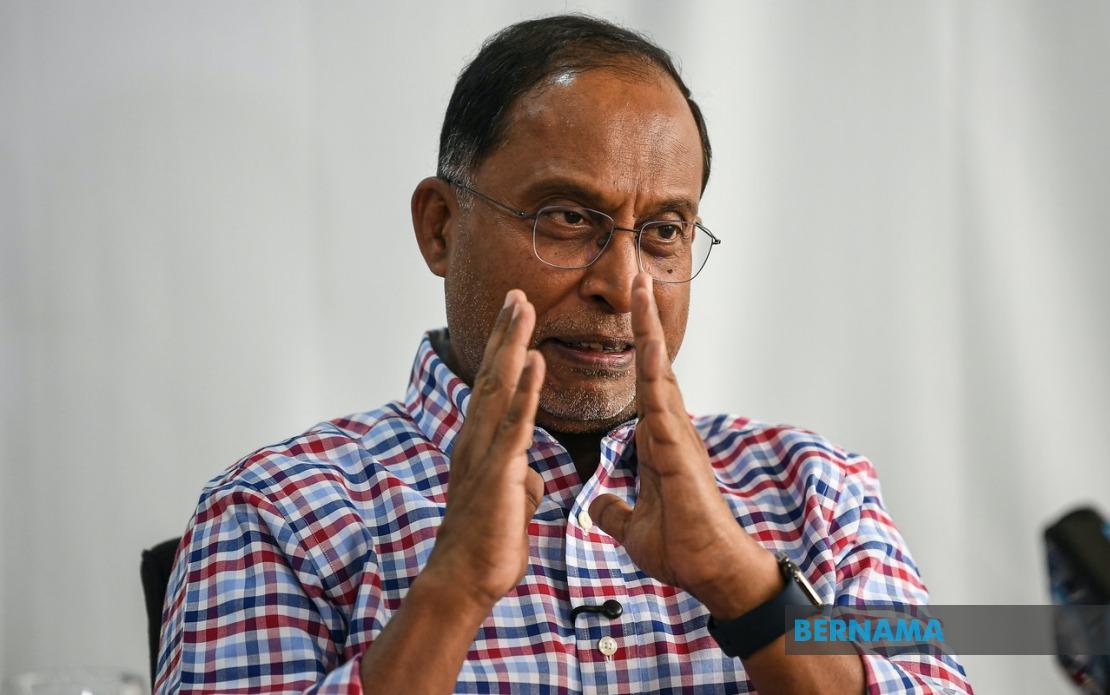
Malaysia's Higher Education Minister Datuk Seri Dr Zambry Abd Kadir has responded forcefully to allegations that between 30,000 and 60,000 students have illegally gained admission to public universities through what critics term 'backdoor' entry, insisting that those making such serious accusations must provide concrete evidence to support their claims. The minister characterised the allegations as potentially damaging to institutional credibility and public perception, raising concerns about how unfounded narratives could undermine parental and student confidence during an already sensitive admission period.
The accusations strike at a foundational principle of Malaysia's higher education system. Zambry reaffirmed that public university admissions operate through documented, transparent procedures based exclusively on merit and established eligibility criteria, processes that have been developed and refined over years to ensure fairness and accountability. The scale of the allegation—involving tens of thousands of students—would constitute a systemic failure of monumental proportions if substantiated, yet remains unaccompanied by the detailed documentation, statistical analysis, or verifiable data that would be necessary to validate such a claim.
The minister's statement reflects growing frustration within the education establishment over what officials perceive as irresponsible public discourse. He distinguished sharply between legitimate academic criticism and unfounded accusations, arguing that freedom of speech, while fundamental to democratic discourse, does not permit individuals to broadcast serious allegations without rigorous factual foundation. This distinction carries particular weight in Malaysia's context, where public trust in educational institutions has been periodically tested by corruption concerns and administrative irregularities in recent years.
Responding to the accusations, several public universities have filed formal police reports, initiating investigative processes that will allow authorities to examine claims through proper legal channels. Zambry characterised this action not as an attempt to silence critics or curtail democratic expression, but rather as a necessary step to ensure that allegations can be examined objectively and conclusively. The police involvement suggests that if substantive evidence exists, it should emerge through official inquiry, while simultaneously placing responsibility on accusers to demonstrate the validity of their assertions.
The minister emphasised that individuals making such serious allegations bear personal accountability for supporting their claims with concrete evidence. In Malaysia's context, where public universities serve as crucial pathways to social mobility for thousands of students from modest backgrounds, accusations of systemic unfairness carry profound implications. If students from well-connected or affluent families were indeed circumventing merit-based selection processes, the consequences would extend beyond institutional integrity to questions about equity, opportunity distribution, and the country's commitment to meritocratic principles.
Zambry's remarks signal that the Ministry of Higher Education maintains openness to genuine constructive criticism aimed at strengthening the system. However, the distinction between legitimate oversight and baseless allegation appears to be shifting toward a more defensive posture. The requirement that critics provide methodology, data sources, and substantive documentation before allegations gain traction represents a threshold that may discourage some forms of public scrutiny, though it simultaneously establishes appropriate evidentiary standards for claims of institutional misconduct.
The timing of these accusations and the government's response occurs amid broader regional conversations about university governance and admission transparency. Throughout Southeast Asia, questions about equity in higher education access have intensified, with neighbouring countries grappling with similar concerns about whether merit-based systems function as intended. For Malaysia, the stakes are particularly high given the country's diverse student population and the role universities play in inter-community social cohesion.
The allegations also reflect deeper anxieties about institutional trust that extend beyond education. Public confidence in government institutions has fluctuated significantly in recent years, influenced by various corruption investigations, administrative scandals, and governance questions. When serious allegations emerge about how opportunities are distributed, public scepticism can crystallise quickly, particularly among families investing substantial resources in their children's educational futures. The government's insistence on evidence-based discourse may prove necessary to prevent unfounded narratives from gaining wider currency.
Zambry indicated that the Ministry of Higher Education would continue prioritising institutional integrity while maintaining public confidence in Malaysia's higher education ecosystem. This dual commitment requires not only transparent operations but also credible communication about how those operations function. Parents and students navigating the admission process need assurance that their applications receive fair evaluation according to published criteria, particularly when allegations of systematic unfairness have circulated through media and social platforms.
Moving forward, the resolution of this matter will likely depend on whether credible evidence emerges during police investigations or through other official channels. If substantive documentation supports the allegations, the implications for institutional reform could be substantial. Conversely, if no significant evidence materialises, the episode will underscore the importance of rigorous verification before public allegations gain traction. For Malaysian education stakeholders, the outcome carries implications for how future critiques of the system will be evaluated and what evidentiary standards will govern public discourse about university admissions.