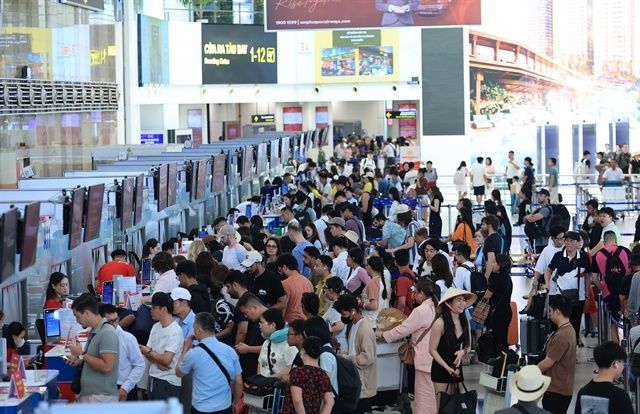
Vietnam is poised to introduce sweeping passenger compensation requirements for airlines, with a newly issued Government Decree No. 208 set to take effect from the beginning of next month. The regulation represents a major overhaul of civil aviation rules and establishes one of the region's more comprehensive frameworks for protecting traveller rights when flights encounter operational disruptions. The decree addresses three primary scenarios: flight delays, cancellations, and schedule changes, each carrying distinct obligations for carriers to notify, assist, and compensate affected passengers.
Under the new framework, Vietnamese aviation authorities define a flight delay as occurring when an aircraft departs more than 15 minutes behind its scheduled time. More significantly, delays extending four hours or longer are classified as "long delays," triggering enhanced passenger support obligations. This distinction reflects international best practices and acknowledges that extended disruptions impose substantially greater inconvenience on travellers. The tiered approach allows regulators to calibrate compensation intensity according to the severity of operational failure, ensuring proportionality while maintaining incentives for airlines to minimise disruptions.
Carriers operating in Vietnam will face immediate notification requirements the moment a delay becomes apparent. Airlines must promptly inform passengers of the anticipated delay, offer a sincere apology, and explain the underlying cause. Beyond passenger communication, the decree mandates that airlines coordinate with airport operators and terminal service providers to ensure revised departure estimates appear on airport flight information displays at minimum every 30 minutes. This continuous update requirement prevents outdated information from circulating and protects passengers from making poor decisions based on stale data—a particular concern in busy terminals where misinformation can proliferate rapidly.
For delays exceeding two hours, Vietnamese airlines must provide material assistance to stranded passengers. The regulation specifies that carriers supply drinking water or issue vouchers of equivalent monetary value, acknowledging that extended waits impose both physical discomfort and incidental expenses on travellers. This relatively modest threshold ensures that even moderate delays trigger support obligations, reflecting a passenger-centric regulatory philosophy that contrasts with more permissive regimes elsewhere in Asia.
The decree establishes time-dependent rest and accommodation obligations that escalate with delay duration and time of occurrence. When delays occur between 7am and 10pm, airlines must arrange suitable rest facilities commensurate with airport conditions—potentially ranging from comfortable seating areas to meal vouchers depending on local infrastructure. However, delays spanning late evening through early morning hours—between 10pm and 7am—trigger more substantial obligations. Airlines must provide sleeping or resting accommodation appropriate to local standards, or offer acceptable alternative arrangements subject to passenger consent. This framework recognises that overnight delays impose qualitatively different hardships than daytime disruptions, particularly for international passengers arriving at inconvenient hours.
When delay responsibility lies with the airline itself, the decree mandates rebooking flexibility that prioritises passenger convenience. Carriers must offer passengers the choice of rebooking on alternative departure times or routing alternative carriers that reach the same final destination. Critically, when the airline caused the delay, carriers must waive all restrictions on itinerary changes, rebooking fees, and applicable surcharges—preventing passengers from bearing financial penalties for airline failures. This provision addresses a persistent irritant in Southeast Asian aviation, where some carriers historically imposed change fees even when operational failures forced schedule modifications.
Schedule changes represent a distinct regulatory category that reflects growing passenger awareness of "hidden" cancellations. The decree defines schedule alterations as carrier-initiated changes to planned departure times for flights identified by a specific marketed flight number. If a carrier advances or delays a flight by five hours or more, airlines must notify passengers and offer refund or rebooking options comparable to cancellation scenarios. However, more modest schedule adjustments—those advancing flights up to four hours or delaying up to 15 minutes—fall under each airline's internal regulations, granting carriers operational flexibility for minor timetable adjustments that minimally impact passenger plans.
Flight cancellations trigger the regulation's most stringent obligations. The decree legally defines a cancellation as the non-operation of a flight for which at least one passenger held a confirmed ticket and seat. Upon cancellation or when airlines refuse passenger carriage, carriers must immediately notify affected parties, issue apologies, and explain the cause. If the airline bears responsibility for cancellation, passengers receive three primary options: rebooking on suitable alternative itineraries with all restrictions and surcharges waived; rebooking on another carrier's flight within 72 hours at passenger request; or full ticket refund—potentially including unused portions for partially-flown itineraries.
The regulatory framework delegates critical implementation details to Vietnam's Minister of Construction, who will prescribe non-refundable advance compensation amounts, payment methodologies and deadlines, and airline obligations regarding information publication and incident reporting. This administrative approach preserves regulatory flexibility while ensuring government maintains oversight of compensation levels and industry compliance. The minister's specifications will prove crucial in determining whether the decree functions as genuine passenger protection or devolves into symbolic regulation with inadequate compensation levels.
The decree's introduction carries significant implications for Malaysian and broader Southeast Asian aviation markets. Vietnam's aviation sector has expanded rapidly, with increasing competition among carriers and rising passenger volumes creating operational pressures that frequently manifest as delays and cancellations. By establishing clear compensation frameworks, Vietnam potentially establishes regional benchmarks that competing carriers across ASEAN may eventually feel pressure to match. Malaysian passengers travelling to Vietnam, and Vietnamese carriers operating regional routes, will encounter these new standards, potentially elevating consumer expectations across the region.
Moreover, the decree reflects evolving passenger awareness throughout Southeast Asia regarding consumer protection in aviation. Countries like Malaysia, Thailand, and Indonesia increasingly scrutinise airline conduct, and Vietnam's formalisation of compensation obligations may prompt discussions in other ASEAN nations regarding comparable protections. Low-cost carriers operating regionally have historically lobbied against stringent compensation rules, but growing passenger sophistication and competitive differentiation may gradually shift industry positions toward embracing more robust consumer protections.
The effectiveness of Decree No. 208 ultimately depends on enforcement mechanisms and passenger awareness. Vietnamese regulatory authorities must develop adequate monitoring capacity and complaint resolution procedures to ensure airlines comply with new obligations. Passenger awareness campaigns will prove essential, as many travellers remain unaware of their rights under similar regulations in other jurisdictions. Airlines will initially resist compensation demands, potentially contesting claims or attempting procedural delays that discourage passenger claims—requiring robust regulatory oversight and accessible dispute resolution mechanisms.