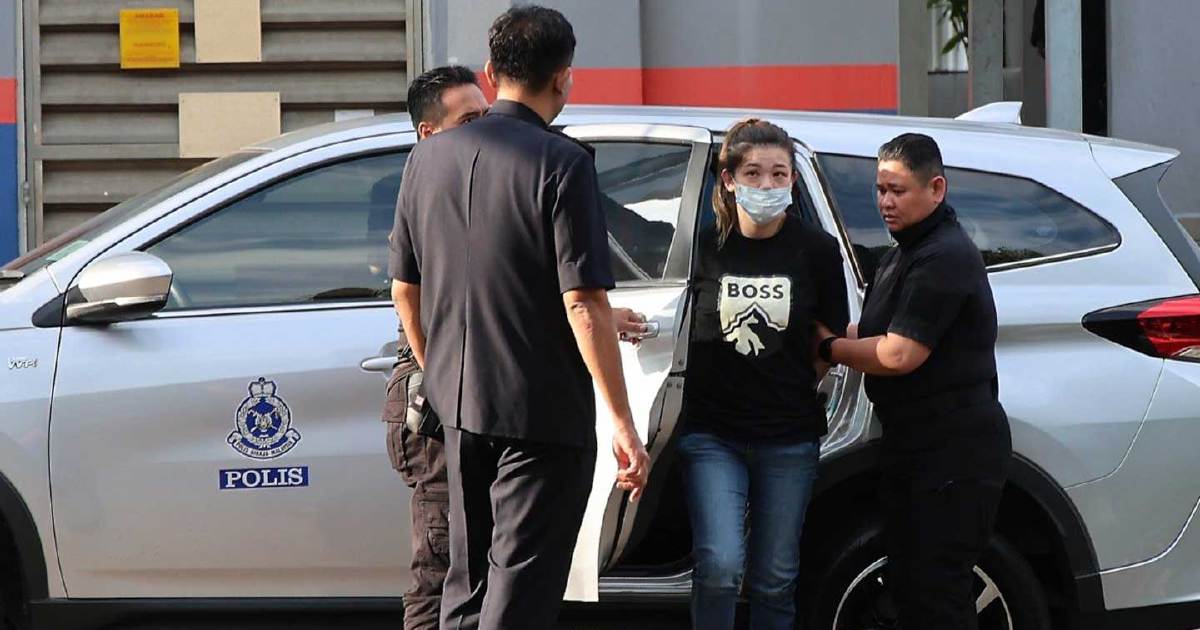
A woman faced murder charges in Sepang magistrate's court today stemming from the death of an Indonesian citizen at a residential unit in Bandar Sunsuria during the opening days of this month. The charge marks another incident of alleged violent crime involving foreign nationals in Malaysia, underscoring the complex law enforcement challenges authorities face in managing criminal cases that cross national boundaries.
The case emerged from circumstances at the Bandar Sunsuria residential complex, an established neighbourhood development in Sepang that has previously gained attention in connection with various criminal investigations. Authorities responded to the incident in the early part of the month, launching what appears to have been a thorough investigation that culminated in the formal charge presented before the court today. The specifics surrounding the interaction between the accused and the deceased remain central to understanding how the situation escalated to this point.
Indonesian nationals constitute a significant portion of Malaysia's foreign worker population, with many employed across construction, domestic service, and manufacturing sectors. Incidents involving fatalities among this community invariably trigger diplomatic considerations and heightened scrutiny from consular authorities. The involvement of Indonesian citizens in criminal cases—whether as victims or perpetrators—typically necessitates coordination between Malaysian law enforcement and Indonesian diplomatic missions to ensure proper procedural compliance and family notification protocols.
The magistrate's court system in Sepang handles a substantial caseload covering the Selangor district, and murder charges represent the most serious category of offences prosecuted at this level before potential elevation to higher courts. The fact that charges were filed suggests investigators gathered sufficient evidence to meet the threshold for prosecution, though the legal process remains in its early stages. The coming weeks will likely involve evidence presentation, bail considerations, and preliminary hearings that clarify the circumstances leading to the death.
Residential complexes in rapidly developing areas like Bandar Sunsuria often accommodate workers from diverse backgrounds, creating communities that reflect Malaysia's multicultural workforce composition. However, such environments occasionally become settings for interpersonal conflicts that can turn tragic. Understanding the context—whether the incident stemmed from personal animosity, workplace disputes, or other circumstances—remains crucial for properly evaluating the case's significance within Malaysia's broader crime landscape.
The timing of this charge announcement coincides with sustained public discourse about security in residential areas across the Klang Valley. Malaysian residents have demonstrated growing concern about violent crime in what are typically regarded as safe neighbourhood environments, with incidents drawing widespread media attention and generating community debate about crime prevention and police responsiveness. Cases involving fatalities particularly amplify public concern and scrutiny of security arrangements.
Murder cases involving foreign nationals often receive elevated attention from multiple stakeholders including diplomatic representatives, labour advocacy groups, and media organisations with interest in worker protection issues. The Indonesian consulate or embassy will likely monitor proceedings closely and may provide consular assistance to ensure the accused receives proper legal representation. Simultaneously, the family of the deceased victim will navigate the intersection of Malaysian legal processes and their own pursuit of justice and closure.
The Sepang magistrate's court system operates within Malaysia's structured legal framework where serious offences such as murder ultimately proceed through higher judicial tiers. The initial appearance today represents a procedural milestone rather than a final determination of the case, with the court establishing preliminary matters such as legal representation, bail status, and the timeline for evidence presentation. These early proceedings often prove determinative in shaping the trajectory of subsequent litigation.
For Malaysian authorities, cases crossing into the realm of international dimensions require meticulous attention to procedural propriety. Documentation must meet exacting standards, and law enforcement must maintain communication channels with relevant Indonesian counterparts. Such coordination becomes especially important when international media coverage amplifies scrutiny, as foreign governments and international observer communities may monitor case developments.
The incident adds to a growing body of criminal cases involving residential areas in outer Kuala Lumpur zones, regions experiencing rapid population expansion and urbanisation. Development areas like Bandar Sunsuria attract diverse demographics including significant migrant worker populations, creating dynamic but sometimes volatile community environments. Security analysts have noted that as these areas expand rapidly, conventional policing approaches sometimes struggle to maintain pace with demographic changes and the social dynamics accompanying population influxes.
Looking ahead, the court proceedings will determine not only the accused's culpability but may also illuminate factors contributing to violent confrontations in shared residential spaces. Legal observers will monitor how Malaysian courts handle cases with significant cross-border elements, as such cases increasingly feature in Malaysia's criminal justice system amid rising foreign national populations and growing incidents involving migrant communities. The outcome will potentially influence community perceptions of security, diplomatic relations, and the effectiveness of Malaysia's approach to addressing violent crime within residential precincts.
%22%2F%3E%3C%2Fpattern%3E%3C%2Fdefs%3E%3Crect%20width%3D%22100%25%22%20height%3D%22100%25%22%20fill%3D%22url(%23ph4p9rmg)%22%2F%3E%3Crect%20width%3D%22100%25%22%20height%3D%22100%25%22%20fill%3D%22url(%23ph4p9rmp)%22%2F%3E%3Ctext%20x%3D%2250%25%22%20y%3D%2250%25%22%20text-anchor%3D%22middle%22%20dominant-baseline%3D%22central%22%20fill%3D%22rgba(255%2C255%2C255%2C0.95)%22%20font-family%3D%22Georgia%2C%20'Times%20New%20Roman'%2C%20serif%22%20font-weight%3D%22700%22%20font-size%3D%22320%22%20letter-spacing%3D%22-0.02em%22%3EKTMB%3C%2Ftext%3E%3C%2Fsvg%3E)