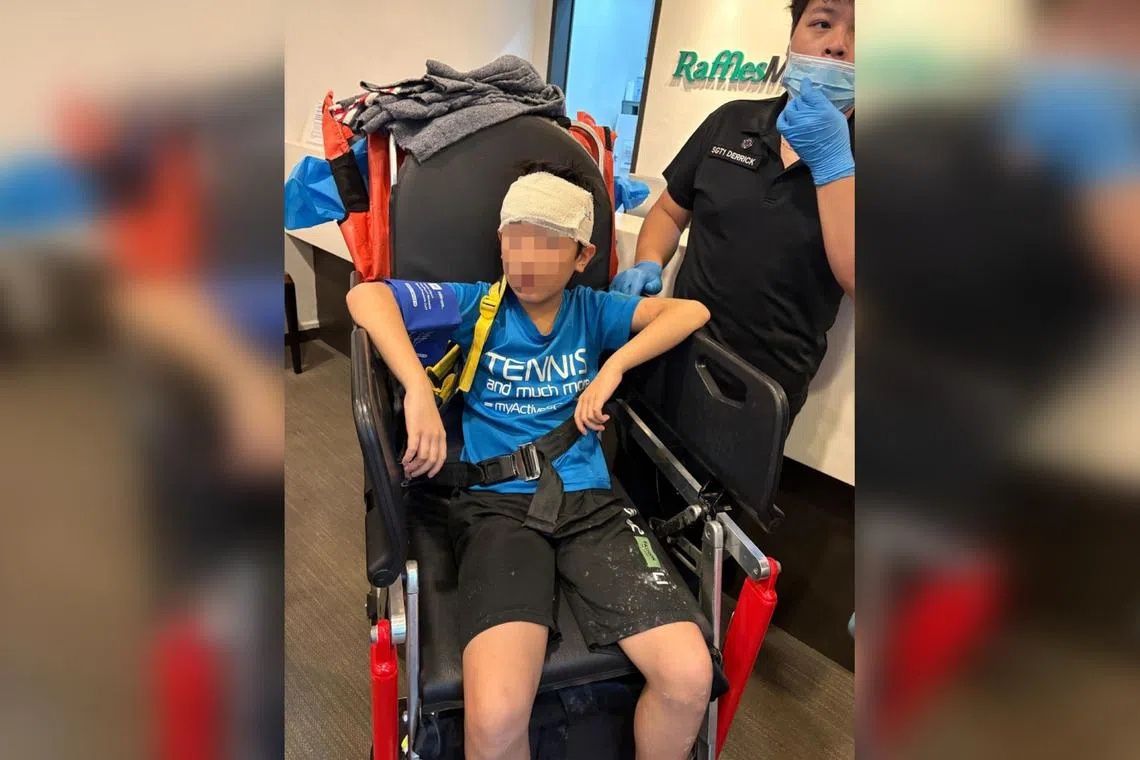
A child required hospitalization after structural failure at a Food Junction outlet in Rivervale Mall, located in Sengkang, on Saturday morning. The Singapore Civil Defence Force responded to an emergency call at approximately 10.30am, transporting the injured patron to KK Women's and Children's Hospital for medical evaluation and treatment.
The incident has raised fresh concerns about structural safety and maintenance standards within Singapore's shopping centres, particularly at food and beverage establishments where high foot traffic creates elevated risk. The collapse, captured in social media footage circulating on TikTok, revealed substantial debris from the signboard blocking the entrance area, with surrounding ceiling sections showing visible damage. Bystanders in the video can be seen maintaining distance from the affected zone, indicating immediate hazard awareness among mall patrons.
Food Junction's management acknowledged the occurrence in an official statement, emphasizing their rapid response protocol and cooperation with both Rivervale Mall authorities and emergency services. The restaurant operator noted that the injured customer underwent comprehensive medical assessment at the hospital and has since returned home to recover. This coordinated response reflects the increasing emphasis placed by F&B operators across Southeast Asia on incident management and stakeholder communication following workplace accidents.
Following the event, Food Junction undertook a comprehensive review and investigation to establish the root cause of the structural failure. The company subsequently implemented reinforced safety protocols aligned with regulatory requirements from relevant authorities. Such investigations typically examine fastening mechanisms, material degradation, installation procedures, and maintenance schedules. The thoroughness of this review demonstrates the potential liability exposure faced by restaurant operators when infrastructure failures result in customer injury.
The outlet, situated on the ground floor of Rivervale Mall, resumed normal operations after the incident and subsequent safety measures were instituted. The restaurant issued a formal apology for the occurrence, a standard practice among major F&B chains operating across the region when patron safety has been compromised. Rivervale Mall, managed by professional property operators, would have also conducted independent structural assessments to ensure no additional risks existed elsewhere in the facility.
For Malaysian readers, this incident carries particular relevance as shopping mall infrastructure standards and maintenance protocols remain subjects of ongoing scrutiny in the domestic market. Many regional shopping centres operate signage, ceiling panels, and suspended fixtures that require systematic inspection regimes. The Singapore case underscores the importance of proactive maintenance schedules and regular safety audits, particularly in high-traffic food courts where concentrated customer activity increases accident probability.
The Building and Construction Authority's involvement in the investigation reflects Singapore's rigorous regulatory framework governing structural safety. Malaysia's own construction oversight bodies and municipal authorities could draw lessons from Singapore's approach, particularly regarding periodic recertification of mall fixtures and enhanced accountability for property managers. Many Malaysian shopping complexes house similar Food Junction outlets and comparable F&B establishments, making this incident instructive for local facility managers.
Structural failures at commercial establishments present complex liability questions involving restaurant operators, mall management, contractors, and potentially manufacturers or installers of the failed equipment. The swift involvement of multiple stakeholders in this case—emergency services, hospital care, management cooperation, and regulatory bodies—reflects best-practice crisis response in developed markets. This coordinated approach minimizes secondary risks and demonstrates professional incident management.
The incident also highlights evolving consumer expectations regarding safety transparency and operator accountability. Social media documentation of the incident, while creating immediate awareness, also places scrutiny on how quickly establishments communicate with the public and implement corrective measures. For regional F&B operators and property managers, this case reinforces the commercial imperative of robust safety cultures and transparent communication with customers and regulatory partners.
Moving forward, this occurrence will likely prompt mall management companies across Singapore and the broader region to review their inspection protocols for suspended signage and ceiling infrastructure. The incident serves as a reminder that even established, professionally-managed venues face infrastructure risks that require constant vigilance. For patrons across Southeast Asia's retail environments, it underscores the value of institutional commitment to ongoing safety assessment and the importance of regulatory oversight in protecting public spaces.