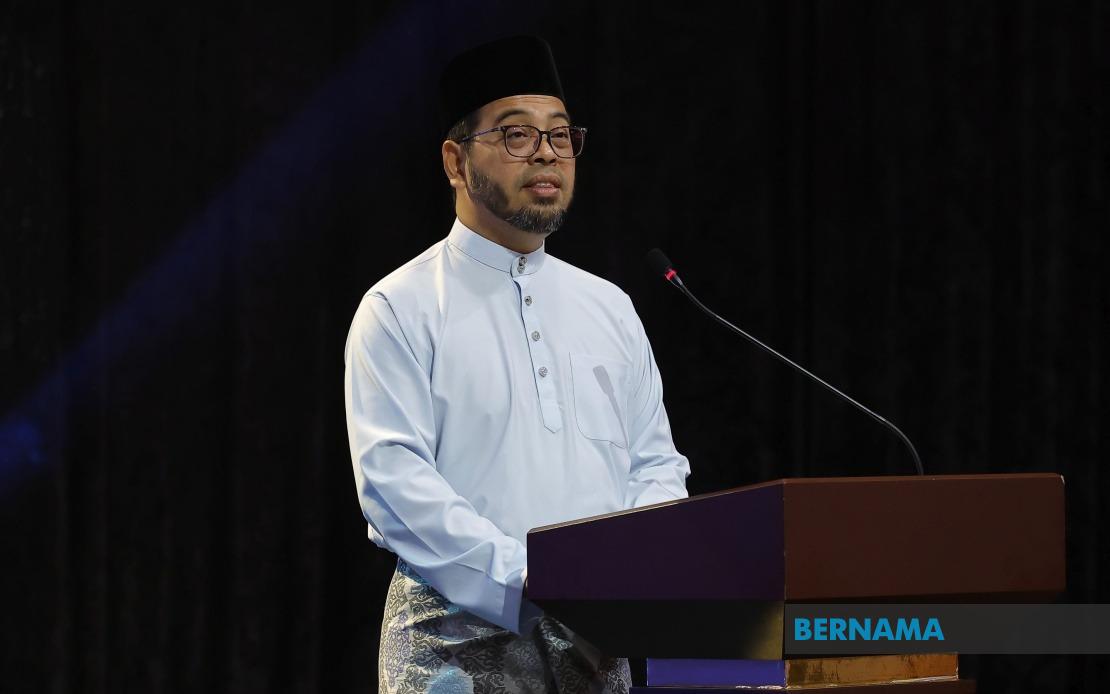
At the national Maal Hijrah 1448H/2026M celebration held at Putra Mosque in Putrajaya, Minister in the Prime Minister's Department (Religious Affairs) Dr Zulkifli Hasan delivered a pointed message about the necessity for Malaysian Muslims to transcend internal disagreements and foster deeper social cohesion. The ceremonial observance, themed "MADANI Dihayati, Ummah Diberkati", drew prominent attendees including Sultan Nazrin Shah of Perak and Deputy Prime Minister Datuk Seri Fadillah Yusof, underlining the significance the government places on the Islamic calendar milestone.
According to Dr Zulkifli, meaningful progress within any community hinges fundamentally on the personal transformation of its individual members. He emphasised that this internal metamorphosis must encompass not merely intellectual advancement but equally critical components of spiritual development and moral fortitude. Without such multifaceted personal growth occurring at the grassroots level, attempts to institute broader social reforms remain superficial and ineffective. This framing positions individual responsibility as the foundation upon which collective advancement must be constructed, a perspective that carries implications for how Malaysia approaches both religious and developmental policy.
The minister articulated a vision wherein a unified and cohesive community generates advantages flowing to all constituents, whereas fragmentation precipitates suffering and weakens the nation's fabric. This argument, though presented in religious and moral language, speaks directly to Malaysia's practical challenges as a multi-religious nation requiring social stability. The framing suggests that enhanced Muslim solidarity need not conflict with broader national unity, but rather serves as a prerequisite for it.
Global headwinds are increasingly affecting Malaysia's economic and social landscape, Dr Zulkifli noted, referencing supply chain disruptions and economic uncertainty that extend far beyond Malaysian borders. These external pressures make internal cohesion particularly valuable, as they provide the resilience necessary to weather international volatility. His emphasis on hearts aligned and commitment unified reflects recognition that economic and geopolitical challenges require societies to operate with maximum efficiency and collective purpose. For Malaysian policymakers, this argument serves as justification for prioritising unity initiatives alongside conventional economic policy responses.
Dr Zulkifli explicitly appealed to Malaysians to sustain backing for government programmes aimed at advancing Muslim dignity and ensuring Islamic principles remain vibrant within the country's civic life. This call represents an implicit acknowledgment that government initiatives addressing religious communities require popular support to succeed, and that such support cannot be taken as automatic. The appeal also signals that the administration views its policies in this domain as requiring continuous validation and public endorsement.
The minister reframed the concept of hijrah—traditionally understood as the Prophet Muhammad's migration from Mecca to Medina—as an ongoing personal and collective journey. Rather than a historical event commemorated annually, he presented hijrah as a continuous process of jettisoning destructive behaviours and embracing values that reinforce social cohesion among Muslims. This reinterpretation makes the religious concept directly applicable to contemporary Malaysian society and its particular challenges, grounding religious observance in practical social outcomes.
With this contemporary understanding of hijrah, Dr Zulkifli argued, efforts to reinvigorate and protect Islamic values become more potent and sustainable. A fragmented community lacks the collective strength to defend shared principles effectively, whereas one bound by mutual commitment can implement such efforts more comprehensively. This logic suggests that strengthening intra-Muslim bonds serves not merely as an end in itself but as an instrumental prerequisite for achieving broader religious and moral objectives that the government has prioritised.
Simultaneously, Dr Zulkifli extended an inclusive message emphasising that citizens of all backgrounds share fundamental responsibility for preserving the nation's peace, stability, and prosperity. This formulation attempts to square the circle between building Muslim-specific unity and maintaining Malaysia's broader multicultural social contract. By presenting Muslim cohesion as complementary to rather than competitive with national solidarity, he offered a framework wherein religious and civic identities reinforce rather than contradict one another.
The ceremony featured recognition of prominent Islamic figures through the National and International Tokoh Maal Hijrah awards. International Islamic University Malaysia Rector Prof Emeritus Datuk Dr Osman Bakar received the national distinction, while Moroccan Islamic scholar Dr Ahmad Al-Raysuni was honoured with the international award. These recognitions highlight Malaysia's aspirations to position itself as a centre of Islamic thought and learning within the broader Muslim world, elevating the visibility of both local and international Islamic intellectual voices. The ceremony thus served multiple purposes: reinforcing domestic Muslim unity while simultaneously projecting Malaysia's influence within transnational Islamic circles.