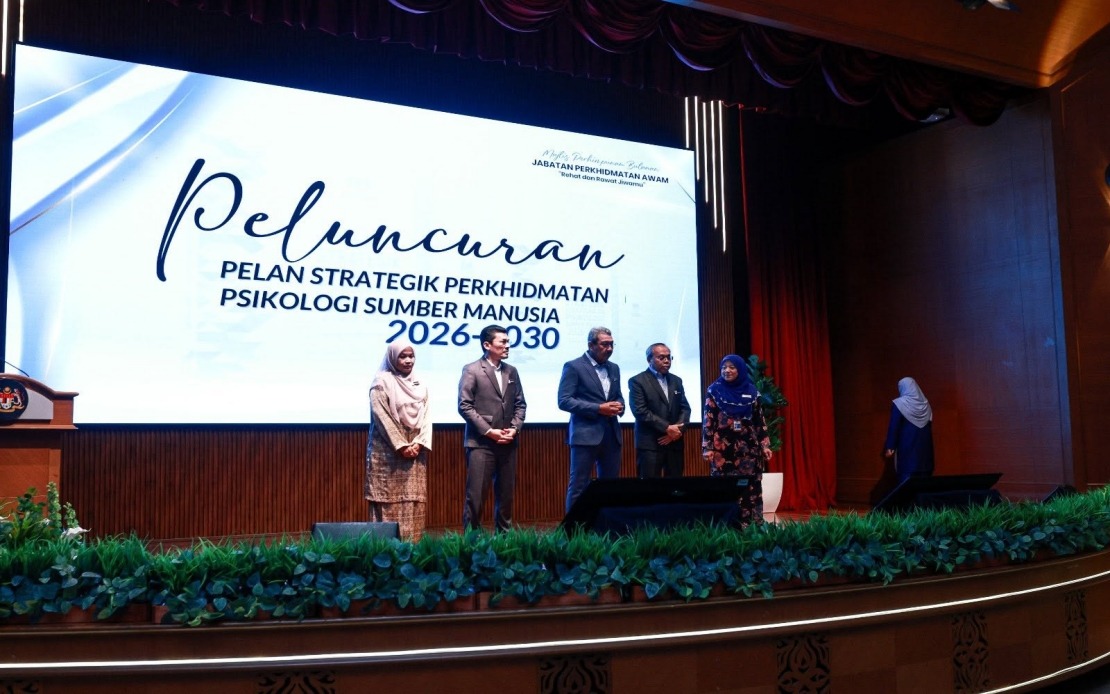
Malaysia's Public Service Department has introduced an ambitious five-year roadmap designed to fundamentally reshape how the country's civil service addresses mental health and psychological well-being among its workforce. The Human Resources Psychology Services Strategic Plan 2026-2030, unveiled at the PSD Monthly Assembly in Putrajaya on June 19, represents a significant institutional commitment to prioritising employee mental health as a cornerstone of organisational effectiveness. The initiative comprises 12 distinct strategies, 22 targeted programmes, and 48 key performance indicators that will guide implementation and measure progress across the entire public sector.
The launch event, which carried the theme "R&R (Rest and Treat) Your Soul", was officiated by Tan Sri Wan Ahmad Dahlan Abdul Aziz, the Director-General of Public Service. His remarks centred on a critical message that resonates beyond traditional human resources management: organisational success fundamentally depends on the mental and emotional health of the people who comprise it. This framing signals a departure from viewing psychological services as peripheral support functions and instead positions them as integral to institutional performance and effectiveness.
A central pillar of the strategic plan is the "Treat" concept, which encourages civil servants to adopt a proactive stance toward their own psychological welfare. Rather than waiting until mental health issues become severe, this approach emphasises taking early intervention steps when needed, seeking professional support, and actively working to dismantle the cultural stigma that has historically surrounded mental health discussions in government workplaces. The emphasis on courage—the willingness to voice problems openly and pursue help without fear of judgment or career consequences—reflects growing recognition that stigma itself remains a significant barrier preventing many public sector employees from accessing available support services.
The psychological well-being framework introduced by PSD builds upon earlier institutional reform initiatives, most notably the H.E.M.A.T work culture programme. H.E.M.A.T encompasses five interconnected elements: enhanced governance, public empathy, progressive mindset, innovation appreciation, and transparent administration. By integrating the new psychology services strategy with this broader cultural framework, PSD is signalling that mental health support does not exist in isolation but rather complements systemic changes designed to create a more humane, forward-thinking public service environment. This holistic approach suggests that improving psychological well-being requires changes at multiple levels—individual, organisational, and institutional.
The "Rawat" concept, which translates to care or treatment in Malay, represents the operational expression of this commitment. Rawat encompasses proactive intervention measures specifically designed to identify and address mental health challenges before they escalate. Rather than adopting a reactive model that only provides support after problems manifest in performance issues or absences, this preventative orientation aims to foster early detection and timely professional intervention. The distinction is meaningful: proactive systems normalise psychological support as a routine aspect of workplace wellness, similar to physical health programmes, whereas reactive systems often only become visible when crises occur.
For Malaysian readers and the broader Southeast Asian context, this initiative carries particular significance. Mental health has traditionally occupied a sensitive position in many regional workplaces, where cultural factors, limited awareness, and organisational taboos have discouraged open discussion of psychological challenges. Public sector organisations, which employ hundreds of thousands across Malaysia and influence workplace practices throughout the economy, carry special responsibility for shifting these dynamics. By institutionalising mental health support through a formal strategic plan complete with measurable objectives, PSD is essentially creating a template that other government agencies and potentially private sector employers may emulate.
The inclusion of 48 specific key performance indicators suggests that implementation will be measured rigorously. These metrics likely encompass utilisation rates for psychological services, employee satisfaction with available support, absenteeism trends, productivity measures, and assessments of stigma reduction within departments. The specificity implied by having 48 distinct KPIs indicates that PSD is moving beyond aspirational statements to establish concrete benchmarks against which success or shortcomings can be objectively evaluated. This data-driven approach increases accountability and provides a mechanism for identifying which programmes prove most effective and which require adjustment.
The 22 individual programmes within the broader strategy presumably reflect different aspects of psychological support and wellness. These might include counselling services, stress management training, peer support networks, mindfulness and resilience programmes, crisis intervention protocols, and managerial training on mental health awareness. By structuring support through multiple distinct programmes rather than a single comprehensive service, PSD allows flexibility in how different departments and employee groups access help suited to their specific needs and circumstances. A junior clerical officer might benefit from basic stress management training and peer support, while a senior manager navigating significant workplace challenges might require individual counselling or coaching.
The five-year timeframe itself carries strategic importance. Mental health and cultural change in organisations rarely demonstrate rapid transformation; embedding new attitudes and practices typically requires sustained effort over years. By committing to a specific five-year plan with defined endpoints, PSD establishes clear accountability timelines while acknowledging that meaningful institutional change cannot be rushed. This duration also aligns roughly with Malaysia's broader economic and administrative planning cycles, potentially facilitating integration with other government-wide initiatives and budget allocations.
The invitation for civil servants to "rest when tired and take care of your soul before it gets worse" reflects important messaging about normalising the acknowledgment of fatigue and emotional exhaustion. In high-stress government environments where traditional work cultures sometimes valorise perseverance despite difficulty, explicitly permission to rest represents meaningful cultural permission-giving. This messaging extends beyond individual wellness to imply broader organisational recognition that sustainable performance requires recovery periods and that attending to psychological needs is not weakness but prudent self-management.
As Malaysia continues navigating complex policy challenges ranging from economic transformation to climate adaptation, the psychological resilience and well-being of the civil service becomes increasingly consequential. Public servants developing and implementing these policies need not only technical competence but also emotional stability, clarity of thinking, and resilience through inevitable setbacks. By investing formally in psychological services and establishing a structured framework for supporting mental health, PSD is effectively investing in the institutional capacity required for effective governance. The broader implications for Southeast Asia are similarly significant, as regional governments increasingly recognise that civil service effectiveness depends fundamentally on workforce well-being, not merely on salary levels or technical training.