Cambodia's leadership is pressing Thailand to take concrete steps toward resolving longstanding border disputes, with Prime Minister Hun Manet calling on his Thai counterpart to fill a vacant position essential to moving the demarcation process forward. The appeal underscores growing diplomatic momentum as the two neighbouring nations work through established channels to manage territorial disagreements that have periodically strained bilateral relations. Both governments remain publicly committed to peaceful resolution, yet the specific request signals Cambodia's frustration with the pace of progress on key boundary issues that have remained unresolved for decades.
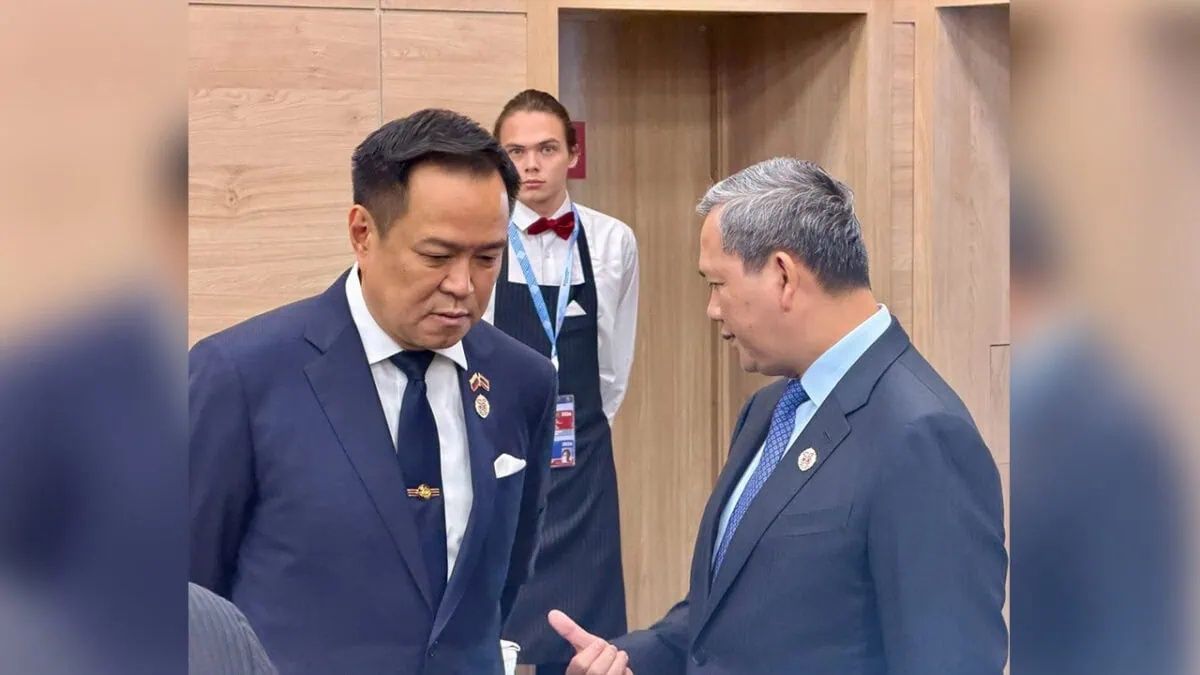
The exchange took place during the Asean-Russia engagement held in Kazan, where Hun Manet and Thai Prime Minister Anutin Charnvirakul managed only a brief informal encounter on the sidelines of the main proceedings. In a social media statement released on Friday, June 19, Hun Manet characterised the conversation as limited in scope but substantive in messaging, emphasising Cambodia's unwavering commitment to resolving territorial disagreements through peaceful means and in strict accordance with international law. The Cambodian premier specifically highlighted his call for Thailand to appoint a chief to the Joint Boundary Commission, a bilateral body designed to coordinate surveying and demarcation activities along the two countries' shared land frontier.
Hun Manet's statement referenced Point Three of a Joint Statement signed on December 27, 2025, which apparently obligates both parties to establish leadership and commence survey work within the JBC framework. The reference to this agreement suggests that Cambodia views Thailand's failure to appoint a commission chief as a breach or at minimum a non-fulfilment of recent diplomatic commitments. For Malaysian observers and wider Southeast Asian audiences, this detail reveals how progress on regional border issues often hinges on administrative appointments and the political will to staff mechanisms that, once operational, can advance dispute resolution methodically.
The Cambodian approach to border management involves a two-pronged strategy reflecting the different nature of disputes in each domain. For maritime boundary questions in the Gulf of Thailand, Cambodia has committed to the compulsory conciliation process mandated under the United Nations Convention on the Law of the Sea (UNCLOS), a mechanism both countries have ratified and in which they are already actively engaged. For land boundaries, however, Hun Manet has consistently favoured bilateral negotiations through the existing JBC framework rather than escalating disputes to international forums. This distinction matters because it reveals Cambodia's calculation that maritime disputes benefit from third-party oversight while land boundary disagreements can be resolved more directly between the two states.
Thai Prime Minister Anutin offered a corresponding account of the Kazan meeting that largely aligned with Cambodia's version while emphasising the conversation's brevity and informal nature. Using colourful language, Anutin described the encounter as little more than pulling each other aside by the elbow, conveying that the discussion occurred in passing during broader multilateral engagements rather than as a scheduled bilateral meeting. Despite the limited time, he confirmed that both leaders reiterated their mutual desire to avoid conflict and stressed their commitment to managing border matters through established legal and diplomatic mechanisms rather than unilateral action or confrontation.
Anutin highlighted Thailand's adherence to multiple frameworks for addressing border issues, including UNCLOS for maritime matters, the JBC for land boundaries, and the General Border Committee (GBC) for broader boundary coordination. This enumeration suggests that from Bangkok's perspective, Thailand is already investing in the necessary institutional structures and remains engaged in their operation. The apparent gap between the Thai and Cambodian positions may reflect different assessments of how effectively these mechanisms are functioning or perhaps disagreement over the pace at which they should advance. For regional stability, such gaps are manageable if both sides continue to privilege dialogue over unilateral measures.
When Thai media inquired whether border checkpoint reopening had been discussed, Anutin deflected with humour, noting that Thai public opinion would oppose such discussions at this juncture. This remark illuminates a domestic political dimension often overlooked in border dispute coverage: popular sentiment in both countries conditions what negotiators can realistically propose. Thai citizens have particular sensitivities regarding cross-border movement and security, making unilateral decisions to reopen disputed checkpoints politically fraught. Hun Manet's earlier statement that border checkpoint discussions were premature aligns conveniently with Anutin's domestic political constraints, though it remains unclear whether this reflects genuine policy consensus or strategic positioning.
The divergence in emphasis between the two leaders' public statements, though subtle, offers insight into negotiating postures. Hun Manet's statement prioritises concrete action—appointing the JBC chief and beginning surveys—while Anutin's remarks emphasise commitment to existing frameworks and desire to avoid conflict. From a negotiation standpoint, Cambodia appears to be raising the pressure for tangible progress, whereas Thailand is defending its record and emphasising the ongoing diplomatic process. This dynamic is typical in territorial disputes where one party seeks acceleration while the other prefers gradual, deliberative progress.
For Malaysia and other ASEAN members, the Cambodia-Thailand border situation carries broader implications for regional stability and institutional confidence. The Association has long championed peaceful dispute resolution and adherence to international law, making the bilateral Cambodia-Thailand dialogue a test case for whether such principles can yield results when major powers are not directly involved. The consistent invocation of UNCLOS by both nations and their adherence to bilateral commissions suggests that Southeast Asian states are capable of managing contentious issues through agreed mechanisms, even when underlying disagreements remain substantial. This pattern offers modest reassurance about the region's institutional maturity.
The pursuit of border demarcation through the JBC reflects a pragmatic approach: rather than seeking dramatic political breakthroughs, Cambodia and Thailand are methodically working through technical surveys and legal interpretations of historical agreements. Such work is unglamorous, slow, and often invisible to publics, yet it gradually narrows the factual basis for disputes. By establishing precisely where boundaries lie through objective surveying, both nations reduce the space for future misunderstandings or opportunistic claims. The frustration Hun Manet expressed suggests Cambodia believes this technical progress has stalled due to Thai administrative delays rather than fundamental policy objections.
As border management between Cambodia and Thailand continues through established diplomatic channels, the bilateral relationship remains susceptible to periodic tensions when local incidents occur or when domestic politics in either nation creates pressure to take harder lines. The Kazan conversation demonstrates that senior leadership maintains commitment to peaceful resolution, yet the specificity of Hun Manet's call for Thai action on the JBC chief appointment suggests this commitment exists within parameters constrained by political and popular opinion. Observers of Southeast Asian affairs should monitor whether Thailand moves to fill the vacant JBC chief position, as this will indicate whether the Kazan conversation translated into momentum or remained merely ceremonial.