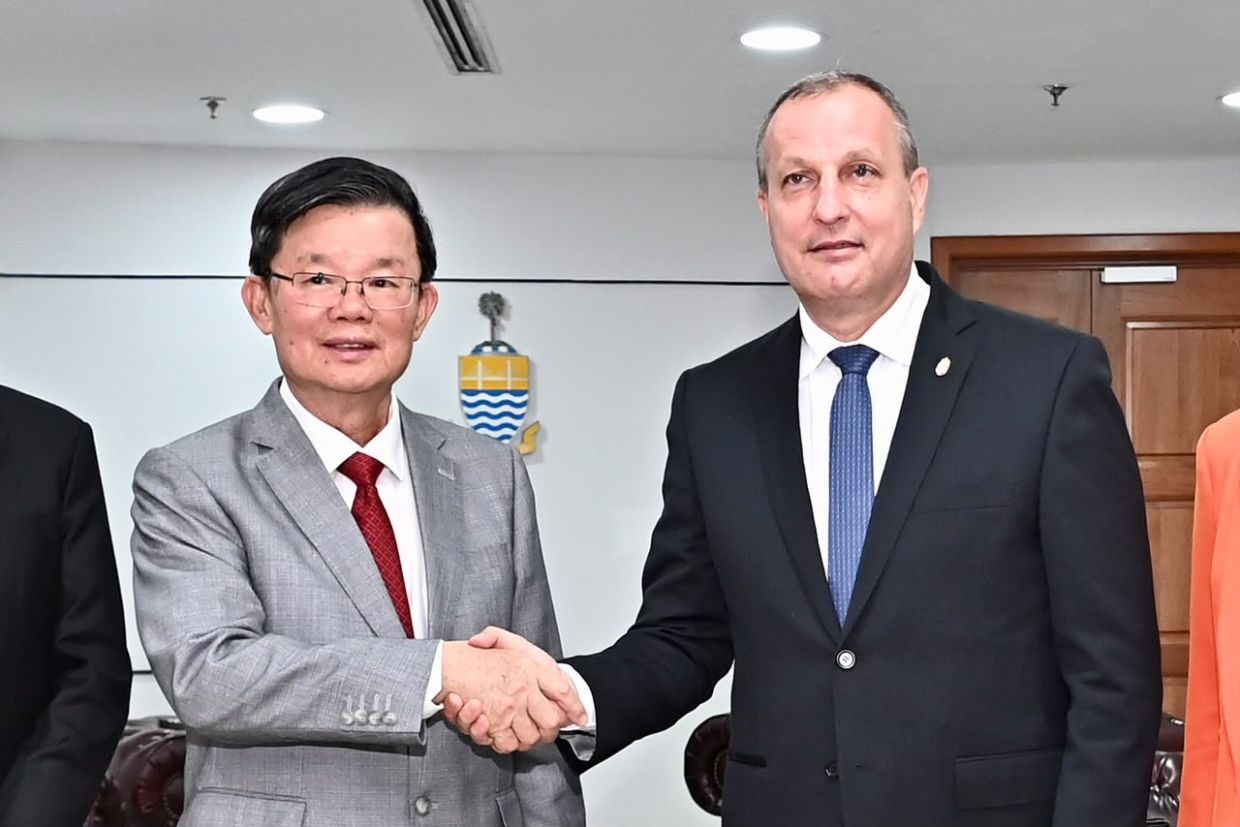
Penang is positioning itself to build a more robust partnership with Hungary across multiple sectors including higher education, technological advancement, environmental sustainability and heritage preservation. The initiative emerged following substantive talks between state leadership and a Hungarian diplomatic mission visiting George Town, signalling growing interest in fostering long-term cooperation between the Malaysian state and the Central European nation.
Chief Minister Chow Kon Yeow highlighted Hungary's standing as a significant European player with considerable depth of knowledge spanning fields particularly relevant to Penang's developmental aspirations. The discussions with Hungarian Ambassador to Malaysia Dr Sándor Sipos and his accompanying team reflected broad ambitions, touching on academic institution linkages, commercial ventures, resource management technologies, sustainable energy solutions, cultural preservation initiatives, and people-to-people exchanges. The conversations extended beyond ceremonial acknowledgments to explore tangible opportunities where Penang's government agencies, academic institutions and private sector could engage meaningfully with their Hungarian counterparts.
The philosophical alignment between both jurisdictions appears fundamental to the partnership's prospects. Chow emphasized that Penang and Hungary share fundamental commitments to balancing economic growth with environmental responsibility and cultural stewardship. This commonality suggests the relationship transcends transactional benefits, potentially creating durable institutional connections. The Chief Minister expressed particular enthusiasm regarding prospects in research initiatives, securing water resources through advanced management systems, transitioning towards renewable energy infrastructure, and cultivating skilled workforces capable of driving innovation in emerging sectors.
Education emerged as a cornerstone pillar within the broader cooperation framework. The Hungarian government currently supports forty fully funded scholarship positions annually for Malaysian scholars, representing a meaningful investment in developing future professionals and researchers from Southeast Asia. Sipos indicated openness to expanding these opportunities, specifically encouraging Penang's talented students to pursue this avenue for overseas education and advanced training. For Malaysia's northern state, these scholarships provide pathways for young people to gain international exposure while building networks that can benefit innovation ecosystems back home. The ambassador underscored education and talent mobility as critical mechanisms for building lasting diplomatic and institutional bridges between nations.
Chow acknowledged Hungary's sustained commitment to the scholarship initiative, recognising its value in equipping Malaysian youth with globally competitive qualifications and research experience. He characterised such educational exchanges as increasingly vital infrastructure for regional cooperation, suggesting Penang views talent development as integral to its competitiveness strategy. The openness displayed by both sides suggests potential for expanding these programmes, possibly targeting specific sectors where Hungary possesses recognised leadership such as water technology, renewable energy systems, and advanced manufacturing.
Beyond academic cooperation, the visiting delegation conducted separate engagements with state executive councillors Goh Choon Aik and Gooi Zi Sen, exploring dimensions including commercial opportunities, community-level engagement, youth initiatives and sporting cooperation. These layered discussions reflected diplomatic thoroughness, ensuring partnership discussions occurred at multiple governance levels rather than remaining confined to high-level statements. The approach signals serious intent to identify concrete collaboration opportunities beyond symbolic gestures.
The sports cooperation dimension represents a distinctive element within the broader partnership architecture. Councillor Gooi expressed interest in exploring athletic disciplines where bilateral exchange could strengthen Penang's sporting capabilities and develop emerging talents. The state government is commissioning its sports council to conduct detailed assessment of suitable sporting disciplines and recommend exchange frameworks with Hungary. This initiative demonstrates recognition that international partnerships can function beyond traditional economic and academic channels, extending into health, wellness and community development sectors where sports serves as powerful soft power vehicle.
For Southeast Asia more broadly, Penang's Hungarian engagement reflects a strategic approach to diversifying international partnerships beyond traditional Asian and Anglo-American networks. As Malaysia's innovation-focused state, Penang recognises that European expertise in environmental technology, heritage preservation and research infrastructure offers valuable models for adoption. Hungary's particular strength in water management technology holds special relevance given Southeast Asia's growing water security challenges, making knowledge transfer in this domain potentially beneficial across the region.
The timing of these discussions aligns with Penang's positioning as Malaysia's gateway for technology-driven investment and innovation hubs. The state has actively cultivated an image as progressive and internationally engaged, making partnerships with established European economies strategically consistent with its branding. Hungary's technological capabilities and research traditions provide complementary assets to Penang's existing strengths in semiconductor manufacturing, logistics and digital innovation clusters.
Implementing these partnership aspirations requires translating diplomatic goodwill into operational frameworks. Both sides acknowledged the necessity for concrete collaborative projects to emerge from current discussions, suggesting awareness that intentions alone yield limited outcomes. The involvement of state executive councillors and specialised agencies like the sports council indicates institutional machinery for converting diplomatic exchanges into actionable programmes.
The partnership also reflects Hungary's own strategic interests in Southeast Asia. As a European Union member with significant manufacturing and technology sectors, Hungary seeks stable markets and technology transfer opportunities in growing Asian economies. Malaysia represents an attractive destination given its political stability, skilled workforce and established position within ASEAN, making Penang an logical focal point for engagement given the state's prominence in high-technology sectors.
Moving forward, success will depend on identifying specific projects where Hungarian expertise directly addresses Penang's development priorities. Water management technology, renewable energy infrastructure, academic research collaborations in emerging fields, and heritage conservation methodologies represent probable initial focus areas. The breadth of discussions suggests both parties recognise partnership potential while remaining pragmatic about requiring demonstrable returns to justify investment.
This engagement demonstrates Penang's confidence in cultivating strategic international relationships beyond conventional patterns. By positioning itself as open to partnerships with technologically advanced European nations, the state signals its aspirations for development models emphasising sustainability, innovation and cultural preservation alongside economic growth, sending important signals to investors and institutions worldwide regarding its strategic direction.