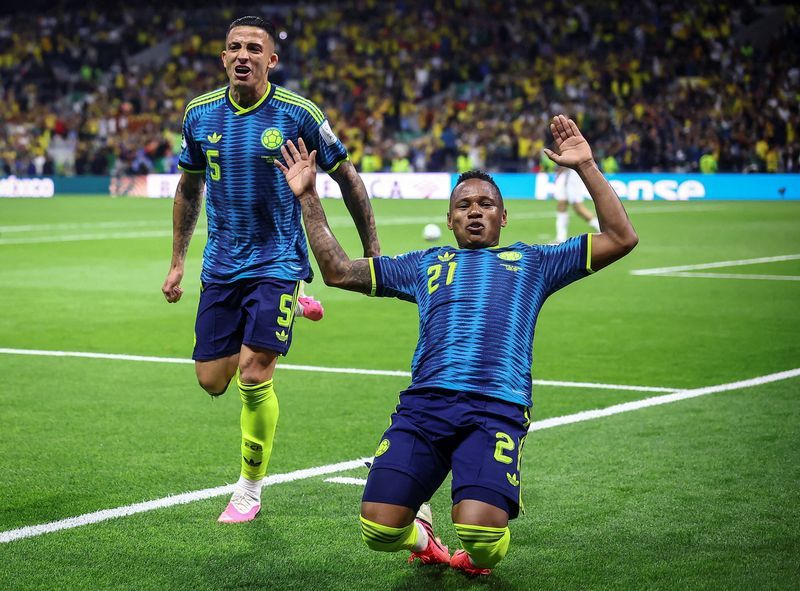
Colombia will attempt to maintain their winning momentum in the World Cup when they confront DR Congo on Tuesday, hoping to register back-to-back victories and effectively book their passage to the knockout rounds. Manager Nestor Lorenzo's team began their Group K campaign with a 3-1 triumph over Uzbekistan, though the Argentine coach recognised that the comfortable scoreline belied a troubling period in the second half when their Central Asian opponents exposed tactical vulnerabilities that could prove costly against more accomplished sides. A victory would guarantee Colombia's advancement to the Round of 32 and could even secure them the group crown should Portugal falter against Uzbekistan in their concurrent fixture.
The spotlight will once again centre on Bayern Munich's Luis Diaz, the dynamic forward whose movement and direct running proved instrumental in dismantling Uzbekistan's defence. Operating with a freedom that stretched the opposition throughout, Diaz claimed both a goal and an assist while earning the player-of-the-match accolade. His ability to transition quickly from defence to attack will be crucial against DR Congo, a team likely to employ a disciplined, compact shape designed to neutralise Colombia's creative players and exploit opportunities on the counter-attack. The challenge intensifies when considering that team captain James Rodriguez, typically the architect of Colombia's attacking plays, remained largely peripheral during the opening encounter, with Lorenzo's setup relying heavily on Diaz's individual brilliance rather than the coherent attacking structure the side will need for sustained success.
DR Congo's approach to this fixture will be shaped by their encouraging debut performance, one that has energised the entire nation and reshaped perceptions of their tournament prospects. The African side's 1-1 draw against Portugal in their opening match represented an extraordinary achievement, marking their competitive return to the World Cup stage after a 48-year absence. Yoane Wissa's opening goal provided DR Congo with a precious moment of history, becoming the nation's first World Cup goal since Zaire's participation in 1974. Coach Sebastien Desabre's defensive organisation and astute use of rapid transitions to trouble one of the tournament's pre-tournament favourites demonstrated that this team possesses qualities extending well beyond their global ranking.
Lorenzo has not underestimated the tactical examination that awaits his squad, delivering a cautionary assessment in the aftermath of the Uzbekistan match. The Colombian manager identified DR Congo's emphasis on vertical passes and swift breaks as presenting a fundamentally different problem compared to the possession-heavy approach required against Uzbekistan. He pointedly noted that Colombia's dominance of the ball occasionally became counterproductive, with excessive sideways play fragmenting attacking sequences that never reached fruition. This observation hints at a broader concern within the Colombian setup regarding clinical finishing and the need to convert dominance into more decisive scorelines, particularly against opponents who will defend with greater discipline and tactical awareness than Uzbekistan demonstrated.
The Colombian attacking setup will likely require greater incisiveness and ball movement if they are to break down DR Congo's anticipated defensive structure. Rather than relying on Diaz's pace to repeatedly pierce defensive lines, as happened against Uzbekistan, Colombia must develop more intricate passing combinations that create clearer shooting opportunities. James Rodriguez's elevation in influence could be instrumental here, as his technical quality and vision represent the kind of orchestration that can unlock compact defences. Lorenzo will hope that a more complete and cohesive attacking performance emerges, one where Colombia's superiority in possession translates more reliably into territorial advantage and clear-cut chances.
DR Congo's defensive resilience and counter-attacking threat represent tangible dangers that cannot be dismissed. Desabre's tactical approach has shown an appreciation for shape and discipline, qualities that proved effective even against Portugal's sophisticated attacking apparatus. The Congolese players have demonstrated a hunger and intensity that suggests they view this tournament as an opportunity to establish themselves on the continental stage and prove that their emergence is not merely a one-match phenomenon. Their ability to absorb pressure and strike quickly on the break means Colombia cannot afford the second-half complacency that characterised their opener.
Home advantage in Mexico City will again favour the South Americans substantially. Thousands of Colombian supporters transformed the Estadio Azteca during their opening match, creating an atmosphere that effectively neutralised any home-ground advantage for the tournament hosts. With Colombia's official training base located in Guadalajara, only a short distance from the capital, another substantial Colombian contingent is expected to attend, providing vocal support and psychological advantage that could prove decisive in tight moments. This factor, combined with Colombia's superior technical quality when playing with confidence and cohesion, suggests they enter as clear favourites.
The broader tournament context adds urgency to Colombia's performance. Group K remains wide open, with multiple permutations possible depending on the outcomes of concurrent and upcoming matches. A victory for Colombia would largely settle their progression, potentially opening a path to a favourable knockout draw. Conversely, a slip-up would intensify pressure heading into their final group fixture and leave their destiny partly dependent on results beyond their control. Lorenzo will be acutely aware that consistency, not merely quality, determines World Cup success, and Tuesday's match offers an ideal opportunity to establish a platform for the knockout stages.