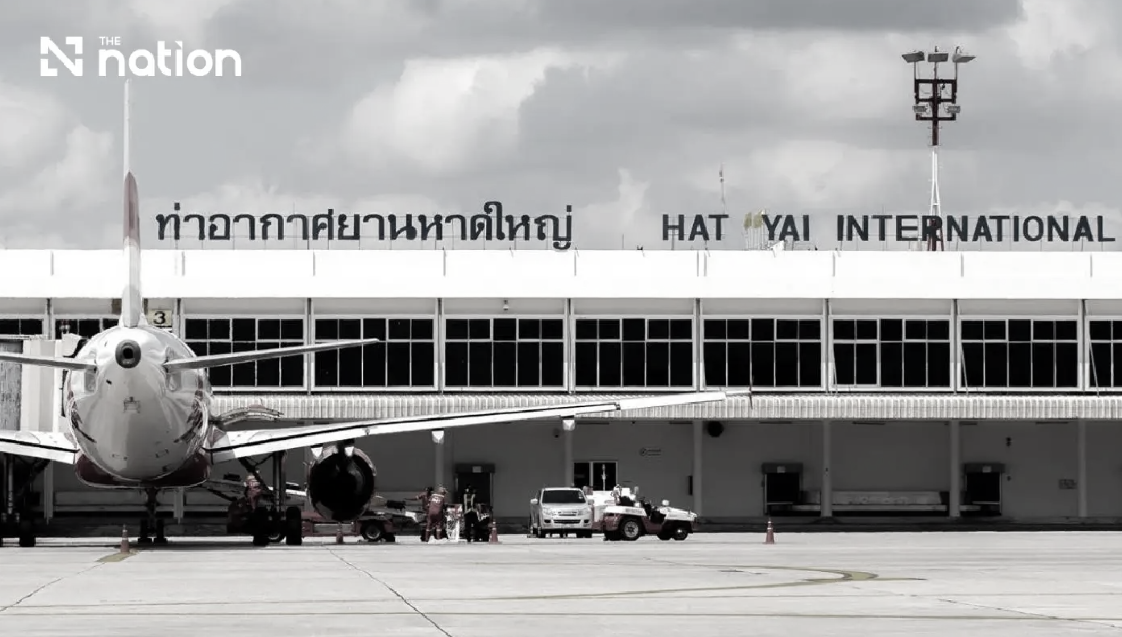
Thailand's Hat Yai International Airport ground operations to a halt on Wednesday afternoon when a fire engine became involved in an accident on Runway 26, creating an unexpected bottleneck for inbound traffic and inconvenience for hundreds of travellers across Southeast Asia's southern transport corridor. The incident forced airport authorities to issue a navigational notice and implement a runway closure lasting nearly three hours, with immediate implications for airlines operating the busy route between Malaysia, Thailand, and points beyond.
Airport officials imposed the closure from 1.55pm to 4.30pm on June 17 as a precautionary measure while ground teams worked to secure and assess the accident scene. The decision reflected standard aviation safety protocols that prioritise runway integrity and operational security above scheduling convenience—a principle that, while essential, inevitably cascades disruption through airline networks and passenger itineraries. Hat Yai serves as a critical hub for cross-border movement in Thailand's southernmost Songkhla Province, directly adjacent to Malaysia's Perlis state, making any operational interruption felt acutely by regional travellers.
With Hat Yai's primary landing surface unavailable, air traffic controllers had no option but to redirect arriving aircraft to alternative airfields. Krabi International Airport, situated roughly 150 kilometres northwest, became the designated diversion point for the affected traffic. Flight-tracking data from Flightradar24 revealed that at least two commercial services were rerouted during the window: Thai Airways' service TG263 and Thai Lion Air's flight SL712 both touched down at Krabi rather than their intended destination, adding journey time and logistical complications for the travelling public.
Passenger experiences ranged from frustrating to anxiety-inducing, with relatives of those aboard the diversions left grappling for information. One family member who contacted Hat Yai Airport seeking clarification received only vague confirmation of an unspecified emergency, with airport personnel declining to elaborate on the precise nature of the fire engine incident. This communication gap, while sometimes inevitable during active emergency response, underscored how airport incident management must be balanced with public transparency and passenger reassurance—a challenge many facilities across Southeast Asia continue to navigate.
Thai Airways flight TG263, the aircraft that prompted at least one direct inquiry from a concerned passenger, eventually landed safely at Krabi and proceeded through normal disembarkation procedures. Passengers on that service and others faced extended journey times, missed connections, and the uncertainty inherent in diversions. While no injuries were reported in the fire engine accident itself, the operational ripple effect touched every booking on those flights and created secondary complications for downstream services depending on aircraft rotation schedules.
The incident illuminates the fragility embedded in modern airport operations, where a single equipment mishap can instantly disable critical infrastructure affecting thousands of people. Hat Yai's dependence on a single primary runway—a common configuration at secondary and regional airports across developing Southeast Asian economies—means that any surface closure concentrates all capacity constraints onto alternative facilities or generates diversions. As air traffic continues expanding throughout the region, the reliability of ground support equipment and the rapid response protocols for incidents becomes increasingly vital to systemic resilience.
For Malaysian travellers and transport authorities, the closure carried particular significance given Hat Yai's geographic and commercial proximity to northern Peninsular Malaysia. Many Malaysian passengers use the airport as a gateway to southern Thailand's resort destinations, government services, or onward connections. Diversions that add hours to journeys create real costs for business and leisure travel alike, while also testing the contingency planning capabilities of airlines operating in the region.
Airlines affected by the closure issued passenger advisories recommending continuous monitoring of official communications, acknowledging that flight delays and itinerary modifications would likely materialise. This reactive messaging, though standard, emphasised the limited visibility and control that passengers retain once diversions are activated. The responsibility for managing rebooking, accommodation, and schedule adjustments fell primarily on individual carriers' customer service operations, a burden that can strain resources during simultaneous diversions.
The closure and diversion episode reinforced the vulnerability of single-runway airport configurations during operational emergencies. While Hat Yai's second runway exists for capacity purposes, standard safety procedures typically require the compromised surface to be fully cleared and inspected before restoration to service. The three-hour window permitted thorough investigation and remediation without unnecessarily extending the disruption, though it still represented a significant gap in throughput capacity during the busy mid-afternoon period when most scheduled services operate.
Investigations into the fire engine accident itself remained ongoing in the immediate aftermath, with airport authorities responsible for determining root causes and implementing corrective measures to prevent recurrence. Whether the incident stemmed from mechanical failure, operator error, or external factors would influence subsequent procedural adjustments and equipment maintenance protocols. For passengers monitoring news from Krabi while awaiting onwards flights, these technical particulars mattered less than practical concerns: when would delayed services depart, what compensation or assistance would airlines provide, and whether their connections remained salvageable.
The incident illustrated broader themes affecting airport safety management across Southeast Asia. Regional aviation authorities, while maintaining robust safety standards, continually encounter resource constraints, equipment limitations, and staffing pressures that can compromise operational margins. Hat Yai's experience on June 17 served as a reminder that even routine ground operations involve inherent risks, and that investment in modern equipment, training protocols, and redundant systems yields dividends when emergencies inevitably occur.
Looking forward, the closure and its passenger impact may prompt Hat Yai and similar regional airports to reassess emergency response procedures, ground equipment maintenance cycles, and contingency protocols with local and national aviation authorities. For Malaysian passengers and airlines operating this route, the incident underscored the importance of flight flexibility and the value of real-time monitoring services that provide advance warning of disruptions—tools increasingly essential in navigating Southeast Asia's interconnected but occasionally fragile transport networks.