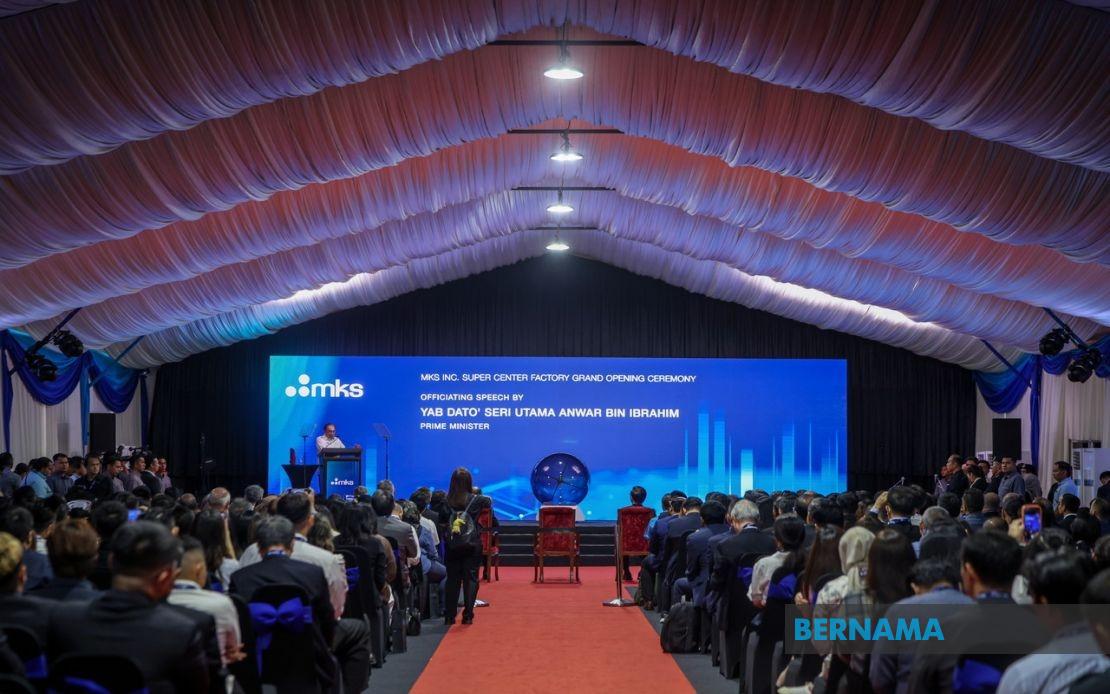
Prime Minister Datuk Seri Anwar Ibrahim has underlined how Malaysia's strategy of engaging with all nations while preserving its independence and neutrality has deepened international confidence in the country and unlocked new avenues for economic partnership. Speaking at the opening of the MKS Super Centre factory in Bandar Cassia Technology Park in Batu Kawan today, Anwar emphasised that this carefully calibrated diplomatic approach has positioned Malaysia as a credible and attractive partner across different regional and ideological camps.
The Prime Minister's remarks came as he highlighted the tangible commercial dividends flowing from Malaysia's non-aligned posture. He pointed to Petroliam Nasional Bhd's recent accord in Turkmenistan as concrete evidence that the country's refusal to choose sides in major geopolitical contests has translated into real economic gains. This agreement underscores how Malaysia's ability to maintain cordial ties with multiple powers simultaneously creates space for strategic business expansion in markets that might otherwise remain closed to nations perceived as aligned with rival blocs.
Anwar recounted Malaysia's recent high-level diplomatic engagements across the globe to illustrate the breadth of the nation's outreach. He referenced his interactions with United States President Donald Trump during the latter's visit last year, alongside concurrent initiatives with China and India, before noting more recent overtures toward Russia. This constellation of engagements, he suggested, reflects Malaysia's intentional positioning as a hub of diplomatic inclusivity rather than exclusivity, a stance that distinguishes the country in an increasingly fractious international order.
The Prime Minister's framing of Malaysia's foreign policy as rooted in "centrality" reveals the government's thinking about the nation's role in global affairs. By maintaining independence and avoiding formal alignment with any bloc, Malaysia projects itself as a neutral arbiter and reliable partner capable of serving multiple masters without compromising core interests. This posture appeals to international investors and partners who view neutrality as a form of stability and predictability.
Anwar stressed that Malaysia's approach extends beyond mere transactional engagement. The country actively articulates its positions on contentious international matters, demonstrating that neutrality does not equate to silence or indifference. Instead, Malaysia reserves the right to speak on issues of principle while simultaneously welcoming participation and cooperation from all quarters. This balance between principled advocacy and pragmatic engagement distinguishes Malaysia's approach from passive non-alignment.
For Malaysian readers and businesses, the implications are significant. A government actively cultivating relationships across geopolitical divides enhances opportunities for Malaysian companies to access markets in the United States, China, Russia, India and beyond. When major powers view Malaysia as genuinely neutral rather than as a proxy for rivals, they become more willing to invest, establish joint ventures, and pursue strategic partnerships that benefit Malaysian economic interests.
The Petronas agreement in Turkmenistan exemplifies this dynamic in practice. Turkmenistan, a former Soviet republic situated between major powers with competing interests, represents precisely the kind of market where Malaysia's neutral credentials prove most valuable. A nation perceived as aligned with Washington or Beijing might face suspicion from Central Asian states wary of great power competition. Malaysia, by contrast, enters such markets as a trusted third party without geopolitical baggage.
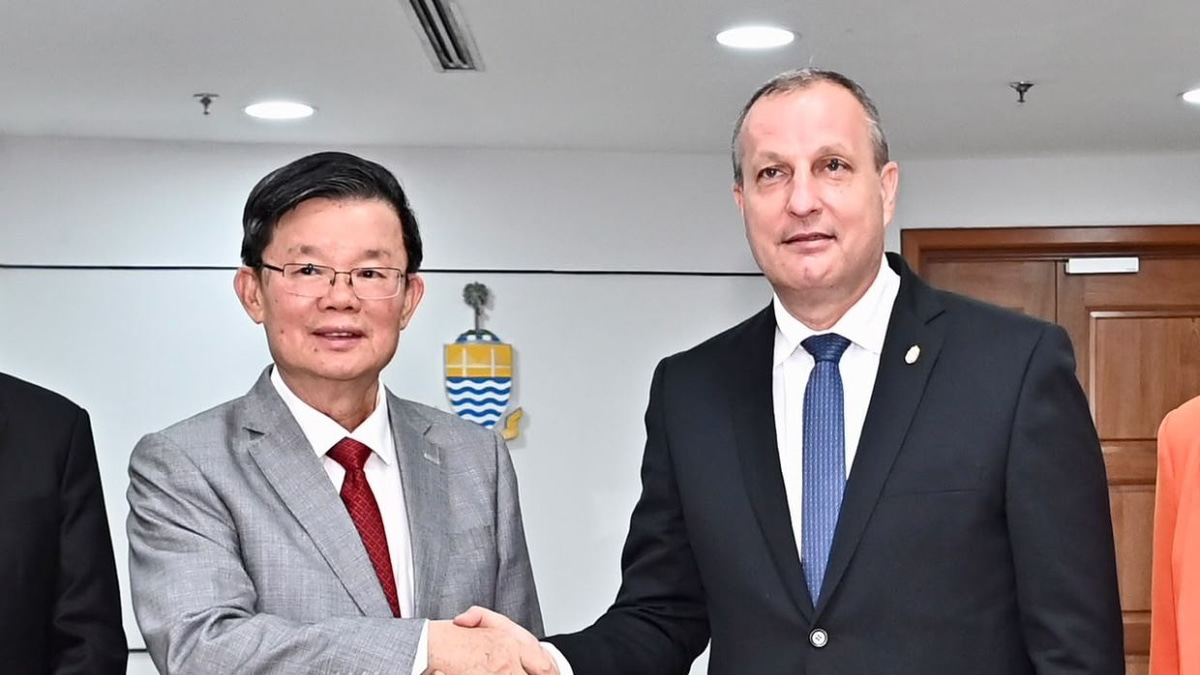
The factory opening event itself, attended by Penang Chief Minister Chow Kon Yeow and Deputy Minister of Investment, Trade and Industry Sim Tze Tzin, signals the government's emphasis on translating diplomatic achievements into tangible industrial and employment outcomes. The MKS Super Centre project represents the kind of private sector growth that depends on a stable, internationally credible operating environment. Anwar's remarks connected the dots between foreign policy doctrine and domestic economic performance.
Malaysia's balancing act occurs amid an era of renewed great power competition. With the United States seeking to counter Chinese influence, China asserting its regional role, India emerging as a major power, and Russia reasserting itself in global affairs, smaller nations face genuine pressure to choose sides. Malaysia's refusal to do so stands as a deliberate strategic choice with real costs and benefits. The cost is the occasional displeasure from major powers seeking clearer commitments; the benefit is access to all markets and the ability to profit from competition without bearing its security burdens.
For Southeast Asia more broadly, Malaysia's model holds lessons and implications. As the region becomes increasingly contested terrain for great power rivalry, nations that successfully maintain autonomy and neutrality while engaging all parties gain disproportionate leverage. Malaysia's relative economic success and stable regional standing partly reflect this diplomatic positioning, offering a template that other Southeast Asian governments watch closely.
The Prime Minister's emphasis on engagement rather than isolation also reflects a pragmatic understanding of Malaysia's position. A resource-rich but mid-sized economy cannot afford autarky or complete non-alignment in the manner of Cold War non-aligned movements. Instead, Malaysia engages actively on its own terms, leveraging its location, resources, and strategic significance to extract maximum benefit from competing powers' desire for Malaysian cooperation and support.
Looking forward, Malaysia's declared commitment to this balanced approach suggests the government intends to deepen rather than abandon its multi-directional diplomacy. Successive agreements like the Petronas deal in Turkmenistan will likely follow, each validating the strategic logic underlying Anwar's foreign policy vision. For investors and businesses, both Malaysian and foreign, this consistency in diplomatic approach provides confidence that Malaysia will remain an accessible, stable partner regardless of shifts in great power alignments.