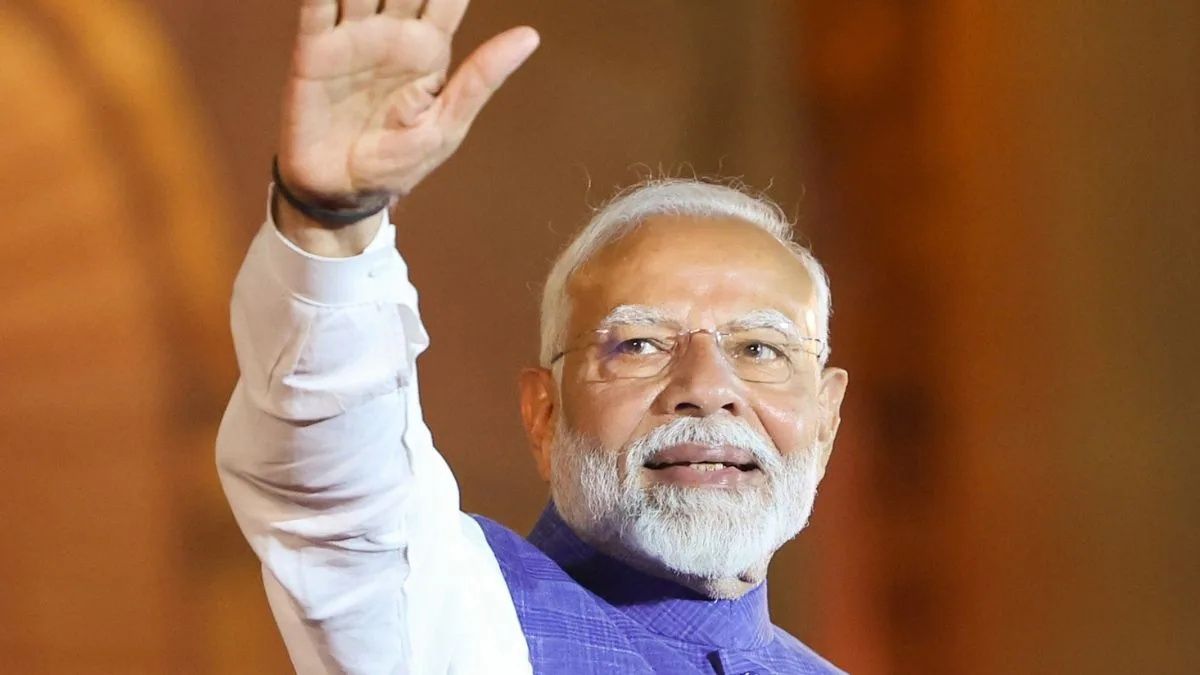
Prime Minister Narendra Modi will take centre stage at India's 12th International Day of Yoga celebrations on Sunday, June 21, leading proceedings from Kolkata's historic Red Road in what the government describes as a reaffirmation of his "Healthy Body, Healthy Mind" philosophy. The choice of West Bengal's capital city for the main national event carries considerable political significance, arriving on the heels of the Bharatiya Janata Party's decisive victory in the state's assembly elections, where the party displaced the ruling Trinamool Congress from power for the first time. Senior BJP officials have indicated that West Bengal will command heightened attention from the Modi government over the coming months and years, with promises of accelerated development for a state described as having suffered from poor governance under its previous administration.
The Red Road venue itself carries symbolic weight beyond its function as a gathering point. One of Kolkata's most prominent public spaces, it represents a convergence of civic engagement, military heritage, and environmental progress—qualities that organisers believe align with yoga's holistic philosophy. The early morning mass demonstration will feature the Common Yoga Protocol, drawing thousands of participants including senior government dignitaries and ordinary citizens. Organisers anticipate record attendance at the Sunday event, reflecting what they characterise as unprecedented enthusiasm for yoga among Indians across socioeconomic and geographic boundaries.
The scale of this year's International Day of Yoga extends far beyond a single gathering in Kolkata. The Ministry of Ayush has orchestrated approximately 2,500 organised events across the globe, with participation coordinated through 211 Indian diplomatic missions stationed abroad. This expansion underscores India's broader efforts to position yoga as a global wellness practice while simultaneously leveraging the celebrations to promote soft power and cultural diplomacy. The international dimension proves particularly relevant for Malaysian and Southeast Asian readers, as neighbouring countries increasingly engage with Indian wellness traditions and cultural initiatives, with many yoga practitioners and wellness enthusiasts in the region viewing these events as opportunities to connect with their Indian counterparts.
A remarkable logistical achievement underpins this year's celebrations: the Ministry of Ayush's Yoga Sangam Portal has registered 600,000 organisations, a milestone that officials characterise as reflecting unprecedented institutional and community engagement. These registered organisations will mobilise their own participants to practise yoga simultaneously with Modi during the main event, creating a distributed yet coordinated nationwide movement. The sheer numerical scale illustrates how yoga has transitioned from a niche wellness practice to a mass-participation phenomenon in contemporary India, embedded within government public health messaging and institutional structures.
The 2024 celebration carries the thematic focus of "Yoga for Healthy Ageing," a choice that reflects demographic realities confronting India and much of Asia. Union Minister of State for Ayush Prataprao Jadhav articulated the underlying rationale: as global life expectancy extends, the critical challenge becomes ensuring those additional years remain characterised by vitality, independence, and purpose rather than decline. Yoga, according to the government's framing, offers a proven holistic methodology for achieving this balance by simultaneously strengthening physical capacity, nurturing psychological resilience, and enriching overall quality of life. This messaging carries particular resonance across Southeast Asia, where rapid ageing populations and mounting healthcare costs prompt governments and individuals alike to explore preventive wellness approaches.
The Ministry of Culture has integrated India's heritage dimensions into the broader celebration by programming yoga events at 100 iconic locations throughout the country. This initiative explicitly bridges contemporary wellness trends with India's cultural and traditional knowledge systems, positioning yoga not merely as modern fitness but as continuity with civilisational practices. Such framing appeals to cultural conservatives while simultaneously modernising yoga's presentation for younger, urban audiences. For Malaysian observers, the approach illuminates how Indian policymakers strategically connect heritage preservation with contemporary health promotion objectives.
Kolkata's preparation for the main Sunday event has involved a series of preparatory activities, including the "Daud Se Dhyan 2026 – From Movement to Stillness" initiative organised under the Swachhata Se Swagat Programme. This preceding activity wove together health promotion, cleanliness initiatives, and broader civic responsibility messaging, indicating how the Modi government employs yoga celebrations as vehicles for multifaceted social messaging beyond wellness alone. The layering of objectives—health, hygiene, civic engagement—demonstrates the political utility government officials derive from these national observances.
The West Bengal government has taken the notable step of mandating participation in International Day of Yoga celebrations for all government employees, requiring attendance at designated venues including Red Road and Milan Mela grounds. This mandatory participation contrasts with voluntary engagement in other states, signalling the particular political importance West Bengal assumes following the electoral transition. Such directives raise questions about the distinction between promoting wellness and deploying mandatory participation as a demonstration of governmental control and political alignment, concerns that Malaysian observers familiar with similar directives in their own context may find instructive.
India's positioning of yoga as a global wellness phenomenon, coupled with the government's strategic deployment of International Day of Yoga celebrations for political messaging within West Bengal specifically, illustrates how health initiatives increasingly intersect with statecraft. The 600,000 registered organisations, the 211 international missions, and the 2,500 worldwide events collectively represent a sophisticated infrastructure for simultaneously promoting wellness, cultural nationalism, and diplomatic outreach. For Southeast Asian nations and Malaysia particularly, India's approach offers a case study in how regional powers leverage traditional practices, health promotion, and cultural diplomacy in integrated fashion. The convergence of genuine health benefits, cultural heritage preservation, and political positioning within West Bengal demonstrates the multivalent purposes these celebrations serve in contemporary India's political economy.