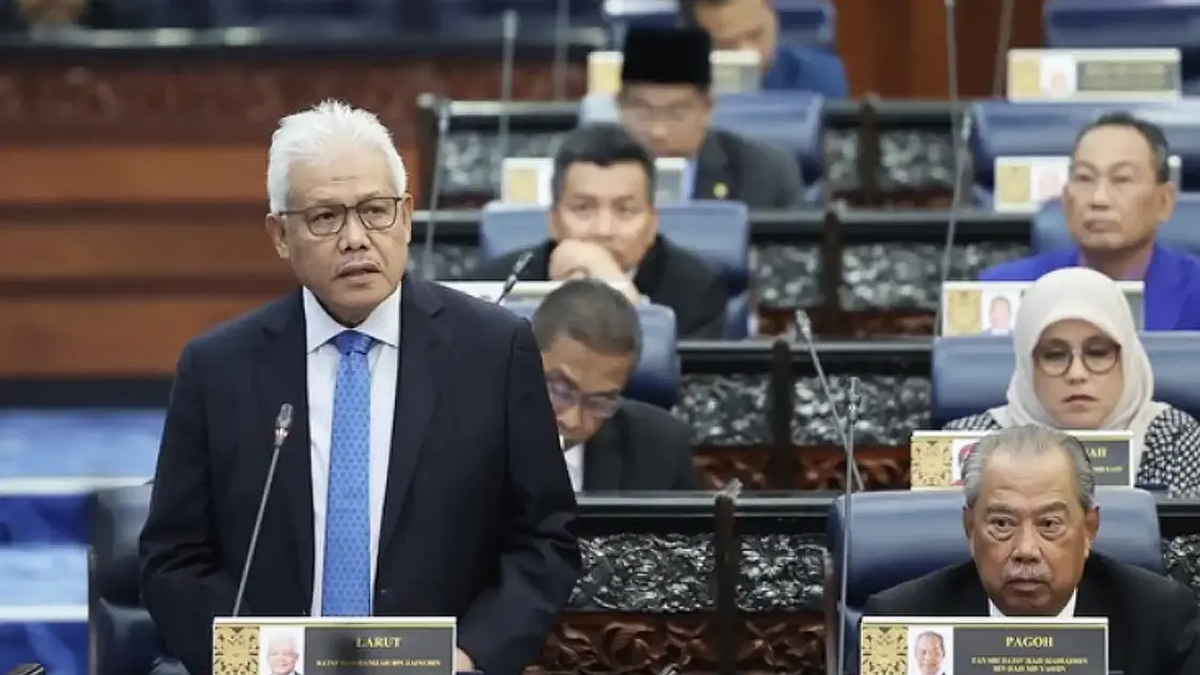
PAS leadership has moved to dispel persistent speculation about the stability of the Perikatan Nasional coalition by explicitly rejecting claims that the Islamic party has sought to engineer Bersatu's exit from the alignment. The statement, delivered in Kota Baru, addresses growing public discourse regarding the apparent friction that has characterised relations between PAS and Bersatu in recent months.
The clarification comes at a juncture when observers and political analysts have noted visible tension within the PN framework. Multiple incidents and policy divergences have fuelled conjecture about the durability of the coalition, particularly regarding the respective roles and influence wielded by its major components. By issuing this categorical denial, PAS appears intent on reassuring both its coalition partners and the broader political establishment that its commitment to the PN arrangement remains intact.
The Perikatan Nasional coalition, which emerged as a significant political force following the 2020 general election, comprises multiple parties with distinct ideological foundations and regional strongholds. PAS, drawing substantial support from its traditional heartland in the northern states, has long positioned itself as the defining voice within the coalition structure. Bersatu, by contrast, brings to the table the political capital of former Prime Minister Mahathir Mohamad and subsequent leadership under Muhyiddin Yassin, alongside its own base of supporters across several states.
The relationship between these two parties has never been entirely seamless, reflecting fundamental differences in approach to governance, religious matters, and national priorities. PAS advocates for a framework grounded explicitly in Islamic principles and constitutional provisions, whereas Bersatu has typically positioned itself as more centrist and accommodating of secular governance elements. These contrasting worldviews have occasionally manifested in public disagreements and divergent policy stances on significant national issues.
Recent months have witnessed intensified media scrutiny of PN's internal dynamics, with various commentators speculating whether structural tensions might eventually prove insurmountable. The coalition's performance in recent state elections, particularly in Selangor and other key territories, has raised questions about its electoral viability and political coherence. Such electoral setbacks naturally invite speculation about whether constituent members might recalibrate their alignments or seek alternative partnerships.
For Malaysian readers, the stability of Perikatan Nasional carries direct implications for national governance prospects. The coalition represents one of two major political blocs competing for federal power, alongside Pakatan Harapan. Any substantial reconfiguration of PN's composition would fundamentally alter the mathematical calculations underlying potential government formations. This explains the heightened attention paid to internal PN developments by political observers, media outlets, and ordinary citizens monitoring the nation's political trajectory.
PAS's explicit denial also reflects awareness that public uncertainty regarding coalition stability can undermine organisational coherence and electoral performance. Voters typically prefer political alliances that project confidence and permanence rather than those perceived as fragile or riven by internal contradiction. By stating unambiguously that it has not and does not intend to force Bersatu's departure, PAS aims to project an image of coalition reliability to both supporters and swing voters.
The timing of this clarification is equally significant. Political cycles in Malaysia often involve periods of heightened speculation about party movements and coalition recalibrations, particularly as the nation approaches electoral cycles or experiences shifts in parliamentary arithmetic. PAS's statement can be understood as a preemptive measure to forestall escalating rumours that might otherwise gain traction and potentially destabilise internal party morale or public confidence in PN's cohesion.
Within the Southeast Asian context, the stability of Malaysia's major political coalitions carries regional significance. The Perikatan Nasional coalition's trajectory influences Malaysia's foreign policy orientation, trade relationships, and regional positioning. A fractured or internally conflicted PN would present different strategic signals to neighbouring countries and international partners than a united coalition would project.
Looking forward, the implicit challenge facing both PAS and Bersatu involves reconciling their respective party interests and ideological commitments while maintaining sufficient unity to function as an effective coalition. This requires continuous dialogue, careful management of divergences, and recognition of mutual interests in maintaining coalition viability. The parties must navigate between accommodating internal differences and projecting the external image of coherence necessary for electoral success and governmental effectiveness. PAS's statement, therefore, should be understood not as a definitive resolution of underlying tensions but rather as an attempt to manage their political expression in public discourse.