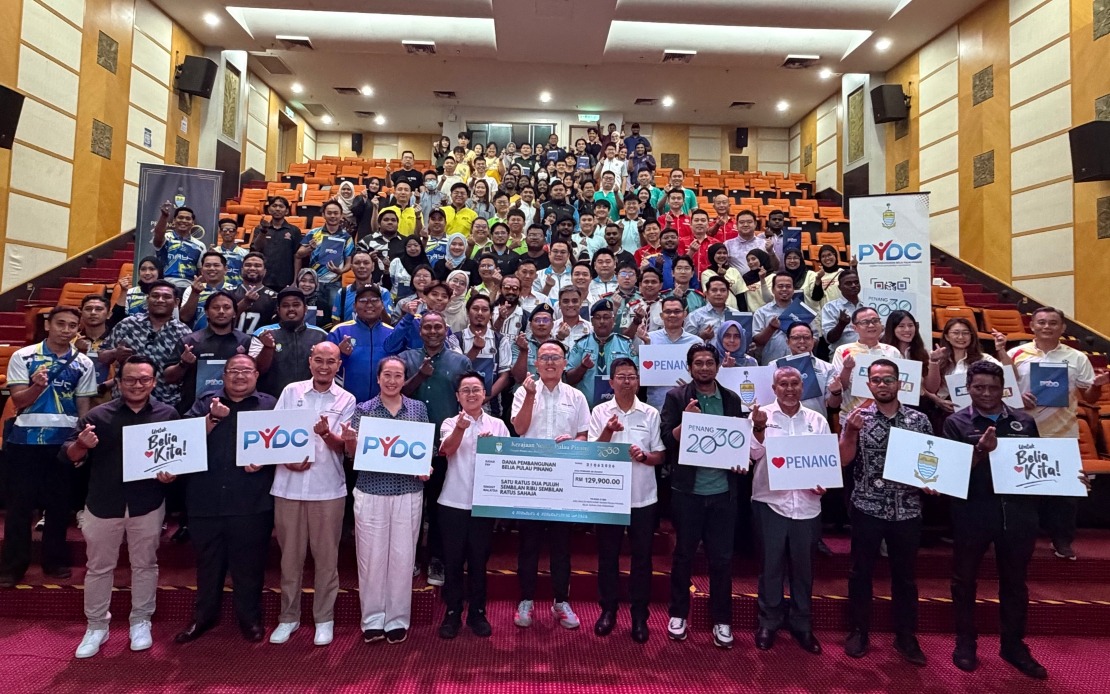
The Penang state government has committed RM129,900 in funding to drive youth development initiatives across the state this year, directing resources to 68 separate programmes managed by 48 registered youth associations. The allocation represents part of a broader RM200,000 commitment approved during a recent Penang State Executive Council Meeting, reflecting the administration's strategic prioritisation of young people as agents of social and economic progress.
Daniel Gooi Zi Sen, who chairs the Penang Youth, Sports and Health Committee, framed the investment as more than routine government spending. He emphasised that the funds represent a deliberate act of institutional trust, positioning youth associations as custodians of creative potential rather than passive beneficiaries of state largesse. This framing carries significance in the Malaysian context, where youth unemployment and skills gaps remain persistent challenges across the region.
The 68 programmes span multiple developmental dimensions, including practical skills training, workplace readiness initiatives, community volunteerism schemes, and structured leadership development. This breadth reflects contemporary understanding that young people require multifaceted support extending beyond narrow vocational preparation. The emphasis on marketability suggests explicit recognition that skills alone insufficient; young Malaysians must develop competitive advantages in an increasingly demanding job market shaped by digitalisation and economic restructuring.
Volunteerism receives particular attention in the fund's design, indicating state recognition that civic engagement and social responsibility require cultivation. In Malaysia, where youth volunteerism rates have historically lagged peer nations, deliberate programme funding may help shift cultural attitudes toward community service and collective problem-solving. This dimension holds particular relevance as Southeast Asian societies navigate demographic transitions and rising social fragmentation.
Gooi stressed that programme success should not be evaluated merely through activity completion metrics or participant attendance figures. Instead, he advocated for rigorous assessment of lasting impact on individual participants and broader community outcomes. This represents a departure from conventional government evaluation practices that often emphasise outputs over substantive change. For Malaysian policymakers and regional youth development professionals, this stance suggests emerging sophistication in programme design and accountability frameworks.
The committee chairman imposed explicit conditions on fund recipients, requiring implementation characterised by integrity, transparency, and competent financial management. These requirements reflect ongoing concerns about accountability in Malaysian public spending and signal that youth associations must meet governance standards comparable to formal government agencies. Organisations receiving funds must establish clear audit trails, maintain detailed records, and demonstrate that expenditures directly advance declared programme objectives.
Penang's approach offers instructive lessons for other Malaysian states and regional governments seeking to optimise youth investment. By distributing funds across multiple associations rather than concentrating resources in singular flagship programmes, the state encourages competitive excellence and reduces dependency on centralised bureaucratic administration. This decentralised approach potentially accelerates innovation and allows programmes to respond nimbly to local community needs.
The underlying policy logic recognises that youth development transcends conventional definitions of economic productivity. Young people require opportunities to develop social capital, build peer networks, and cultivate confidence in collective action. Through structured programmes emphasising these dimensions, Penang creates space for young Malaysians to rehearse citizenship practices and develop civic agency alongside technical capabilities.
Given Malaysia's position as a middle-income nation with aspirations toward high-income status, human capital development has emerged as critical competitive imperative. Youth represent the nation's largest demographic bulge; their productive engagement during peak earning years will substantially determine national prosperity. State governments recognising this reality, like Penang, position themselves advantageously for attracting investment and developing resilient regional economies.
The fund's emphasis on ideas and creativity reflects contemporary labour market realities where routine tasks face increasing automation. Young Malaysians must cultivate adaptive thinking, innovation capacity, and entrepreneurial mindsets to thrive professionally. Penang's structured support for youth-led initiatives provides scaffolding that permits experimentation and creative risk-taking within bounded institutional frameworks.
Implementation effectiveness will ultimately determine whether this financial commitment yields intended developmental outcomes. Fund recipients must translate resource allocation into transformative experiences that equip young participants with capabilities extending beyond programme duration. Equally, state oversight must balance accountability requirements with programmatic autonomy, permitting sufficient flexibility for association leadership to contextualise activities to their membership demographics and local conditions.
Looking forward, other Southeast Asian administrations may examine Penang's model as template for youth investment. The state has signalled that systematic, adequately-resourced support for youth development represents legitimate government function worthy of sustained budget allocation. This principle, increasingly evident across ASEAN nations confronting rapid social change and economic transition, gradually reshaping regional priorities toward recognising young people as stakeholders in governance rather than passive policy subjects.