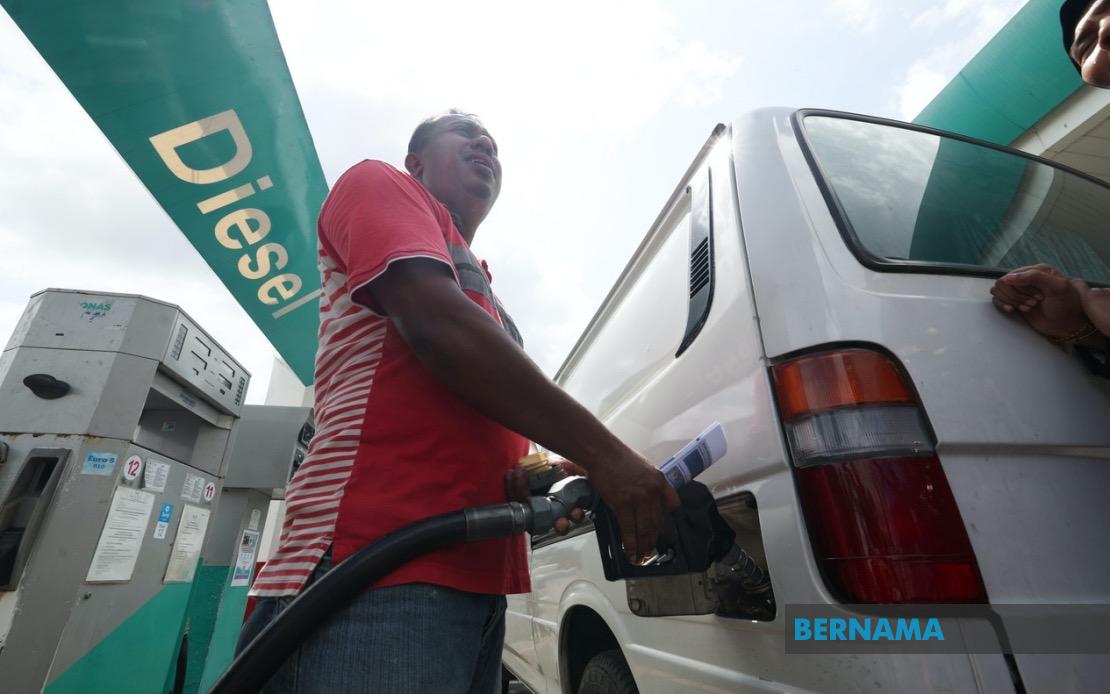
Prime Minister Datuk Seri Anwar Ibrahim has confirmed that Malaysia's government will reduce the price of subsidised diesel to RM2.10 per litre beginning in July 2026, marking a significant shift in the nation's fuel subsidy framework. The announcement, made in Bintulu today, signals the MADANI Government's commitment to restructuring fuel assistance programmes whilst maintaining affordability for Malaysian drivers.
The new pricing mechanism will operate through a targeted subsidy approach, mirroring the successful model established under the BUDI MADANI RON95 (BUDI95) programme that has been implemented for petrol. By leveraging verification systems based on MyKad identification, the government aims to ensure that fuel subsidies reach eligible Malaysian citizens more efficiently. This methodology represents a departure from blanket subsidies, instead directing support to those who qualify under the programme's criteria.
The BUDI95 programme, which serves as the template for this diesel initiative, has demonstrated the feasibility of combining affordability with fiscal responsibility. That programme uses digital verification to differentiate between eligible Malaysian drivers and other users, creating a dual-price system that manages government expenditure whilst protecting domestic consumers from volatile global fuel prices. The extension of this framework to diesel suggests the administration is confident in the system's ability to scale across multiple fuel types.
Finance Minister II Datuk Seri Amir Hamzah Azizan is scheduled to provide detailed implementation guidelines tomorrow in Kuala Lumpur, indicating that operational specifics remain under finalisation. The briefing will likely address critical questions regarding eligibility criteria, the mechanics of MyKad-based verification at petrol stations, and any phased rollout plans. For Malaysian consumers and the transport sector, these details will prove crucial in understanding how the new structure affects their fuel purchasing power.
The timing of this announcement carries particular significance given Malaysia's economic landscape. Diesel fuel powers a substantial portion of the nation's commercial transport, industrial machinery, and agricultural operations. By setting a price point at RM2.10 per litre, the government appears to be balancing the interests of logistics companies, farmers, and consumers against the constraints of the national budget. This price reflects awareness that excessive fuel costs cascade through supply chains, ultimately affecting retail prices and inflation.
The transition to a targeted subsidy model also reflects broader policy trends in Southeast Asia, where countries grapple with balancing social welfare commitments against fiscal sustainability. Indonesia, the Philippines, and Thailand have each experimented with various subsidy reform mechanisms, with mixed results. Malaysia's approach, grounded in established digital infrastructure through MyKad, positions the nation favourably compared to regional peers struggling with implementation challenges.
For the logistics and transport sectors, the RM2.10 price point requires careful evaluation against operational costs. Commercial operators will need to factor in whether the subsidised rate applies universally to their operations or carries restrictions. Typically, government subsidies target individual consumers rather than commercial entities, meaning business users might face different pricing structures. Such distinctions could reshape transportation economics across supply chains that depend on diesel-powered vehicles.
The agricultural sector represents another critical stakeholder in this announcement. Farmers rely substantially on diesel for irrigation pumps, tractors, and mechanical harvesting equipment. A fixed price of RM2.10 per litre provides predictability for agricultural planning and cost calculations, potentially stabilising food production costs. Given Malaysia's ongoing efforts to achieve greater food security, maintaining affordable diesel for farming operations aligns with broader strategic objectives.
The MyKad verification system introduces a modernisation element to fuel subsidy administration, reducing opportunities for leakage and ensuring resources target intended beneficiaries. However, implementation requires coordination across multiple agencies including the Malaysian Ministry of Finance, domestic fuel retailers, and the identification authority managing MyKad databases. Training petrol station staff to execute verification procedures efficiently will prove essential to smooth operations.
Globally, crude oil prices remain volatile, influenced by geopolitical tensions, production decisions by OPEC member nations, and shifts in demand from major economies. Malaysia's commitment to a fixed subsidised price for diesel insulates domestic consumers and businesses from these international fluctuations, at least partially absorbing price shocks through the government budget. The sustainability of this approach depends on petroleum revenue trajectories and the government's fiscal capacity.
The broader policy context suggests the MADANI Government prioritises targeted support over universal subsidies, reflecting lessons learned from previous programmes that proved fiscally unsustainable. This transition resonates with international economic recommendations favouring direct cash transfers or selective support over commodity subsidies. By concentrating diesel subsidies on verified Malaysian citizens, the administration seeks to demonstrate fiscal discipline whilst maintaining social protection.
Market participants including petroleum retailers and fuel logistics companies will require clear guidelines on implementation mechanics. Questions regarding wholesale pricing, retailer margins, verification procedures at the pump, and dispute resolution mechanisms need clarification before July 2026. The Finance Ministry's scheduled briefing will begin addressing these operational concerns, though subsequent regulatory announcements will likely follow.