%22%2F%3E%3C%2Fpattern%3E%3C%2Fdefs%3E%3Crect%20width%3D%22100%25%22%20height%3D%22100%25%22%20fill%3D%22url(%23phrq8ng)%22%2F%3E%3Crect%20width%3D%22100%25%22%20height%3D%22100%25%22%20fill%3D%22url(%23phrq8np)%22%2F%3E%3Ctext%20x%3D%2250%25%22%20y%3D%2250%25%22%20text-anchor%3D%22middle%22%20dominant-baseline%3D%22central%22%20fill%3D%22rgba(255%2C255%2C255%2C0.95)%22%20font-family%3D%22Georgia%2C%20'Times%20New%20Roman'%2C%20serif%22%20font-weight%3D%22700%22%20font-size%3D%22136%22%20letter-spacing%3D%22-0.02em%22%3ETerengganu%3C%2Ftext%3E%3C%2Fsvg%3E)
Police in Terengganu have dismantled what authorities describe as a sophisticated drug distribution network centred in Kampung Duyong Besar, culminating in the arrest of two brothers alleged to have used their family home as a base for large-scale narcotics trafficking. The operation, which unfolded in Kuala Terengganu, represents a significant enforcement action against organised drug crime in the state and underscores the persistent challenges Malaysian law enforcement faces in combating the distribution of controlled substances.
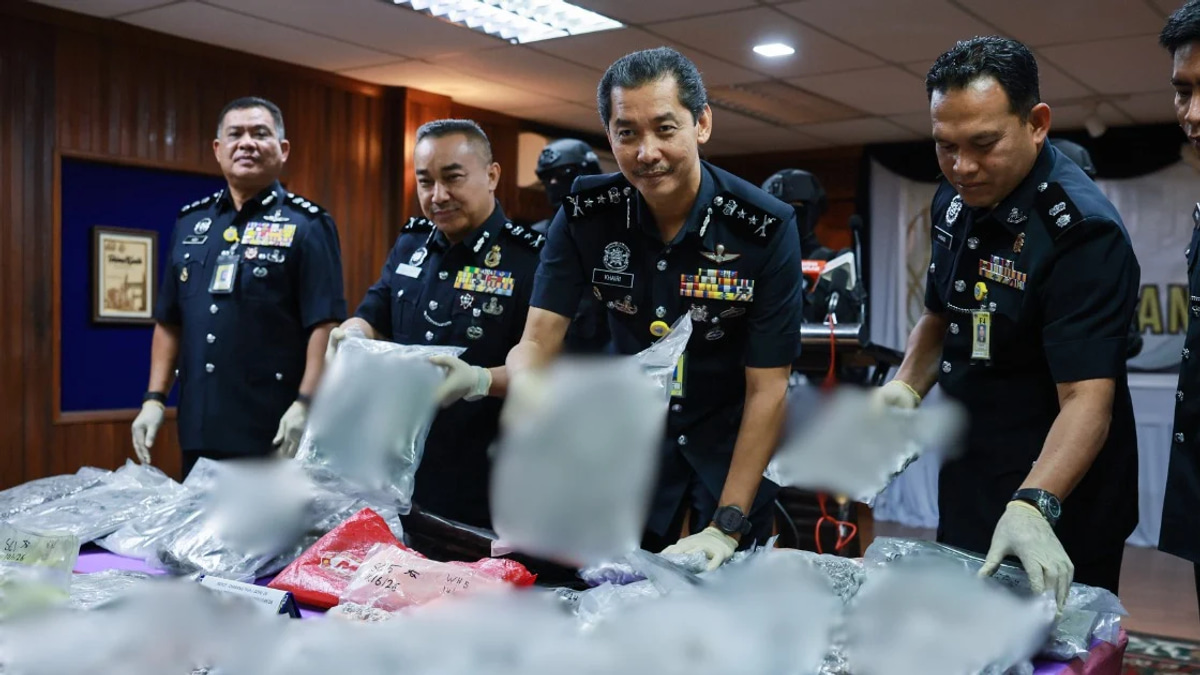
The investigation, initiated following intelligence gathered by the Terengganu police narcotics division, led officers to conduct a series of raids on properties linked to the suspects. During these operations, police recovered an estimated RM1.76 million worth of cannabis in various forms, including packaged buds and processed material. The substantial seizure suggests the brothers were engaged not merely in small-scale dealing but rather in wholesale distribution operations, likely supplying a network of street-level dealers across the state and potentially beyond its borders.
Beyond the drug haul itself, the seizure of multiple luxury vehicles has drawn particular attention from authorities, who view such acquisitions as telltale indicators of proceeds from illegal drug activity. The expensive automobiles recovered during the raids exemplify how proceeds from narcotics trafficking are often laundered through the acquisition of high-value consumer goods, a pattern well-documented in transnational organised crime investigations throughout Southeast Asia. The presence of these vehicles at the Kampung Duyong Besar residence signals the scale and profitability of the suspected operation.
The brothers' alleged use of a residential property in what appears to be an established neighbourhood for drug trafficking demonstrates a common criminal strategy in Malaysia. Rather than operating from purpose-built clandestine facilities, traffickers frequently utilise ordinary homes in populated areas, banking on the assumption that such locations attract less scrutiny than dedicated distribution centres. This approach complicates police detection efforts and underscores why intelligence gathering and community cooperation remain vital to disrupting such networks.
Terengganu's role in national drug trafficking patterns reflects broader regional dynamics. The state's significant coastline and proximity to shipping routes make it attractive to international drug smuggling networks seeking entry points into Malaysia. Once imported, large quantities of cannabis and other substances are distributed inland through networks of middlemen and street dealers. The dismantling of the Kampung Duyong Besar operation may thus represent just one node in a larger trafficking ecosystem extending far beyond Terengganu's boundaries.
The arrest of the two brothers follows months of surveillance and investigation by the state's narcotics division, reflecting the patient, methodical approach increasingly adopted by Malaysian police when targeting mid-level trafficking organisations. Rather than focusing solely on street-level users and small dealers, authorities have recognised the importance of identifying and apprehending those occupying the distribution chain's middle and upper echelons, where the greatest impact on supply can be achieved. Such operations require considerable resource investment and inter-agency coordination but yield proportionally greater returns.
The investigation also highlights the evolving sophistication of drug trafficking organisations operating within Malaysia. The combination of significant capital investment in luxury vehicles, the establishment of ostensibly legitimate residential bases, and the apparent scale of their operation suggests the brothers may have operated as part of a larger criminal enterprise rather than as independent actors. The nature of their suspected distribution network likely extended into adjacent states and possibly involved connections to transnational smuggling routes.
For Malaysian readers and policymakers, this seizure provides a stark reminder of the persistent challenge posed by cannabis trafficking in particular. Despite Malaysia's strict drug laws and severe penalties—including mandatory death sentences for trafficking in quantities exceeding 50 grams of cannabis—large quantities continue circulating throughout the country. The existence of organised networks capable of accumulating RM1.76 million in inventory suggests demand remains robust and profit margins sufficiently attractive to sustain significant criminal investment.
The case also illustrates the interdependence between different criminal offences in trafficking operations. The acquisition of luxury vehicles raises questions of money laundering oversight and whether financial institutions detected suspicious transactions or asset acquisitions by the suspects. Similarly, the operation of a distribution network from a residential property may have involved coordination with local facilitators or protection through corrupt officials—typical components of organised drug enterprises.
As the investigation proceeds, Terengganu police have indicated that further arrests may be forthcoming, suggesting the dismantling of this particular network remains an ongoing process. Additional suspects involved in the distribution chain, source suppliers, or supporting roles may yet face apprehension as authorities follow investigative leads emerging from the initial operation. Such comprehensive approaches to dismantling criminal networks prove more effective at disrupting supply than focusing narrowly on individual arrests.
The seizure underscores that despite Malaysia's formidable legal framework and enforcement apparatus, the profitability and accessibility of cannabis relative to other controlled substances continue driving trafficking and consumption patterns. Regional cooperation, financial crime investigation, and community intelligence remain essential components of any effective counter-drug strategy. The Kampung Duyong Besar operation demonstrates that proactive enforcement remains possible but equally that the underlying drivers of drug trafficking persist throughout Malaysian society.